Bromine Tablets Not Dissolving? 5 Fixes That Work
Bromine tablets sitting unchanged in your floater? Five common causes and the fixes that actually work, from water chemistry to floater settings.
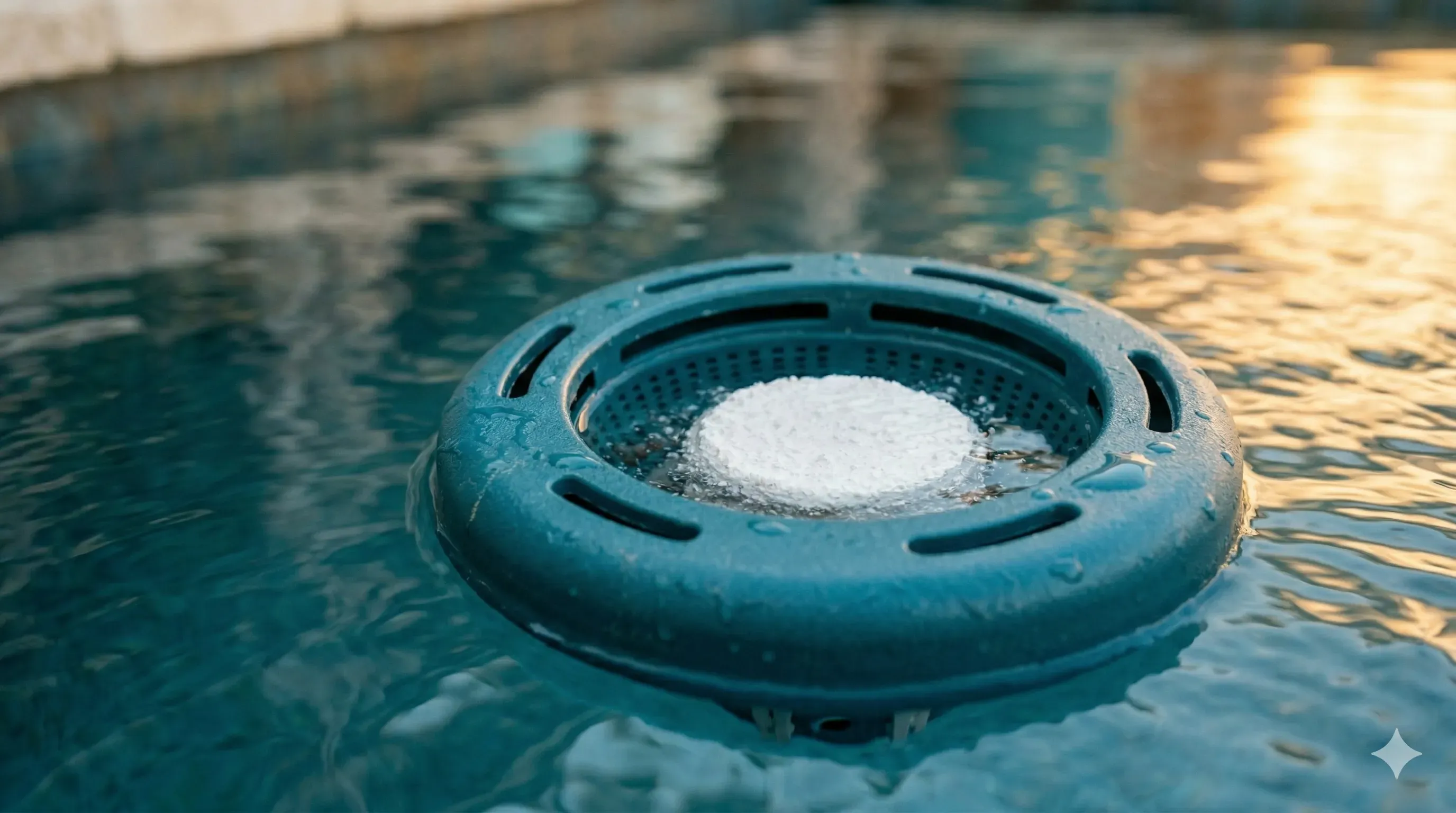
You load the floater with fresh tablets, twist it to what feels like the right setting, and drop it in the water. A week later the tablets look exactly the same. Bromine reads zero on the test strip, so you add more tablets. Now the floater is packed full and nothing is happening.
Sound familiar? It’s the most common frustration with bromine hot tubs, and it has a few specific causes that are easy to fix once you know what to look for.
How bromine tablets actually work
BCDMH tablets don’t dissolve like sugar in coffee. They undergo hydrolysis, a chemical reaction with water that happens at the tablet surface and works inward layer by layer.
The tablet releases hypobromous acid (the active sanitizer) and a small amount of hypochlorous acid (which reactivates spent bromine). This is a surface erosion process, not bulk dissolution. The compressed tablet is designed to erode slowly over one to three weeks per tablet at hot tub temperatures.
Understanding this matters because most “dissolution problems” are actually expectations problems. Tablets are engineered to be slow. But if they’re barely shrinking after two weeks in hot water with good circulation, something else is going on.
Check your water temperature first
Cold water is the single biggest reason tablets won’t dissolve. BCDMH hydrolysis speeds up a lot with heat. At 100 to 104 degrees Fahrenheit, tablets dissolve at their designed rate. Below 80 degrees, dissolution slows to a crawl.
This matters more than people realize. If you’ve turned the temperature down during vacation, dropped to economy mode, or just filled with cold tap water and haven’t waited for it to heat, the tablets will sit there doing nothing.
The fix: Always heat your tub to full operating temperature (100 to 104 degrees) before expecting tablets to work normally. If you just refilled, wait until the water is fully heated before judging tablet performance.
Your floater might be the problem
The floating dispenser has adjustable vents (usually a twist ring with up to 13 settings) that control how much water contacts the tablets. Two common problems here.
Vents too closed. If the ring is twisted nearly shut, barely any water reaches the tablets. Start at a middle setting and adjust from there.
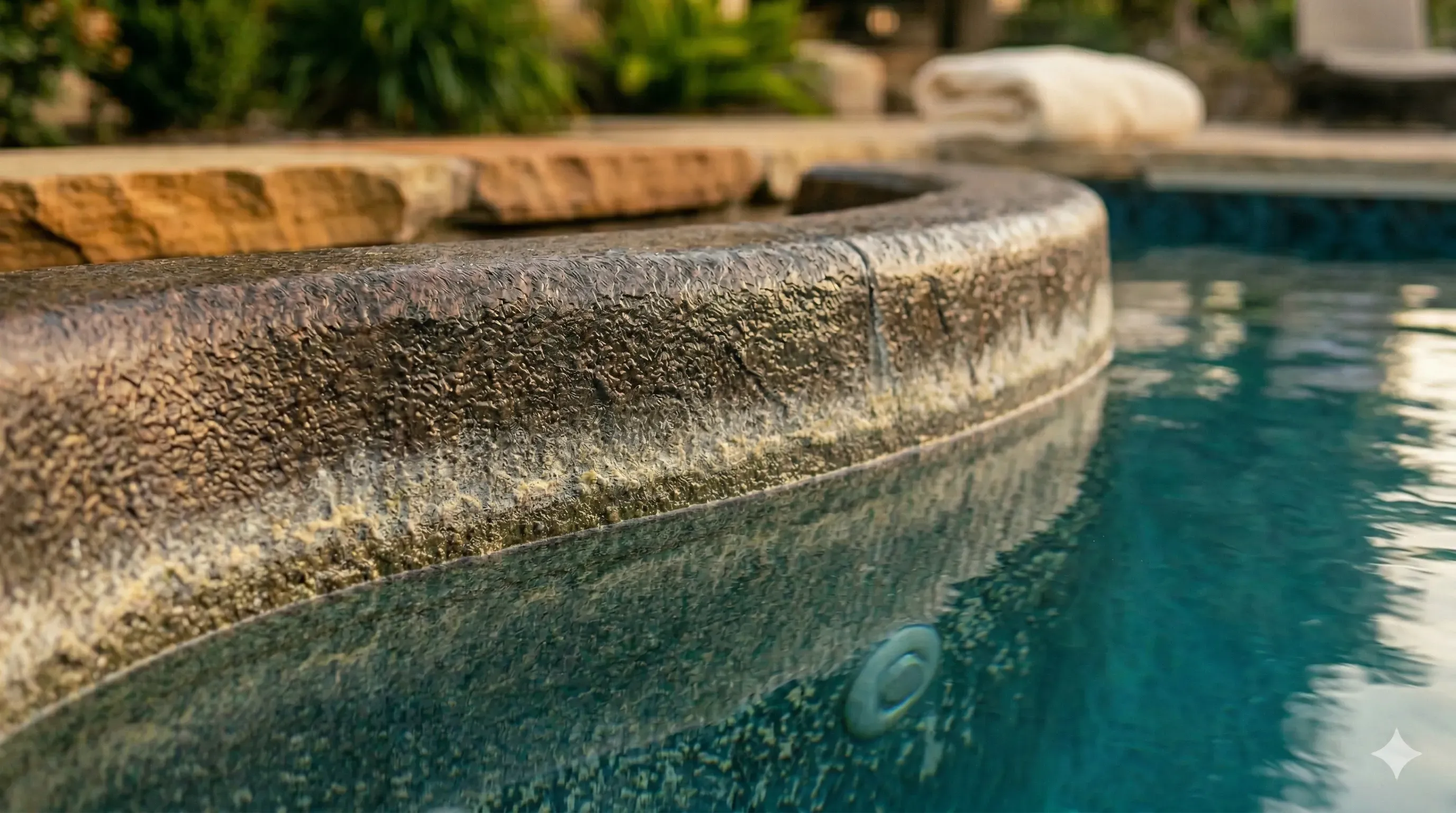
Vents clogged with scale. Over time, calcium deposits, biofilm, and chemical residue block the small openings. Pop the floater open and inspect the holes. If they’re crusty or narrowed, soak the floater in a vinegar solution for 30 minutes and scrub with an old toothbrush.
Tablets packed too tight. Cramming too many tablets restricts water flow between them. Only fill to the manufacturer’s recommended capacity, and make sure water can circulate around each tablet. For most hot tubs, three to five tablets is the sweet spot.
| Hot Tub Size | Starting Tablets | Floater Setting |
|---|---|---|
| 200 gallons | 2 to 3 | Low to medium |
| 300 gallons | 3 to 4 | Medium |
| 400 gallons | 4 to 5 | Medium |
| 500 gallons | 5 to 7 | Medium to high |
Also check position. If the floater gets stuck behind steps, wedged against a pillow, or trapped in a dead zone with no circulation, the water around it becomes saturated and dissolution stalls. Give it a nudge when you see it parked in one spot. And never let it rest against the spa shell for extended periods. The concentrated chemicals will bleach and permanently stain the acrylic.
Water chemistry blocking dissolution
Two chemistry issues interfere with normal tablet erosion.
High calcium hardness. Water above 400 ppm calcium can deposit scale on tablet surfaces and inside floater vents, creating a physical barrier. Keep calcium hardness between 150 and 250 ppm for best results.
High pH. Above 7.8, scaling accelerates and bromine effectiveness drops. At pH 8.0, bromine retains about 83% of its killing power (still decent), but scale formation on equipment and tablets increases. Keep pH between 7.2 and 7.8.
| Parameter | Ideal Range | Dissolution Impact |
|---|---|---|
| Water temperature | 100 to 104°F | Primary driver of dissolution speed |
| pH | 7.2 to 7.8 | High pH promotes scaling on tablets |
| Calcium hardness | 150 to 250 ppm | Above 400 ppm blocks tablet surfaces |
| Circulation | 8+ hours daily | Moving water carries away reacted chemicals |
Run your circulation pump at least eight hours per day. Many modern hot tubs run 24/7 on low speed, which is ideal. If your pump is on a timer and only runs a few hours, tablets will dissolve much slower during off periods.
The dormant bromine trap
Here’s the scenario nobody talks about, and it catches more people than any mechanical issue.
Your tablets might actually be dissolving perfectly fine. The bromine gets released, sanitizes contaminants, and converts to bromide ions. Those bromide ions read as zero on your test strip. So you think the tablets aren’t working when really the problem is that you haven’t activated the bromide back into measurable bromine.
The industry calls it dormant bromine. The bromide is there. It just needs an oxidizer to wake it up.
The fix: Shock with MPS (non-chlorine shock) or a small dose of chlorine. This converts the dormant bromide ions back into active hypobromous acid, which will then register on your test strip.
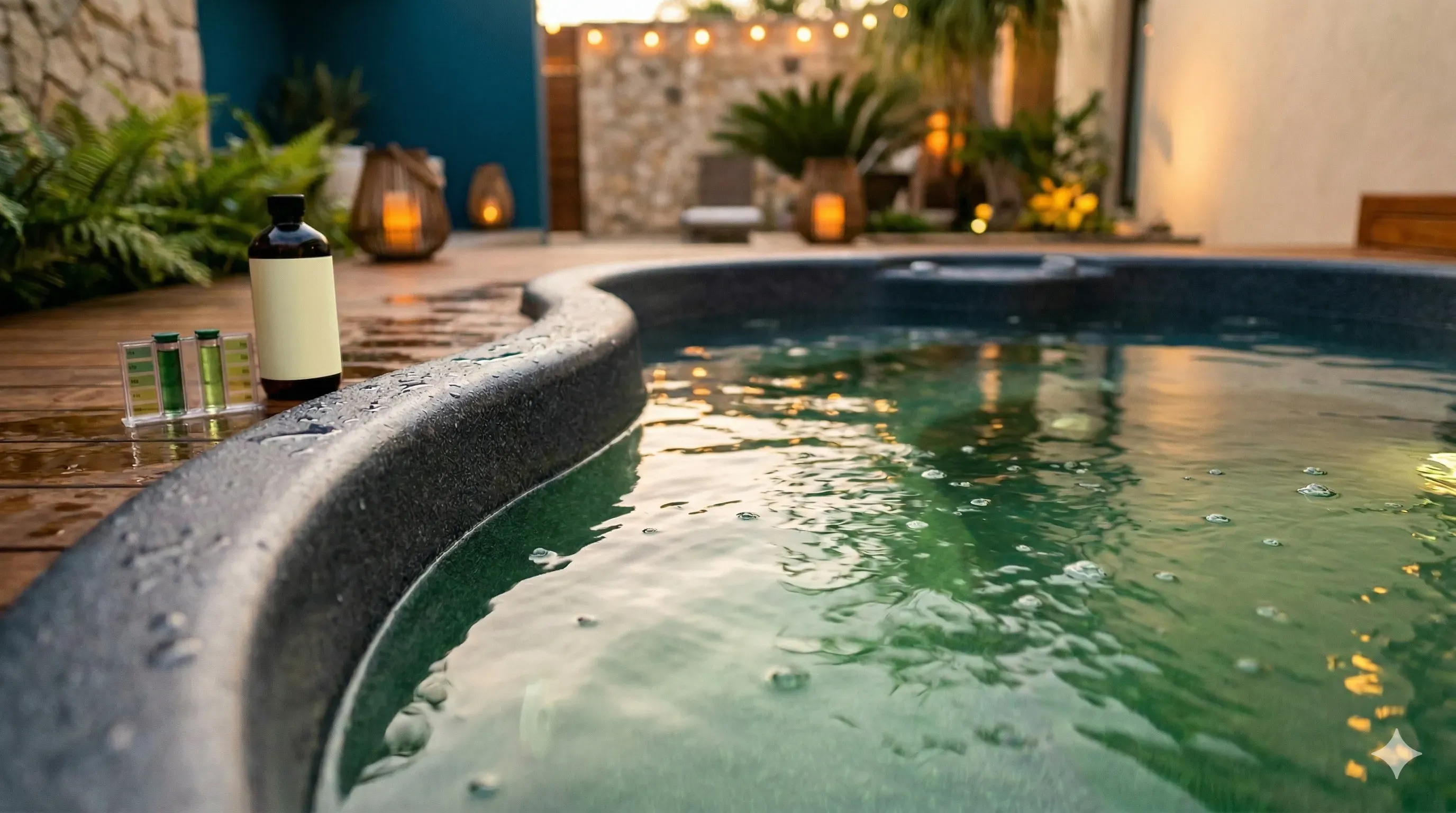
The bleachout trap: If your test strip goes completely white or reads an impossibly low number, you may actually have extremely high bromine that is bleaching the reagent on the strip. Dilute your water sample 1:1 with distilled water and retest. If you get a reading, multiply by two. For accurate results above 10 ppm, use a Taylor K-2106 FAS-DPD test kit instead of strips.
When tablets dissolve too fast
The opposite problem is just as common and potentially dangerous. One Trouble Free Pool member reported tablets from the same bucket that normally lasted three to five days dissolved in under two hours, spiking bromine to 50 to 100 ppm and causing skin burns.
Causes of fast dissolution:
Tablets absorbed moisture during storage. Once the compressed structure breaks down, they crumble instead of eroding slowly. Store tablets sealed, dry, and below 86 degrees Fahrenheit.
Brand switch. Different manufacturers use different binder formulations. The active ingredient (BCDMH at 96 to 98%) is essentially identical across brands, but the binder that controls dissolution rate varies quite a bit. A switch from a hard, slow-dissolving brand to a softer one can catch you off guard.
Floater vents too open. Turn them down. Adjust by one setting per day and test after 24 hours at each setting.
If bromine is too high right now: Remove the floater immediately. Place it in a plastic bucket outdoors (wet bromine tablets produce irritating fumes). Leave the hot tub cover off and run the jets to accelerate dissipation. If levels are above 10 ppm, don’t soak until they drop to 5 ppm or below. For faster results, check our guide on lowering bromine levels.
Skip the tablets entirely
Many experienced hot tub owners abandon tablets altogether and use the sodium bromide plus bleach method. It eliminates the “Goldilocks problem” of tablets dissolving too fast or too slow by removing tablets from the equation.
How it works:
- On a fresh fill, add sodium bromide to establish a bromide bank (about 2 ounces per 500 gallons, targeting 30 ppm).
- Shock with bleach (plain unscented 8.25% sodium hypochlorite) to convert the bromide into active bromine.
- After each soak, add a small dose of bleach to reactivate the bromide bank and oxidize bather waste.
- Between soaks, the bromide sits dormant. No floater needed, no unpredictable dissolution.
The bleach method gives you precise, immediate control over bromine levels. You dose exact amounts of liquid instead of relying on tablets that erode at whatever rate they feel like. The bromide bank lasts for months, only needing replenishment when you add fresh water.
This approach is the standard recommendation on the Trouble Free Pool forum for a reason. It works.
The DMH factor nobody mentions
Every BCDMH tablet that dissolves releases dimethylhydantoin (DMH) as a byproduct. DMH accumulates in the water over time, similar to how cyanuric acid builds up from dichlor use in chlorine systems. Excess DMH gradually reduces bromine effectiveness, and there’s no test kit for it.
This is the hidden reason experienced owners drain and refill every three to four months. A fresh fill resets the DMH level to zero along with all other accumulated byproducts. If your tablets seem to “stop working” even though everything else checks out, the water may simply be due for a change.
Frequently asked questions
How long should bromine tablets take to dissolve in a hot tub? A single 1-inch BCDMH tablet fully exposed to 100 to 104 degree water dissolves in about one to three weeks. Three to five tablets in a floater on a lower vent setting can last two to three months before all tablets are consumed. If tablets last longer than three weeks each, something is slowing dissolution.
Why are my bromine tablets turning mushy instead of dissolving? Mushy tablets are almost always a moisture exposure problem during storage, not a water chemistry issue. Tablets absorb humidity from the air and lose their compressed structure. Store tablets in a tightly sealed container in a cool, dry place below 86 degrees Fahrenheit. Replace any discolored or crumbly tablets.
Should I break bromine tablets to make them dissolve faster? No. Crushing BCDMH tablets creates toxic dust that causes severe respiratory irritation at concentrations as low as 10 ppm in air. Broken tablets also release sanitizer too fast, potentially spiking bromine to dangerous levels. If you need quick bromine, use granules or sodium bromide with a shock treatment instead.
How many bromine tablets should I put in my floater? Start with one tablet per 100 gallons as a baseline. A 300 gallon tub gets three tablets, a 400 gallon tub gets four. Set the floater vents to the lowest open position and test after 24 hours. Increase by one setting per day until you read 3 to 5 ppm bromine consistently.
What is dormant bromine and why does my test strip read zero? Dormant bromine means spent bromide ions are sitting in your water with no active sanitizer showing. Your tablets may actually be dissolving fine, but the bromine gets used up and converts to inactive bromide. Shock with MPS or chlorine to reactivate the bromide bank. If the strip bleaches white, your levels may actually be too high.
Can I use a hot tub without a bromine floater? Yes. Many experienced owners ditch the floater entirely and use the sodium bromide plus bleach method. Establish a bromide bank with sodium bromide on fresh fills, then shock with plain bleach after each soak. This gives more precise control and eliminates the unpredictable dissolution issues that come with tablets.