Green Hot Tub Water: Is It Algae or Copper?
Green water in your hot tub is almost never algae. Here's how to diagnose it in 60 seconds, fix each cause, and keep it from coming back.
Most people see green water and assume algae. In a hot tub, that’s almost never the answer. At 100 to 104F, most algae species are at or past their thermal limit. They can’t grow fast enough to turn your water green. What can turn your water green at those temperatures is dissolved copper, and it’s far more common than people expect.
The fix for copper is completely different from the fix for algae. Treat for the wrong one and you’ll make the problem worse. Shock a copper problem and the water gets greener. Add algaecide to a copper problem and you’re literally pouring more copper into already copper-contaminated water.
Here’s how to figure out which one you’re dealing with in about 60 seconds.
The 60 second diagnosis
Run your hand along the wall of the tub below the waterline.
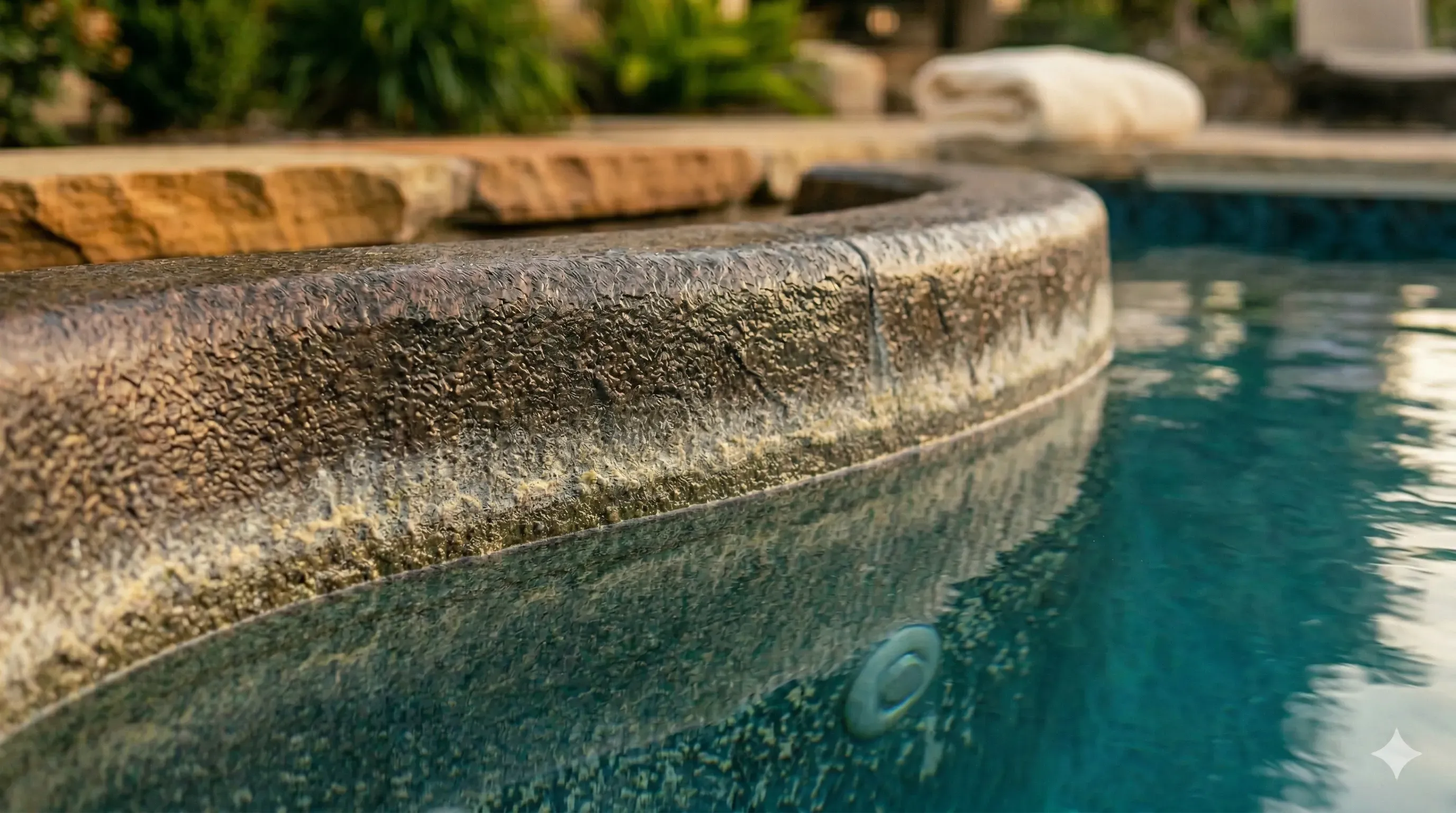
Slimy or slippery walls? That’s algae. Living organisms cling to surfaces. You’ll feel a slick film, especially along the waterline and in crevices around jets. The water is usually cloudy green, not transparent. May have a musty smell.
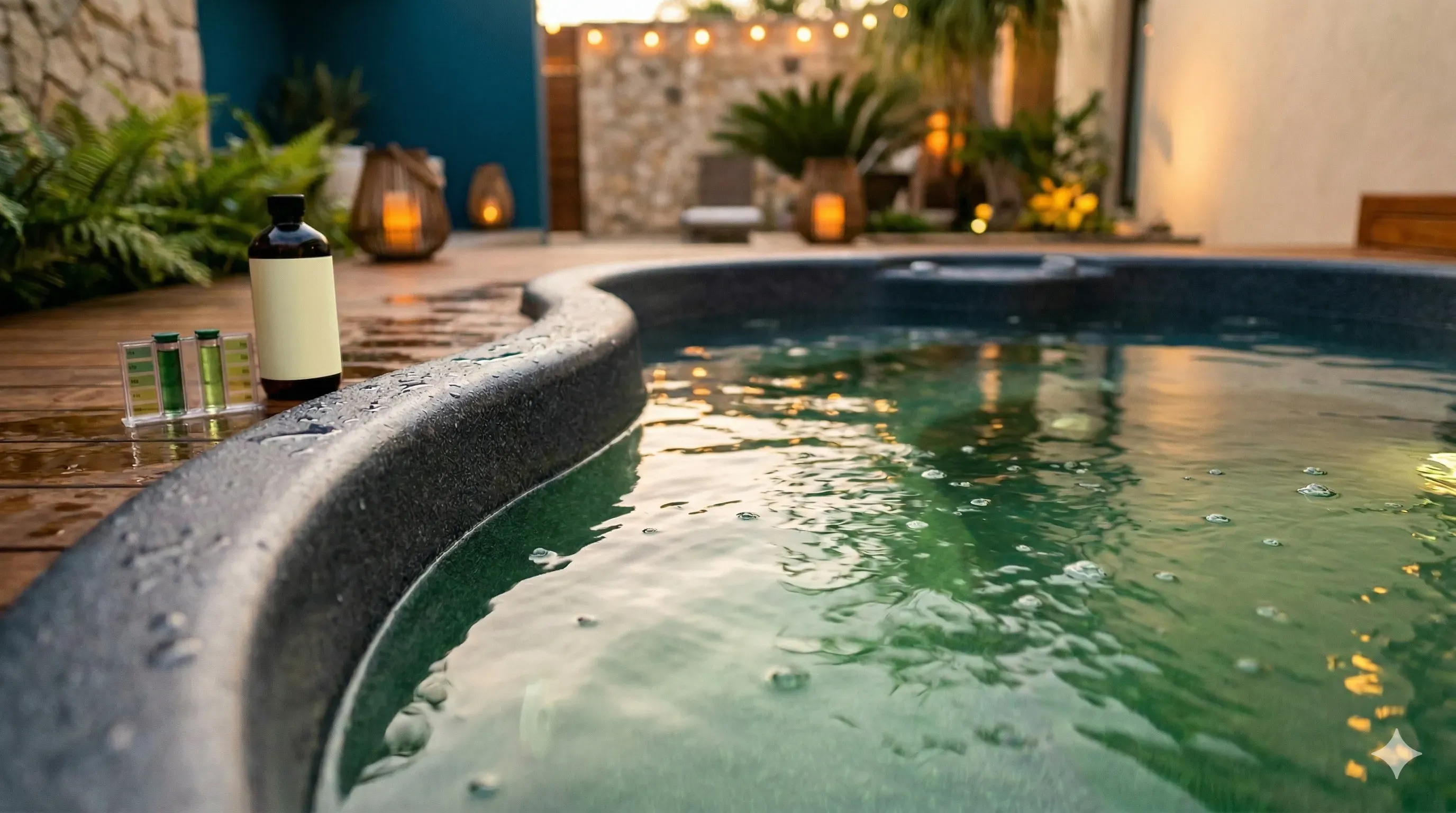
Walls feel clean and smooth? That’s dissolved metal. Copper ions color the water without coating surfaces. The green is uniform throughout, the water is clear (you can see through it), and there’s no unusual smell. This is the more common scenario.
A second clue: add a dose of chlorine shock. If the green gets more intense, that confirms metals. The chlorine oxidized dissolved copper into its visible colored form. If the green starts to fade and the water gets cloudier before clearing, that was algae being killed.
Why copper turns water green
Dissolved copper (Cu2+ ions, if you want to get nerdy) absorbs red light and reflects blue-green. At low concentrations, the water looks slightly teal. At higher concentrations, it’s unmistakably green.
The color often appears or intensifies after you add chlorine or shock. That’s because the oxidizer converts invisible dissolved copper into its colored ionic form. People see the green, panic, add more shock, and the green gets worse. It’s a misdiagnosis loop.
Where does the copper come from?
Your fill water. Both well water and city water can contain dissolved copper, especially if your house has copper plumbing. Hot water dissolves copper from pipes faster than cold water. Well water is particularly notorious for high metal content.
Your heater element. When pH drops below 7.2, the water becomes corrosive and eats into metal components. The heater is the hottest surface in the system and corrodes first. One owner ran pH at 5.7 to 6.8 for months because of a bad pH meter. The heater tubes were visibly acid-etched and their kids’ hair turned green.
Copper-based products. Pool algaecides containing copper, and mineral sanitizer systems like FROG or Nature2, introduce copper directly. In a 300 to 500 gallon tub, copper concentrations spike fast.
The green shade guide
No competitor covers this, but the shade matters for diagnosis:
Clear, bright emerald green. Copper. Nine times out of ten, this is what you’re looking at. The water is transparent but colored, like someone added food coloring. Walls are clean.
Dark, cloudy, murky green. Algae or a combination of algae and metals. Water is opaque. Surfaces may be slimy.
Yellow-green tint. Could be iron (which starts greenish before turning brown) or very early-stage contamination. Often appears right after filling from well water.
Blue-green. Copper combined with chloride ions from your sanitizer. Common in tubs using dichlor, which releases chloride as it dissolves.
How to fix copper-related green water
Step 1: Test for metals. Standard hot tub test strips don’t measure copper or iron. You need a separate metal test kit. The Taylor K-1264 tests both copper (0.2 to 3.0 ppm) and iron (0 to 2.0 ppm). Copper above 0.2 ppm causes staining. Above 0.3 ppm, green water is likely.
Step 2: Fix pH first. If pH is below 7.2, that’s actively dissolving copper from your heater and fittings. Bring pH to 7.4 to 7.6 immediately to stop the corrosion.
Step 3: Add a metal sequestrant. Products like Natural Chemistry Spa METALfree (4 oz per 400 gallons at fill, 1 oz per 400 gallons weekly) or SpaGuard Stain and Scale Control (1 oz per 300 gallons weekly) bind dissolved metals so they can’t oxidize or stain. CuLator SpaPak is the only product that physically removes metals. It sits in the filter compartment and traps copper, iron, and manganese permanently in a polymer pouch.
Step 4: For severe cases, drain and refill with a pre-filter. If metals are high, sequestrants just hold them in suspension. A hose pre-filter like the Pure Fill Spa Pre-Filter removes up to 98% of heavy metals from fill water before they enter the tub. Add sequestrant to the fresh fill immediately, before adding any sanitizer.
How to fix algae-related green water
If the walls are slimy and the water is cloudy green, sanitizer failed and something grew.
Shock the tub to at least 10 ppm free chlorine using dichlor granules. About 1 teaspoon per 100 gallons gets you there. Run jets on high for 20 to 30 minutes. Scrub all surfaces with a non-abrasive pad to break up the biofilm. Clean or replace the filter since it’s likely loaded with algae and organic matter.
If it’s severe, drain the tub, scrub the shell, purge the lines with Ahh-Some, and start fresh. Algae in a hot tub means sanitizer was absent for an extended period, so biofilm is almost certainly growing in the plumbing too.
The copper algaecide trap
This deserves its own warning. Pool algaecides containing copper are a common purchase for hot tub owners who see green water and assume algae. The irony is brutal: copper algaecide adds more copper to already copper-contaminated water. The green gets worse, so you add more algaecide, which adds more copper. The cycle continues until you have heavily stained surfaces and water that won’t clear without draining.
Never use copper-based algaecide in a hot tub. Algae is rare in well-sanitized tubs above 100F, and copper creates problems far worse than the algae it’s supposed to prevent. If you want algae prevention, maintain 3 to 5 ppm free chlorine. That’s it.
How to prevent green water
Use a hose pre-filter when filling. Especially if you have well water or copper plumbing. A pre-filter removes metals before they enter the tub. Worth the investment if you’ve had metal issues before.
Keep pH between 7.2 and 7.6. Never below 7.2. Low pH is the number one cause of copper leaching from heater elements. This is non-negotiable.
Add sequestrant at every fill. If your source water has any detectable metals, dose a sequestrant right after filling, before adding sanitizer. Wait 24 hours before shocking or adding chlorine so the sequestrant has time to bind.
Test your fill water once. Know what you’re starting with. If your tap water runs above 0.2 ppm copper, you’ll need a pre-filter and sequestrant as a permanent part of your routine.
Drain every 3 to 4 months. Metals concentrate as water evaporates. Regular water changes prevent the slow buildup that turns a minor metal issue into a visible one.
Frequently asked questions
Why did my hot tub turn green after shocking? Shocking oxidizes dissolved copper in the water, converting invisible copper ions into their colored form. The green gets worse because the shock is doing its job on the metals, not because you did something wrong. Add a metal sequestrant and run the filter.
Is green hot tub water safe to sit in? If it’s copper, the water won’t make you sick in a single soak, but prolonged exposure can irritate skin, stain hair green, and damage equipment. If it’s algae, the water likely has low sanitizer and could harbor bacteria. Fix the cause before soaking.
Can algae grow in a hot tub at 104 degrees? Rarely. Most green algae species stop growing above 95F. At 104F, they’re at or beyond their thermal limit. Green water in a hot tub running at normal temps is almost always dissolved copper, not algae. Check by touching the walls. Slimy means algae. Clean walls mean metals.
How do I test for copper in my hot tub? Standard 5-way or 7-way test strips don’t test for metals. You need a separate metal test kit like the Taylor K-1264, which tests both copper and iron. Or bring a sample to a pool store that runs a full metal panel. Test your fill water too so you know what you’re starting with.
Will draining fix green hot tub water? Only if you also fix the source. If copper comes from your fill water, draining and refilling just reintroduces the same metals. Use a hose pre-filter on the refill. If copper comes from a corroded heater, fix the pH and consider upgrading to a titanium element.
What is a metal sequestrant and do I need one? A sequestrant binds to dissolved metal ions so they can’t oxidize and stain surfaces. Products like Natural Chemistry Spa METALfree or SpaGuard Stain and Scale Control keep metals locked in solution. They don’t remove metals, so you need to re-dose weekly. CuLator SpaPak is the one product that physically removes metals.