Hot Tub Chemical Subscriptions: Are They Actually Worth It?
Keeping up with hot tub chemicals is a chore most owners dread. Here's how subscriptions work, what a good one includes, and who actually benefits.

Most hot tub owners have run out of chlorine at the worst possible time. Friday evening, pool store closed, Amazon says Tuesday. You skip the dose, promise yourself you’ll fix it tomorrow, and by Monday the water is cloudy and you’re burning through shock trying to recover. A drain and refill later, you’ve lost half a Saturday fixing a problem that started with one missed dose.
Chemical subscriptions exist to prevent exactly that cycle. Instead of reactive pool store runs, the products show up at your door before you need them. But are they actually worth it, or just another recurring charge? It depends on how consistent your current routine is and how much wasted product you’re willing to admit to.
How subscriptions work
Most hot tub chemical subscription services ask you a few questions upfront: what sanitizer you use (chlorine, bromine, or salt water system), what size your tub is, and how often you soak. Based on those answers, they assemble a package of chemicals sized to your setup and ship it on a recurring schedule.
Delivery frequency varies. Monthly, quarterly, or somewhere in between. A well sized chemical supply usually lasts two to four months depending on bather load. The better services adjust your shipment quantities over time based on your consumption patterns rather than sending the same fixed box every cycle.
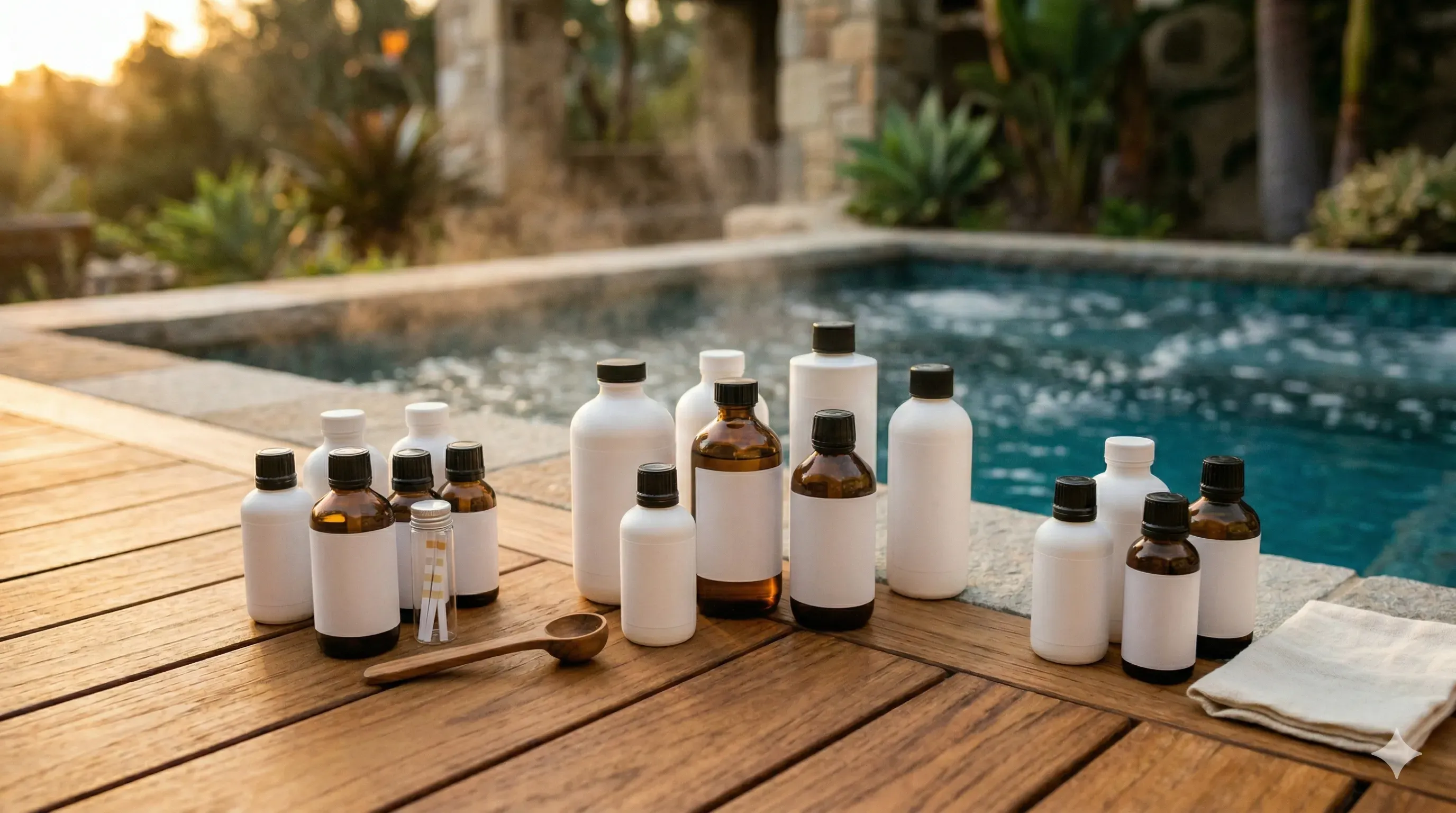
The products inside aren’t proprietary or exotic. Sanitizer (dichlor granules or bromine tablets), pH decreaser, alkalinity increaser, shock oxidizer, and test strips. Same chemicals you’d buy at a pool store or on Amazon. The difference is someone else figured out the quantities and timing for your specific tub.
Some services also include seasonal adjustments, sending more sanitizer during summer months when higher temperatures and more frequent use burn through chlorine faster, and scaling back in winter when usage usually drops. This is a detail that separates genuinely personalized services from ones that just auto-ship a static box.
What chemicals a hot tub actually needs
Before evaluating any subscription, it helps to understand what products your tub actually requires. The list is shorter than most pool stores would have you believe.
A typical 300 to 400 gallon hot tub used three to four times per week by two people needs: a sanitizer (dichlor granules or bromine tablets), pH decreaser, alkalinity increaser, shock oxidizer, and test strips. That’s five products. Some tubs also need a calcium hardness increaser or metal sequestrant depending on the source water, but many don’t.
Each product has a different consumption rate. Sanitizer and shock need replacing every four to eight weeks depending on usage. pH and alkalinity adjusters last longer, usually three to four months per container. Test strips last two to three months per bottle.
The tricky part isn’t knowing what to buy. It’s knowing when to reorder and how much of each product you actually go through. Most people overestimate some things and underestimate others, which means they run out of sanitizer (the one product you can’t skip) while sitting on six months of unused pH increaser.
The pool store problem
The real issue with buying chemicals yourself isn’t the products. It’s the experience.
The upselling tax. Ask anyone on Reddit’s r/hottub and you’ll hear the same story. You walk in for chlorine and walk out with four extra bottles because the salesperson convinced you that your water “probably needs” enzyme treatment, a clarifier, and a phosphate remover. In a 300 gallon hot tub, most of those products are completely unnecessary if your basic chemistry is balanced. But the salesperson gets commission on all of it.
The waste you don’t notice. Dichlor granules and bromine tablets lose potency over time, especially stored in a humid garage or an unsealed container near the hot tub. If you bought a 5 pound bucket of dichlor six months ago and it’s been sitting in 80% humidity, the available chlorine content has degraded. You’re using more product to achieve the same result and don’t realize it. Subscription shipments are sized for near term use, so you’re always working with fresh product.
What a subscription gets right
The biggest advantage sounds obvious: you don’t run out. But it matters more than people realize.
Running out of sanitizer for even three or four days lets bacteria multiply and biofilm start establishing in your plumbing. Recovering from neglected water requires extra shock, possibly a full drain and refill, and half a day of work. All because you ran out of chlorine and put off reordering.
A good service also matches products to your setup. A chlorine tub needs different chemicals than a bromine tub. A two person spa burns through sanitizer at a completely different rate than a six person party tub. A hot tub in Arizona with 280 ppm calcium hardness tap water needs different products than one in Portland with 30 ppm. Sending the same box to everyone defeats the entire purpose.
There’s also the waste problem, which nobody talks about. Without a subscription, most people oscillate between buying too little (running out) and buying too much (products sitting on the shelf until they lose potency). A right-sized recurring shipment eliminates both failure modes.
And honestly? When the chemicals are sitting on your counter in a fresh box, you’re more likely to actually test and dose on schedule. When they’re buried in a pool store bag in the garage, you’re not. Behavior matters more than chemistry. The best water treatment routine is the one you actually follow.
What to watch out for
Not all subscriptions are equal. Some are genuinely useful. Others are just auto-ship with better marketing. Here’s how to tell the difference.
Personalization has to be real. If everyone gets the same box regardless of tub size, sanitizer type, or water source, that’s just a recurring Amazon order with extra branding. Your 250 gallon bromine tub and your neighbor’s 500 gallon chlorine tub shouldn’t receive the same kit. Services that ask about your tub volume, sanitizer type, usage frequency, and ideally your water source (zip code or hardness level) are the ones actually solving the problem.
Flexibility is non-negotiable. Can you skip a shipment? Swap products? Adjust frequency? If you drain and refill mid-cycle, can you get a startup dose sooner than your next scheduled delivery? Rigid subscriptions that won’t adapt to your actual needs cause the same frustration as not having one. Hot tub chemistry isn’t static. Your needs change with the seasons, with how many guests you have over, and with how your fill water behaves after each drain.
Watch for locked-in contracts. If a service requires a 6 or 12 month commitment with cancellation fees, that’s a red flag. Your needs might change (you move, you sell the tub, you switch sanitizer systems). Month-to-month or quarter-to-quarter with easy cancellation is the standard you should expect.
Who benefits the most
If you know what your tub needs but just never get around to ordering on time, a subscription takes that task off your plate. By the time most people remember to reorder, they’re already a week behind on sanitizer and the water is starting to turn.
New hot tub owners get a lot out of subscriptions too. You’re still learning what products you need, how much to use, and how often. Having someone else figure out the quantities while you build confidence with your water chemistry removes the biggest source of beginner stress.
Heavy users and large families go through sanitizer and shock fast. If you’re soaking daily or hosting friends on weekends, a subscription that adjusts for your usage rate keeps you stocked without constant reordering.
And if you’re on well water or in a hard water area, your fill water adds complexity that standard guides don’t address. A service that accounts for your water source can include products like metal sequestrant or calcium management chemicals that owners with standard municipal water never think about.
Is it worth it?
It comes down to one question: are you currently maintaining your water consistently, or are you falling behind?
If you already have a testing schedule, reorder chemicals before running out, and keep a log of your readings, a subscription mostly gives you convenience and time back. You already have the system.
If you find yourself running out, guessing at doses, buying the wrong things at the pool store, or skipping treatments because you forgot to reorder, a subscription solves the root problem. Inconsistency is what causes most hot tub water issues, and most inconsistency comes from the hassle of buying chemicals, not from lack of knowledge.
The chemicals in a subscription box aren’t special. They’re the same products you’d buy yourself. What you’re really getting is the routine. And when it comes to hot tub water, showing up consistently matters more than anything else.
Frequently asked questions
Are hot tub chemical subscriptions worth it? For people who consistently run out of chemicals, skip treatments, or buy the wrong products at the pool store, yes. The value isn’t in the chemicals themselves (they’re the same products you’d buy yourself) but in the consistency: never running out, always having fresh product, and having quantities matched to your actual tub and usage pattern. If you’re already organized and reorder on your own schedule, the benefit is mostly convenience.
What chemicals come in a hot tub subscription? Core essentials: sanitizer (dichlor granules or bromine tablets), pH decreaser, alkalinity increaser, shock oxidizer, and test strips. Better services customize quantities based on tub size, sanitizer type, and usage frequency. Some include seasonal adjustments, sending more sanitizer in summer and less in winter.
How often do you need to buy hot tub chemicals? Sanitizer and shock need replacing every 4 to 8 weeks depending on usage. pH and alkalinity adjusters last 3 to 4 months per container. Test strips last 2 to 3 months per bottle. A quarterly subscription with seasonal sizing covers most owners. Heavy users (daily soaking, large families) may prefer monthly delivery.
Can I customize a hot tub chemical subscription? Depends on the service. The good ones let you pick chlorine vs bromine, change delivery frequency, skip months, and swap products. If a service won’t let you adjust anything, that’s a red flag. Your needs change with the seasons, with drain cycles, and with how many people use the tub.