Do Hot Tub Enzymes Work? What the Science Says
The honest truth about hot tub enzymes based on science, not marketing. What they do, what they can't do, and whether they're worth adding to your routine.
Search for “do hot tub enzymes work” and you’ll find two types of articles. The first type is written by companies selling enzyme products. They’ll tell you enzymes are revolutionary. The second type is written by companies selling competing products. They’ll tell you enzymes are worthless.
Neither is giving you the full picture because both have something to sell.
The real answer sits in the middle, and it requires looking at what the science actually says rather than what marketers want you to believe.
What enzymes actually are
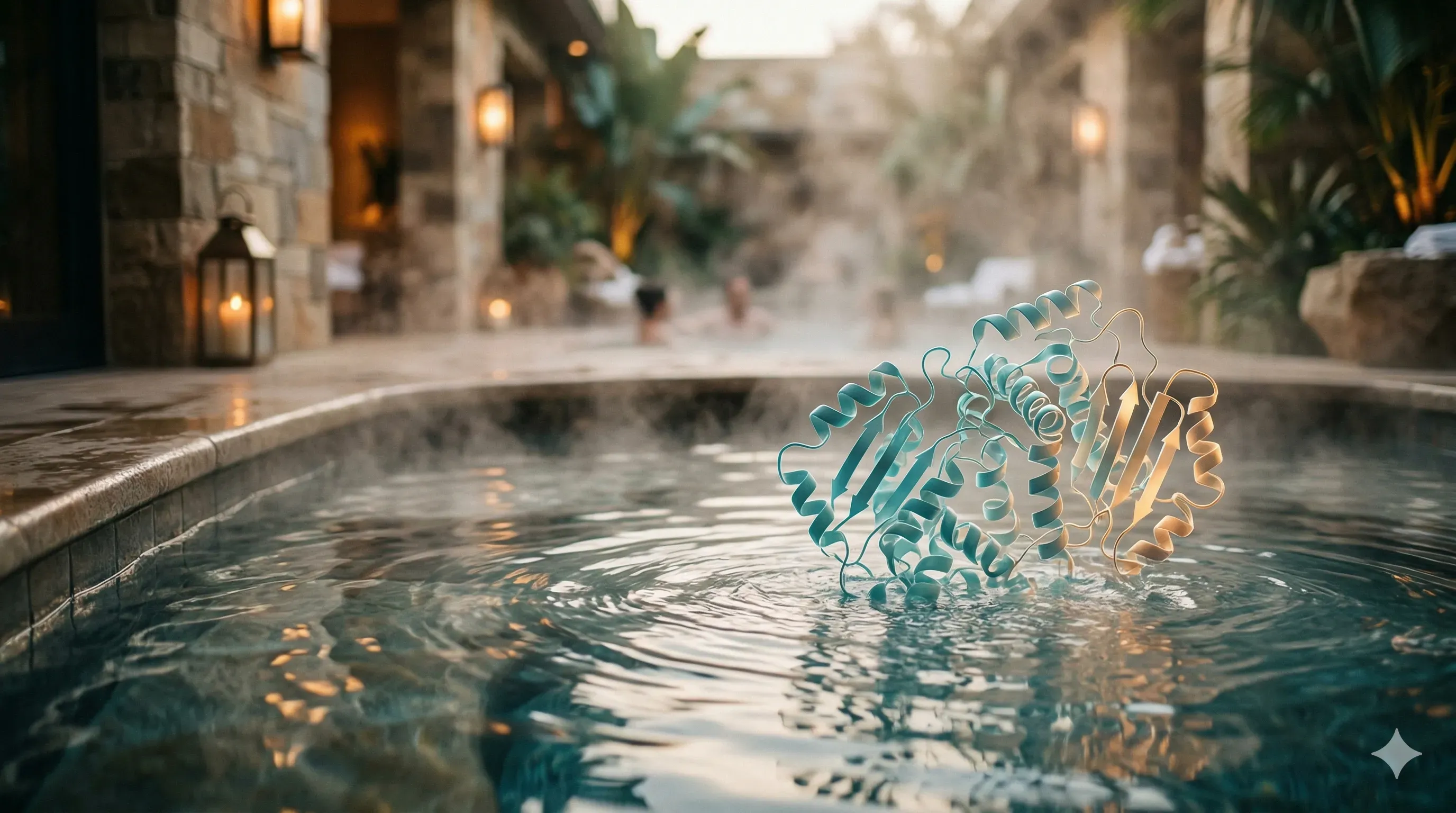
Think of enzymes as tiny biological machines. Each one is a protein molecule built to speed up one specific chemical reaction. In hot tub products, you’re dealing with lipase (breaks down fats and oils), protease (breaks down proteins), and sometimes amylase (breaks down starches).
Each enzyme works on a specific substrate using a lock-and-key mechanism. Lipase targets triglycerides from body oils and lotions, splitting them into fatty acids and glycerol. Protease cleaves peptide bonds in proteins from dead skin cells and sweat.
A single enzyme molecule can catalyze roughly 10,000 reactions per second and keep working until something destroys it. By comparison, a single chlorine molecule oxidizes one contaminant and is consumed. That catalytic efficiency is the theoretical appeal of enzymes.
The end products are CO2 and water, which is cleaner than chlorine oxidation. Chlorine creates chloramines and other disinfection byproducts when it reacts with organic matter. Enzymes don’t.
The chlorine-enzyme paradox
Nobody selling enzyme products wants to talk about this next part.
Enzymes are organic proteins. Chlorine and bromine are oxidizers designed to destroy organic molecules. You’re adding something that your sanitizer is engineered to attack.
Research published in Biochemistry journal showed that chlorine dioxide can reduce enzyme activity by 90% within 15 seconds at high concentrations. Hypochlorous acid (the active form of chlorine in your tub) oxidizes amino acid residues in enzyme proteins, particularly methionine, tryptophan, and tyrosine. This unfolds the protein structure and kills the enzyme’s catalytic function.
At normal hot tub chlorine levels (1 to 3 ppm), the degradation is slower but continuous. Enzymes are being destroyed from the moment you add them to sanitized water.
The question isn’t whether chlorine degrades enzymes. It does. The question is whether enzymes can break down enough organic matter before chlorine destroys them. It’s a race condition, and nobody has published a study measuring the actual half-life of commercial spa enzymes in chlorinated hot tub water.
This is why Natural Chemistry’s Spa Perfect label tells you to add the product when sanitizer is below 5 ppm. They know their enzymes won’t survive long at higher concentrations.
What enzymes can actually do
Setting aside the paradox, the underlying biochemistry is sound. Enzymes do break down their target substrates. That part isn’t controversial.
Reduce organic buildup. Lipase genuinely breaks down body oils, lotion residue, and sebum that cause scum lines, filter clogging, and foam. Multiple forum users report noticeably less waterline ring when using enzyme products.
Potentially reduce sanitizer demand. The theory: if enzymes pre-digest organics, chlorine doesn’t have to oxidize them. One independent tester (RVDoug) measured roughly 20% less dichlor consumption with Spa Marvel, but acknowledged the result wasn’t statistically significant.
Make water feel different. Many enzyme products contain surfactants that reduce surface tension, making water feel “softer” or “silkier.” This is real but it’s the surfactant, not the enzymes, creating that sensation.
Possibly slow biofilm formation. Honestly, this one is the strongest scientific argument for enzymes, and it comes from medical and industrial research rather than recreational water studies. Protease enzymes can degrade 50 to 93% of the extracellular polymeric substance (EPS) matrix that holds biofilm together. Chlorine can’t penetrate established biofilm, but enzymes can break down its protective organic shell, potentially making the bacteria inside more vulnerable to sanitizers.
What enzymes absolutely cannot do
This list matters because enzyme marketing often implies capabilities that don’t exist.
They don’t kill anything. Enzymes are not sanitizers and they’re not registered as pesticides or disinfectants with the EPA. They break down dead organic matter. Living bacteria, viruses, and mold are completely unaffected.
They don’t replace your sanitizer. A hot tub running only enzymes is a warm petri dish. Pseudomonas aeruginosa (the bacteria behind hot tub rash) thrives in warm, unchlorinated water no matter how many enzymes you dump in.
Water chemistry stays the same. pH, alkalinity, calcium hardness, sanitizer levels? Enzymes don’t touch any of it.
Established biofilm is too much for them. They can weaken the outer layer, but a proper plumbing purge with a product like Ahh-Some is far more effective at clearing out existing colonies.
The evidence gap nobody admits
Here’s what separates enzymes from every other product you add to your hot tub: there are zero peer-reviewed studies examining enzyme effectiveness specifically in recreational pool or spa water. Zero.
The biochemistry of how lipase cleaves triglycerides is rock-solid science. The industrial wastewater research is extensive. The biofilm degradation studies from medical contexts are compelling. But nobody has run a controlled study in a hot tub to measure whether commercial enzyme products, at the concentrations sold, in sanitized 102-degree water, provide measurable benefits over proper chemistry management alone.
The entire enzyme industry for recreational water is built on extrapolation from adjacent fields and manufacturer claims. No independent lab has verified what these products do in your hot tub.
A biochemist on the Trouble Free Pool forum summarized it bluntly: enzymes are “pH, temperature, and oxidizer sensitive organic macromolecules” being added to water that is specifically designed to destroy organic macromolecules. The forum’s chemistry experts largely consider enzyme products unnecessary if you stay on top of your water chemistry.
The counterpoint from enzyme supporters: even a modest reduction in organic load is worth it for comfort. Many owners report subjectively better water feel, less scum, and easier maintenance. Anecdotal? Yes. But enough people report it that dismissing enzymes entirely seems premature.
The temperature question
One genuine advantage for hot tub enzyme use: water at 100 to 104 degrees Fahrenheit (38 to 40 degrees Celsius) is near the optimal activity range for mesophilic lipases and proteases. These enzymes peak at 37 to 42 degrees Celsius. Your hot tub is essentially running at ideal enzyme operating temperature.
Denaturation (the heat-induced destruction of enzyme structure) doesn’t begin until roughly 131 degrees Fahrenheit (55 degrees Celsius) for most standard enzymes. Your hot tub is well below that threshold. Some manufacturers claim their thermophilic formulations remain active up to 180 degrees Fahrenheit, though hot tubs never approach that temperature so the claim is mostly marketing.
The takeaway: hot tub temperatures help enzymes work faster, not slower. So on the temperature question at least, the science is actually on the enzyme makers’ side.
Who actually benefits from enzymes
Based on the research and real user experiences, enzymes make the most sense for:
Heavy bather loads. Families using the tub daily with multiple people generate a lot of organic waste. Enzymes can help manage the oil, lotion, and sweat load that overwhelms filters and causes scum lines.
Owners who don’t shower before soaking. If your household isn’t going to rinse off lotions, deodorant, and hair products before every soak (most people won’t), enzymes provide a secondary line of defense against that organic load.
Sensitive skin. Some owners with eczema and psoriasis report improvement, possibly because enzymes reduce the organic load that creates chloramines (the actual irritant, not free chlorine). This is anecdotal but consistent across forums.
Enzymes make less sense for:
Solo soakers who shower first. If you rinse before soaking and maintain proper chemistry, your organic load is minimal. Enzymes are solving a problem you don’t really have.
Owners who already follow TFP-style chemistry management. If you’re testing regularly, maintaining sanitizer levels, and draining every three to four months, your water chemistry is already handling what enzymes claim to address.
Product transparency problem
No enzyme product for recreational water discloses which specific enzymes it contains, at what concentrations, or what substrates they target. Every label says “natural enzymes” or “plant-derived enzyme blend” without specifics.
This makes informed purchasing impossible. You can’t compare products on formulation because nobody tells you what’s in theirs. The difference between a two-dollar-per-month product and a thirty-five-dollar-per-month product might be concentration, enzyme variety, additional ingredients like surfactants, or simply marketing.
| Product | Monthly Cost | Dosing | Notes |
|---|---|---|---|
| Orb-3 Spa Enzymes | ~$1.50 | Weekly, 1 oz per 500 gal | Best value. Non-foaming version available |
| Natural Chemistry Spa Perfect | ~$2 to 3 | Weekly, 1 oz per 100 gal | Widely available. Add when sanitizer is below 5 ppm |
| Leisure Time Enzyme | ~$4 to 5 | Weekly, 1 oz per 250 gal | No-frills workhorse from a major brand |
| Spa Marvel | ~$12 to 20 | Every 3 months, 16 oz | Contains surfactants and minerals beyond just enzymes |
| Waters Choice | ~$13 to 35 | Every 2 weeks to monthly | Claims once-yearly drain frequency (disputed) |
The budget products (Orb-3, Spa Perfect, Leisure Time) make modest claims and deliver modest results. The premium products (Spa Marvel, Waters Choice) charge a lot more without evidence of superior enzyme formulations. An independent tester found Spa Marvel performed as an “expensive placebo” in a well-maintained tub.
So are they worth it?
Enzymes are neither snake oil nor miracle workers. The biochemistry is real. The practical benefits in a hot tub are modest and unverified by independent research.
If you want to try enzymes, start with a budget option like Spa Perfect or Orb-3 at two to five dollars per month. If you notice less scum line, easier filter cleaning, and better water feel, keep going. If nothing changes after two or three water cycles, drop them without guilt.
What matters infinitely more than enzymes: proper sanitizer levels, regular testing, balanced pH, and draining every three to four months. Get those right and enzymes become a nice-to-have, not a need-to-have. Get those wrong and no amount of enzymes will save your water.
Frequently asked questions
Do hot tub enzymes replace chlorine or bromine? No. Enzymes are not sanitizers. They cannot kill bacteria, viruses, or any living organism. They only break down non-living organic matter like body oils, lotions, and dead skin cells. Every enzyme product on the market still requires a real sanitizer. A hot tub without chlorine or bromine is unsafe regardless of enzyme use.
Can chlorine destroy enzyme products in my hot tub? Yes. Chlorine oxidizes proteins, and enzymes are proteins. Research shows hypochlorous acid can reduce enzyme activity by 90% within seconds at high concentrations. At normal hot tub levels of 1 to 3 ppm, degradation is slower but ongoing. This is why enzyme products require regular re-dosing and work best when added after sanitizer levels drop below 5 ppm.
Are hot tub enzymes safe for sensitive skin? Enzyme products themselves are non-toxic and safe. Some owners with eczema and psoriasis report improvement because enzymes may slightly reduce the sanitizer needed, resulting in less chemical contact. But this is anecdotal. If skin sensitivity is your concern, maintaining proper pH between 7.2 and 7.6 and avoiding high combined chlorine matters far more than adding enzymes.
How much do hot tub enzyme products cost per month? Monthly costs range from about two dollars to thirty-five dollars depending on the product. Budget options like Orb-3 and Natural Chemistry Spa Perfect run two to five dollars per month. Mid-range products like Leisure Time Enzyme cost four to five dollars. Premium products like Spa Marvel and Waters Choice range from twelve to thirty-five dollars monthly.
Do enzymes help with hot tub biofilm? This is actually the strongest scientific case for enzymes. Research from medical and industrial fields shows enzymes can degrade 50 to 93% of biofilm matrix material. Chlorine can’t penetrate established biofilm, but enzymes can break down its protective organic shell. However, no study has tested this specifically in hot tub plumbing.
What is the best enzyme product for hot tubs? For value, Natural Chemistry Spa Perfect or Orb-3 Spa Enzymes offer the best results per dollar at two to five dollars per month. Both are straightforward enzyme products without the inflated marketing claims of premium brands. If you want a set-and-forget option, Spa Marvel is dosed once every three months but costs a lot more.