Hot Tub Filter Cycle: How Long to Run Your Pump
Your filter cycle depends on your pump type. This guide covers how long to run it, how to program your panel, and when to adjust for heavy use.
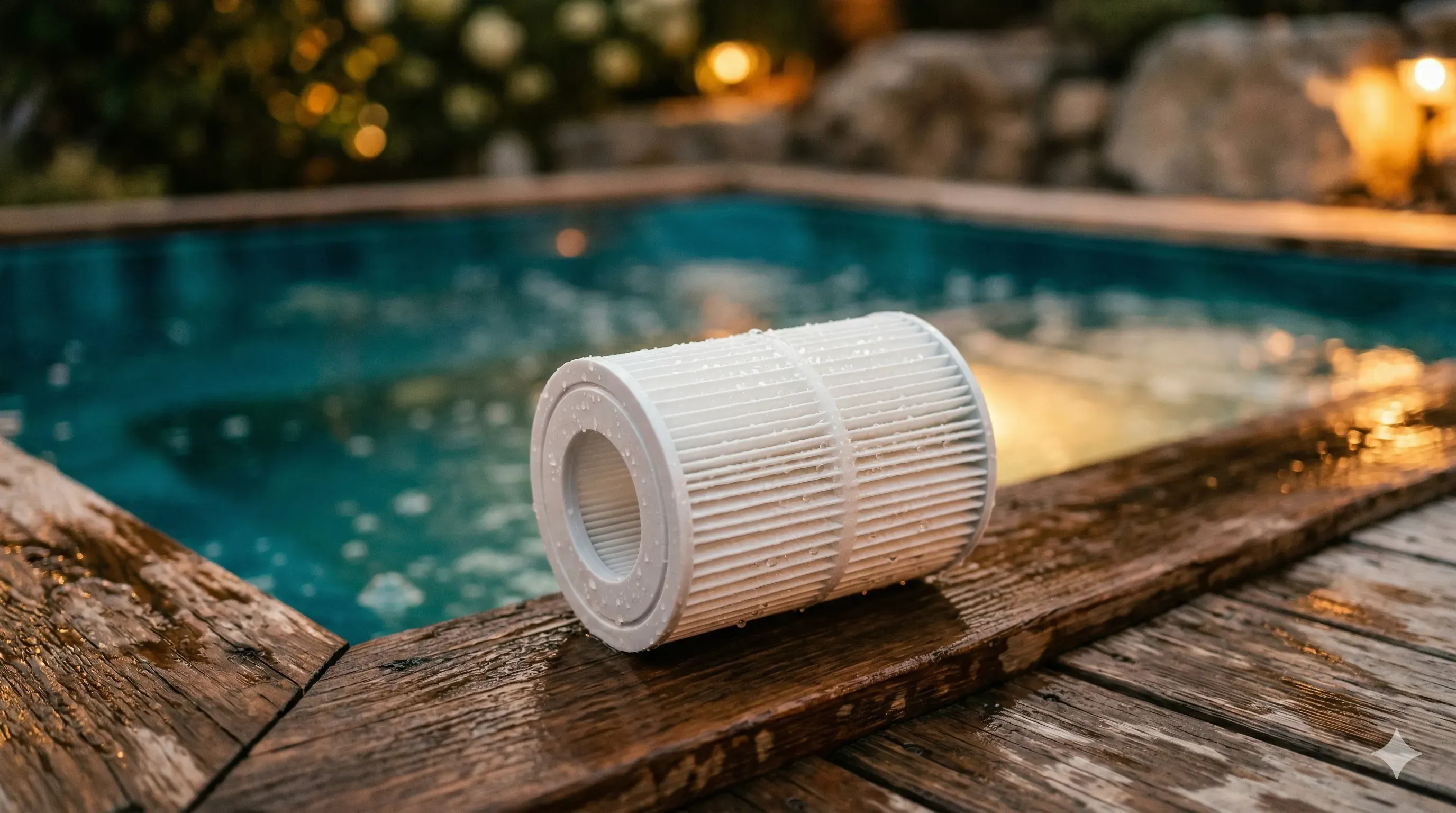
Your filter cycle is the heartbeat of your hot tub. It circulates water through the filter, distributes sanitizer to every pipe and jet, moves water past the heater, and prevents the stagnant conditions where biofilm thrives. Too short and water quality suffers. Too long with the wrong pump and you’re wasting energy.
The right setting depends entirely on what kind of pump your tub has.
Filter cycle recommendations by pump type
| Pump Type | Daily Run Time | Why |
|---|---|---|
| Dedicated circulation pump | 24/7 (designed for this) | Draws only 40 to 150 watts. Provides continuous filtration, heating, and sanitizer distribution. |
| Two-speed pump on low | 8 to 12 hours per day | Low speed draws 200 to 500 watts. Provides good filtration at moderate energy use. |
| Single-speed jet pump | 4 to 8 hours per day | Draws 1,500 to 3,500 watts on the only speed it has. Running it longer than necessary burns energy fast. |
If you have a circulation pump: You already have the ideal setup. Hot Spring, Sundance, Caldera, and many Master Spas models ship with a small circ pump that runs around the clock at about the same wattage as a light bulb. The jet pump only kicks on when you press the jets button. Don’t overthink it. Leave the circ pump running.
If you have a two-speed pump: Your tub uses the same pump for filtration (low speed) and jets (high speed). Set your filter cycles to run 8 to 12 hours total per day on low speed. Most controllers split this into two equal cycles, so F4 on a Balboa panel gives you 4 hours every 12 hours, totaling 8 hours per day.
If you have a single-speed pump: This is the least efficient setup because the pump only runs at full blast. You need enough filtration to keep water clear but every hour costs a lot more energy than a two-speed or circ pump. Start with 4 hours total (two 2-hour cycles) and increase if water quality drops.
Understanding water turnover
Turnover is how long it takes for your entire water volume to pass through the filter once. The industry standard for spas is a 30-minute turnover, meaning all the water should cycle through the filter every half hour during filtration.
The math is simple: tub volume divided by pump flow rate equals minutes per turnover.
A 400-gallon tub with a 25 GPM circ pump turns over every 16 minutes. That same tub with a two-speed pump moving 80 GPM on low turns over in 5 minutes. Even short filter cycles achieve multiple turnovers quickly.
So why run the pump for hours? Turnover is just particle filtration. The longer reasons are sanitizer distribution (chemicals need to reach every pipe, not just the main body), heat maintenance (the heater only works when the pump runs), and biofilm prevention (still water in dead legs breeds bacteria).
How to set your filter cycle
Balboa panels (most common)
Balboa uses F-codes to set filtration duration per 12-hour period:
| Setting | Hours per Cycle | Total Daily Filtration |
|---|---|---|
| F1 | 1 hour | 2 hours |
| F2 | 2 hours (factory default) | 4 hours |
| F4 | 4 hours | 8 hours |
| F6 | 6 hours | 12 hours |
| F8 | 8 hours | 16 hours |
| FC | Continuous | 24 hours |
The first cycle starts 6 minutes after power-up. The second starts 12 hours later. To change the setting, press Temperature Up/Down, then the Lights button while the temperature is flashing. Press Lights repeatedly until you see FLTR, then use the Temperature buttons to adjust.
Gecko panels
Gecko systems use three settings: FS (filter start time), Fd (filter duration, 0 to 24 hours), and FF (filter frequency, 1 to 4 cycles per day). Hold the Light key for 5 seconds to enter the program menu, then use up/down keys to set each value.
Operating modes
Most systems have three modes that affect when the heater runs, which indirectly affects pump run time:
Standard mode maintains your set temperature at all times. The heater kicks the pump on whenever the water drops below the target, even between scheduled filter cycles. This means the pump runs more than just your programmed filter time.
Economy mode only heats during scheduled filter cycles. Water temperature may drop between cycles. Good for regular users on a predictable schedule. If your filter cycle is short (F1 or F2), the tub may never fully reach your set temperature in economy mode.
Sleep mode only heats when temperature drops 10 to 20F below the set point. Best for extended absences like vacations. Not for regular use since the temperature swing is too large for spontaneous soaking.
Seasonal adjustments
Winter: Never reduce filtration in freezing temperatures. Water movement prevents pipes from freezing. Most modern tubs have automatic freeze protection that kicks the pump on when sensors detect near-freezing temps, but maintaining your normal filter cycle adds a safety margin. Energy costs rise 50 to 100% in cold climates because the heater works harder, but that’s the heater, not the pump.
Summer with regular use: If you’re soaking frequently in warm weather, maintain your normal schedule. The higher ambient temperature means less heating but more bacterial growth potential.
Summer with light use: If the tub sits mostly idle in summer, you can experiment with reducing the cycle by 2 hours. If water stays clear and chemistry holds steady for a week, the shorter cycle works. If cloudiness appears, add the time back plus 2 hours.
After heavy use or a party: Run an extended filter cycle for the next 12 to 24 hours. Shock the water immediately after everyone leaves. Rinse the filter the next morning since it just absorbed a heavy organic load.
Signs your filter cycle is too short
Cloudy water is the first sign. Particles that the filter should catch stay suspended because water isn’t passing through the cartridge often enough.
Sanitizer that disappears fast. Without enough circulation, chlorine or bromine concentrates near where you dose it and never reaches dead legs in the plumbing. The readings look inconsistent between tests.
Stale or musty smell. Stagnant water in low-flow plumbing areas breeds bacteria. You’ll notice it when you open the cover.
Temperature fluctuations. The heater only runs when the pump runs. Short cycles mean the water cools a lot between runs, then the heater works harder to recover. Steady pump operation maintains temperature more efficiently than reheating from a drop.
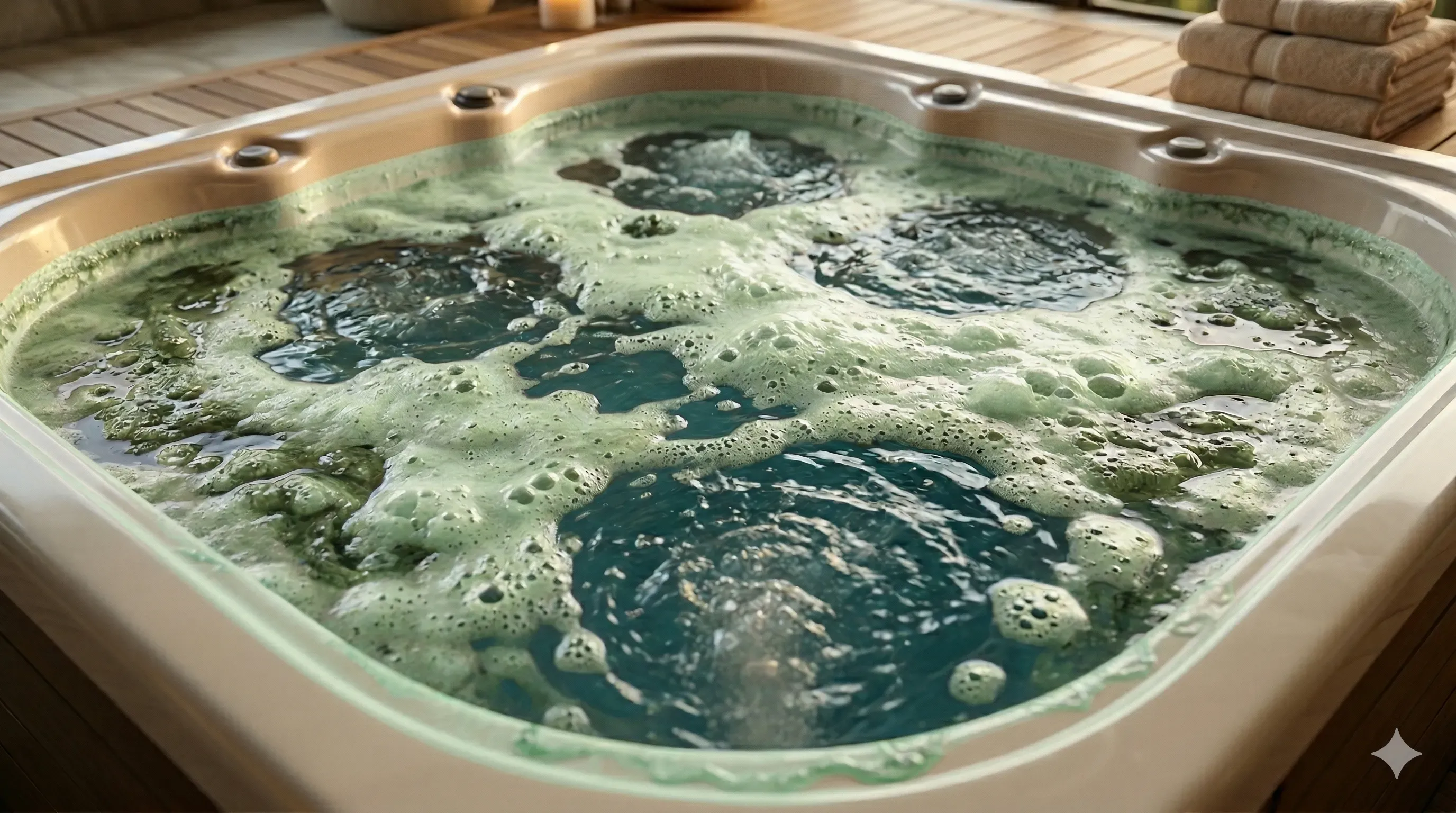
Foam that won’t go away. Organic contaminants like body oils and lotions need to pass through the filter to be removed. Short cycles let them accumulate.
If you experience any of these, add 2 hours to your filter cycle and monitor for a week. That’s cheaper and easier than adding chemicals to compensate for inadequate filtration.
Signs your filter cycle is too long
Your energy bill spikes and water quality was already fine at a shorter setting. If the water was crystal clear at 6 hours per day, running 12 hours isn’t improving anything.
The pump runs hot or makes new noises. Continuous operation wears bearings and seals, especially on jet pumps not designed for 24/7 use. Circ pumps are built for it. Jet pumps are not.
The approach that works best: start with your manufacturer’s default setting, run it for two weeks, and assess water quality. If everything looks good, try reducing by 1 hour and reassess. Find the minimum that keeps your water clear, then add 1 hour as a buffer.
Filter cycles and ozone or UV systems
If your tub has an ozone generator or UV sanitizer, those systems only work when the pump is running. Ozone has a half-life of 15 to 22 minutes in water. UV only treats water flowing past the lamp. Both provide zero protection when the pump is off.
This means your filter cycle determines how many hours per day your ozone or UV system actually operates. A tub with an ozonator and a 4-hour filter cycle gets 4 hours of ozone treatment and 20 hours with no supplemental sanitization. If you have either system, lean toward longer filter cycles to get more value from the equipment.
Neither one replaces your chemical sanitizer, though. You still need chlorine or bromine for residual protection between pump cycles and in parts of the plumbing that ozone and UV can’t reach.
Energy use by pump type
The pump motor is not the energy hog people think. The heater is. A typical hot tub heater draws 4,000 to 6,000 watts, while a circ pump draws 40 to 150 watts and a two-speed pump on low draws 200 to 500 watts.
Despite running 24 hours a day, a 50-watt circ pump uses about 1.2 kWh per day. A two-speed pump running 8 hours on low at 400 watts uses 3.2 kWh per day. A single-speed jet pump running 4 hours at 2,000 watts uses 8 kWh per day.
The biggest energy savings come from cover quality (a good cover prevents up to 70% of heat loss through evaporation), water temperature (each degree lower saves 10 to 17% on heating), and heater duty cycle (steady temperature is more efficient than reheating from a drop). Obsessing over pump run time is usually the wrong place to look for savings.
Your maintenance schedule and filtration
Filter cycles are one piece of the bigger picture. A good filtration routine pairs with regular testing, proper chemical balance, weekly shocking, monthly filter deep cleans, and quarterly drain and refills. Getting the cycle right makes everything else easier because well-circulated, well-filtered water responds predictably to chemical adjustments.
Frequently asked questions
How long should I run my hot tub filter per day? It depends on your pump type. Dedicated circulation pumps are designed to run 24/7 at low wattage. Two-speed pumps should run 8 to 12 hours per day on low speed. Single-speed pumps need 4 to 8 hours. Start with your manufacturer’s default and adjust from there.
Should I leave my hot tub pump running all the time? If your tub has a dedicated circulation pump (Hot Spring, Sundance, Caldera, many Master Spas), yes. These pumps draw 40 to 150 watts and are designed for continuous operation. If you only have a jet pump, running it 24/7 wastes energy and wears it out faster. Use timed filter cycles instead.
What does F2 or F4 mean on my hot tub panel? On Balboa control systems, F2 means 2 hours of filtration per 12 hour period. F4 means 4 hours, F6 means 6 hours, and FC means continuous filtration. Two cycles run per day, so F4 gives you 8 total hours of filtration daily. The default on most systems is F2.
Does running the filter cycle use a lot of electricity? A circulation pump running 24/7 uses about 1 to 3.6 kWh per day. A two-speed pump on low running 8 hours uses about 2 to 4 kWh per day. The heater is the real energy draw at 4,000 to 6,000 watts. The pump motor accounts for a fraction of your total hot tub energy use.
Should I change my filter cycle for winter? Never reduce filtration in freezing temperatures. Water movement prevents pipe freezing. Most modern tubs have automatic freeze protection, but running a standard filter cycle provides an extra safety margin. In summer with light use, you can experiment with shorter cycles.
Why is my hot tub water cloudy even though chemicals are balanced? Insufficient filtration is one of the most common causes. If your filter cycle is too short, particles stay suspended and organics accumulate faster than the filter can remove them. Try adding 2 hours to your cycle and check again in 48 hours. Also make sure the filter cartridge isn’t clogged or past its replacement date.