Hot Tub Maintenance for Beginners: A Simple Guide
New hot tub? Here's your simple maintenance routine, the common mistakes to avoid, and how little time it actually takes.
If your hot tub came with a manual thicker than the tub itself, you’re not alone. Most new owners crack open that binder, see phrases like “total dissolved solids” and “calcium hardness titration,” and quietly close it again.
Here’s the thing nobody tells you upfront: hot tub maintenance is genuinely simple once you strip away the jargon and the pool store upselling. The weekly commitment runs about 15 to 20 minutes. You don’t need a chemistry degree. You don’t need a shelf full of specialty products. You need a few basics, a consistent routine, and the confidence to know that a slightly off reading isn’t an emergency.
Your routine, broken down by frequency
Hot tub care comes down to keeping the water sanitized, keeping the chemistry balanced, and keeping the tub clean. Everything below supports one of those goals.
Before every soak (30 seconds)
Glance at the water. Is it clear? Good, get in. Is it cloudy, foamy, or discolored? Don’t get in. Test first, fix what’s off, then enjoy it.
Check the temperature readout. If it’s way below your set point, something might be up with the heater or circulation pump.
Thirty seconds. Not a chore, just a habit.
Two to three times per week (2 to 3 minutes each)
This is where the real work lives, and it barely qualifies as work.
Test the water. Dip a test strip, wait 15 seconds, compare the colors. You’re looking at four numbers: free chlorine or bromine (3 to 5 ppm), pH (7.4 to 7.6), total alkalinity (80 to 120 ppm), and calcium hardness (150 to 250 ppm, though you only need to check this monthly).
Add sanitizer. Based on your reading, sprinkle dichlor granules over the water with the jets running. A maintenance dose is about 1/4 to 1/2 teaspoon per 100 gallons. That’s less than you’d put on scrambled eggs.
Adjust pH if needed. pH drifts in hot tubs. It almost always drifts up because hot water releases CO2. Small corrections every few days are normal and much easier than one big correction after a week of neglect. If you’re wrestling with stubborn pH drift, alkalinity is usually the culprit.
That’s the core routine. Two to three minutes, three times a week.
Weekly (10 to 15 minutes)
Shock the tub. Even when the water looks perfect, organic buildup from body oils, sweat, lotions, and dead skin accumulates all week. Shocking oxidizes those compounds so they don’t degrade your water quality. Non-chlorine shock (MPS) at about 1 ounce per 250 gallons handles a normal week. Use dichlor shock after parties or heavy use.
After shocking, crack the cover open for 20 to 30 minutes. Chemical off-gases get trapped under a sealed cover and destroy the vinyl from underneath. Just prop it up a few inches and let it breathe.
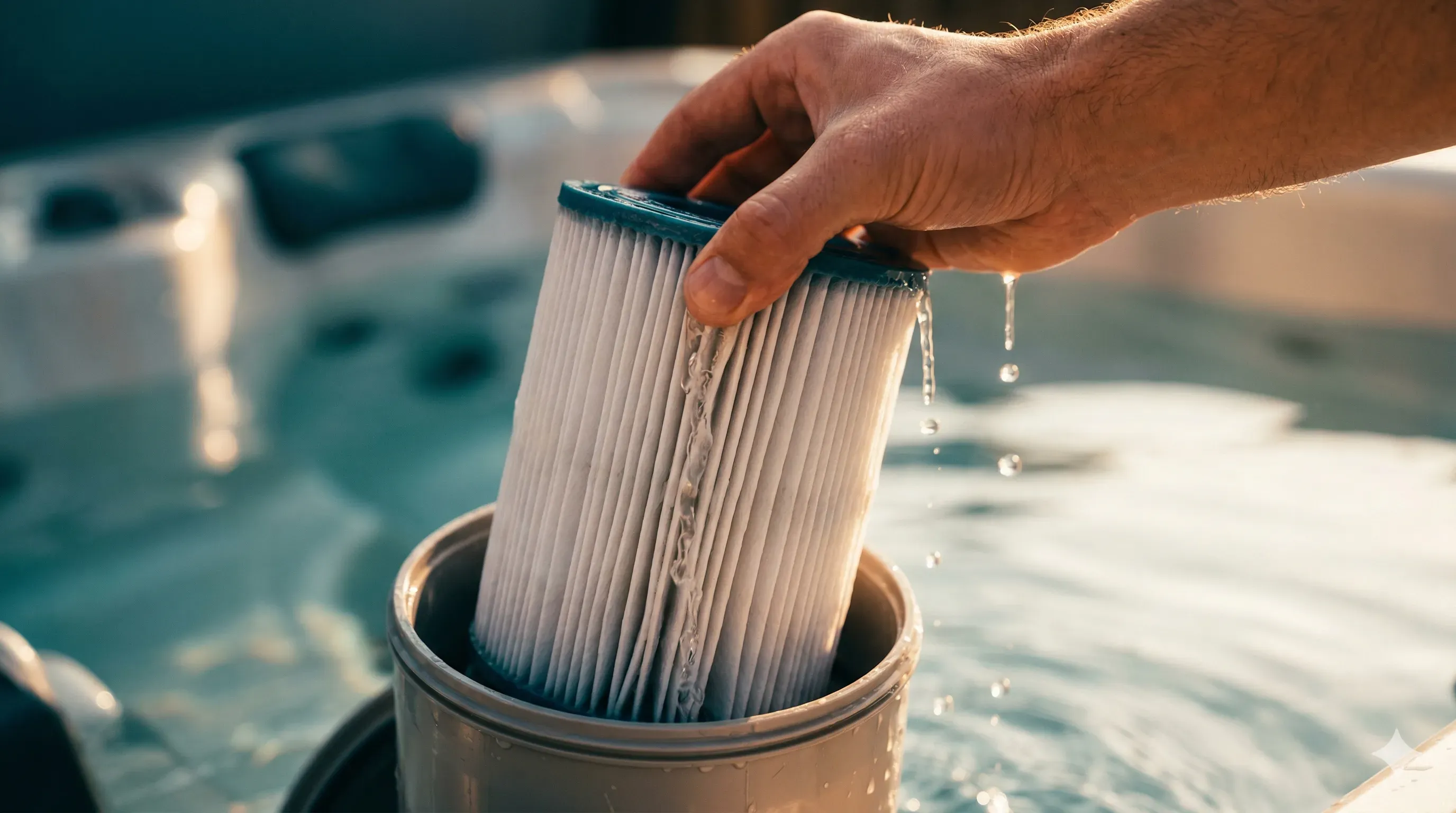
Rinse the filter. Pull the cartridge, spray it with a garden hose, work between the pleats. Five minutes. The difference in water flow and clarity is immediate.
Wipe the waterline. That oily ring at the water’s surface builds up from body oils. A quick pass with a spa-safe cloth keeps it from hardening into something you’ll need to scrub later.
Monthly (20 to 30 minutes)
Deep clean the filter. A weekly rinse gets the surface debris. Once a month, soak the cartridge overnight in a filter cleaning solution to dissolve the oils and minerals embedded in the fabric. If you have a spare cartridge, swap it in while the other soaks.
Test calcium hardness. Target: 150 to 250 ppm. Unlike pH, calcium doesn’t move fast. But it drifts as water evaporates and you top off. Hard water areas need closer attention because excess calcium leads to scale buildup that gets harder to remove the longer you wait.
Clean the cover underside. Chemical off-gases from the water collect on the bottom of your cover. A wipe down with a damp cloth prevents mildew and vinyl deterioration.
Every 3 to 4 months (2 to 3 hours)
Full drain, clean, and refill. The big reset.
Every chemical you add raises total dissolved solids over time. After a few months, the water gets sluggish and harder to balance. A fresh fill fixes everything.
Use the drain formula: gallons divided by daily bathers divided by 3 = days between drains. A 400 gallon tub with 2 daily bathers: 400 / 2 / 3 = roughly every 67 days. If chemistry starts fighting you before the schedule says it’s time, trust the water over the calendar.
Before draining, flush the plumbing with a pipe cleaner product to strip out biofilm. After refilling, follow the startup chemical sequence: alkalinity first, then pH, then calcium if needed, then sanitizer, then shock.
Replace the filter every 12 to 18 months, or sooner if cleaning stops restoring good flow.
Your first week is different
The first week after a fresh fill, whether it’s a brand new tub or a quarterly refill, runs differently from the ongoing routine. Expect more testing, more adjustments, and a few head scratching moments. Normal.
If it’s a brand new tub: Run a plumbing purge before your first fill. New tubs sit in warehouses and showrooms with stagnant water, manufacturing residue, and sometimes antifreeze in the lines. A purge flushes all of that out before clean water goes in.
Adjust chemistry in order. Alkalinity first (80 to 120 ppm), then pH (7.4 to 7.6), then calcium hardness (150 to 250 ppm), then sanitizer, then shock. Wait 15 to 20 minutes between each chemical addition. Dumping everything in at once causes reactions that make your readings unreliable.
Test daily for the first week. Your water is finding its equilibrium. pH will drift more than usual. Sanitizer will get consumed faster as the tub burns through initial contaminants. By day seven or eight, things settle and you can drop back to two to three tests per week.
Don’t panic over fluctuations during this period. Just keep testing, keep nudging, and let it stabilize.
The mistakes that cost beginners money
Most beginner problems aren’t chemistry problems. They’re sequence and patience problems.
Adjusting pH before alkalinity. Alkalinity is the foundation. It acts as a buffer that determines how stable your pH stays. If you chase pH while alkalinity is out of range, pH will snap right back within a day. Get alkalinity to 80 to 120 ppm first. Then pH corrections will actually hold.
Adding all chemicals at once is tempting but counterproductive. Each chemical changes the water, and those changes interact. Throwing sanitizer, pH decreaser, and shock into the tub at the same time creates a mess where nothing reads accurately. Add one product, run the jets for 15 to 20 minutes, retest, then add the next.
New tub owners also skip the plumbing purge. That fresh water you just filled? It’s now circulating through lines that held factory residue and stagnant water for months. You’ll wonder why the chemistry won’t balance and why the water has a funky smell. A 20 minute purge before the first fill prevents all of it.
Then there’s the pH panic. pH in a hot tub drifts upward. That’s just physics. Hot water sheds CO2, and CO2 loss raises pH. It doesn’t mean something is broken. Small adjustments two to three times a week are part of the deal, not a sign that you’re doing it wrong.
Neglecting the filter is another common one. A clogged filter can’t be compensated for with more chemicals. Particles recirculate, water clarity drops, and sanitizer gets consumed fighting debris instead of bacteria. Weekly rinse. Monthly deep soak. Replace on schedule.
Using trichlor instead of dichlor. Trichlor is made for pools. It’s highly acidic, dissolves slowly, and will crash your pH while building up cyanuric acid to levels that disable your sanitizer. Dichlor is what you want for hot tubs. It dissolves fast, has a nearly neutral pH, and is designed for the smaller water volumes of a spa.
How long it actually takes
One of the biggest fears new owners have is that they’ve signed up for a second job. Real numbers:
| Task | Frequency | Time |
|---|---|---|
| Quick visual check | Before each soak | 30 seconds |
| Test and dose sanitizer/pH | 2 to 3 times per week | 2 to 3 minutes |
| Shock, filter rinse, waterline wipe | Weekly | 10 to 15 minutes |
| Deep filter clean, calcium test, cover care | Monthly | 20 to 30 minutes |
| Drain, clean, refill, rebalance | Every 3 to 4 months | 2 to 3 hours |
Total weekly time: about 15 to 20 minutes. Testing three times (6 to 9 minutes) plus the weekly shock and filter rinse (10 to 15 minutes). Some weeks it’s even less.
An experienced owner summed it up: 10 minutes once per week for chemicals, 20 minutes once per month for a deep filter clean, 30 minutes every 90 days for a drain and refill. The rest is autopilot.
One more thing worth mentioning: don’t turn off the hot tub to save energy between uses. Reheating from cold takes more energy than maintaining temperature. Leave it running, keep the cover on, and let the circulation pump do its job.
When to drain and start fresh
Sometimes chemistry fights back and no amount of adjusting will fix it. That’s the water telling you it’s done.
Chemistry won’t stabilize. You’re adding pH decreaser every day, sanitizer disappears overnight, and alkalinity won’t hold. When total dissolved solids build past a tipping point, the water stops responding to corrections the way it should.
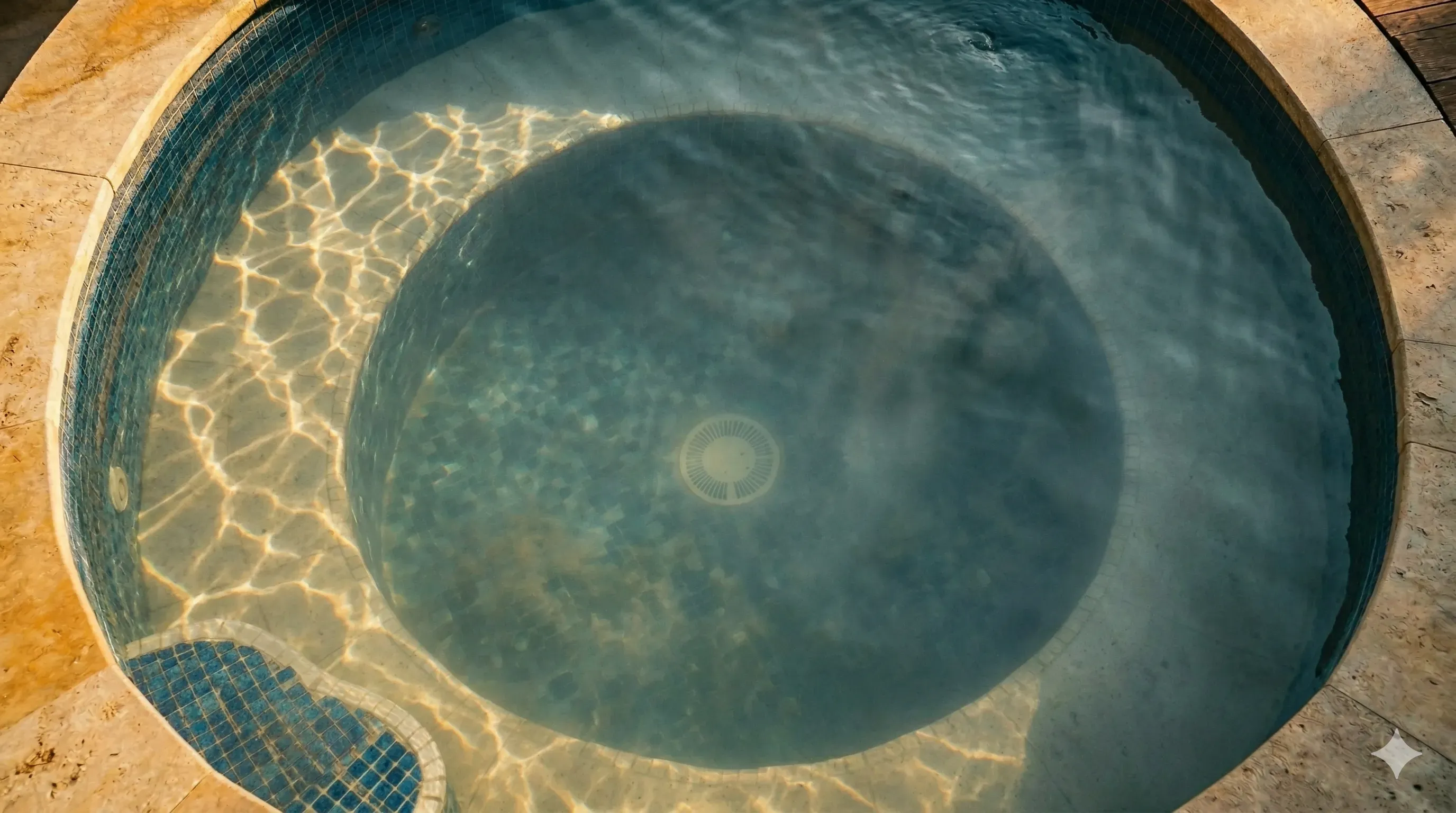
The water looks dull. Test strips say everything is fine, but the water has a grayish tint and doesn’t sparkle the way fresh water does. That’s dissolved organic waste that oxidation alone can’t remove.
Foam that keeps coming back after shocking is another signal. It means organic contamination. If shocking and the usual hygiene habits don’t resolve it, the water has accumulated more than it can handle.
Don’t fight dying water. Drain it, flush the plumbing, refill, and rebalance. A fresh start takes a couple of hours and resets the clock on months of buildup. That’s what the quarterly drain schedule is for.
Keep it simple
Two to four people in a 400 gallon hot tub is equivalent in bather load to a party in a swimming pool. The water volume is tiny relative to what you’re putting into it, which is why chemistry swings faster and more aggressively than it ever would in a pool.
But that same small volume is what makes hot tub care manageable. You’re dosing in teaspoons and tablespoons. Corrections take minutes, not hours. And because the feedback loop is fast, you learn quickly what your tub needs and when.
The owners who struggle are the ones trying to memorize everything at once. Don’t do that. Start with the two to three times per week test and dose routine. Once that feels automatic, layer in the weekly shock and filter rinse. The monthly and quarterly tasks come naturally after that.
Your tub doesn’t need perfection. It needs consistency. Fifteen minutes a week of honest attention keeps the water clean, keeps the equipment running, and keeps you soaking instead of troubleshooting.
Frequently asked questions
How hard is it to maintain a hot tub? Not hard at all once you settle into a routine. The weekly time commitment runs about 15 to 20 minutes total. Most sessions are just dipping a test strip, sprinkling some granules, and moving on with your day. The learning curve is steep for about two weeks, then it becomes second nature.
What chemicals do I need for a hot tub as a beginner? A sanitizer (dichlor granules for chlorine or bromine tablets), pH decreaser (sodium bisulfate), alkalinity increaser (baking soda), non-chlorine shock (MPS), and test strips. That covers 95% of what you’ll ever need. Check the full beginner chemical list for exact details.
How often do you put chemicals in a hot tub? Sanitizer gets added two to three times per week after testing. Shock goes in once a week. pH and alkalinity adjustments happen as needed based on your test results, usually once or twice a week. Each dosing session takes two to three minutes.
Can I just use bromine instead of chlorine in my hot tub? Absolutely. Bromine works well in hot water, stays stable at higher temperatures, and many people prefer the feel of it on their skin. Keep it between 3 to 5 ppm. The maintenance routine is nearly identical whether you choose bromine or chlorine.
How do I know when to drain my hot tub? Every three to four months under normal use. The rough formula: divide your tub’s gallons by average daily bathers, then divide by 3. That gives you the number of days between drains. If chemistry starts resisting your corrections before the schedule says it’s time, or the water has that dull grayish look even when readings are normal, drain early and start fresh.
What happens if I skip hot tub maintenance for a week? Sanitizer will drop to zero within a day or two at spa temperatures, and bacteria start multiplying fast. After a full week, you’ll likely see cloudy water, a chemical smell, and possibly biofilm forming in the plumbing. One skipped week isn’t the end of the world, but you’ll need a heavy shock dose and thorough testing to catch back up.