How to Flush Your Hot Tub Plumbing (and Why You Should)
Biofilm lives inside your pipes where sanitizer can't reach. This guide covers how to flush it out, which product to use, and what that gunk actually means.
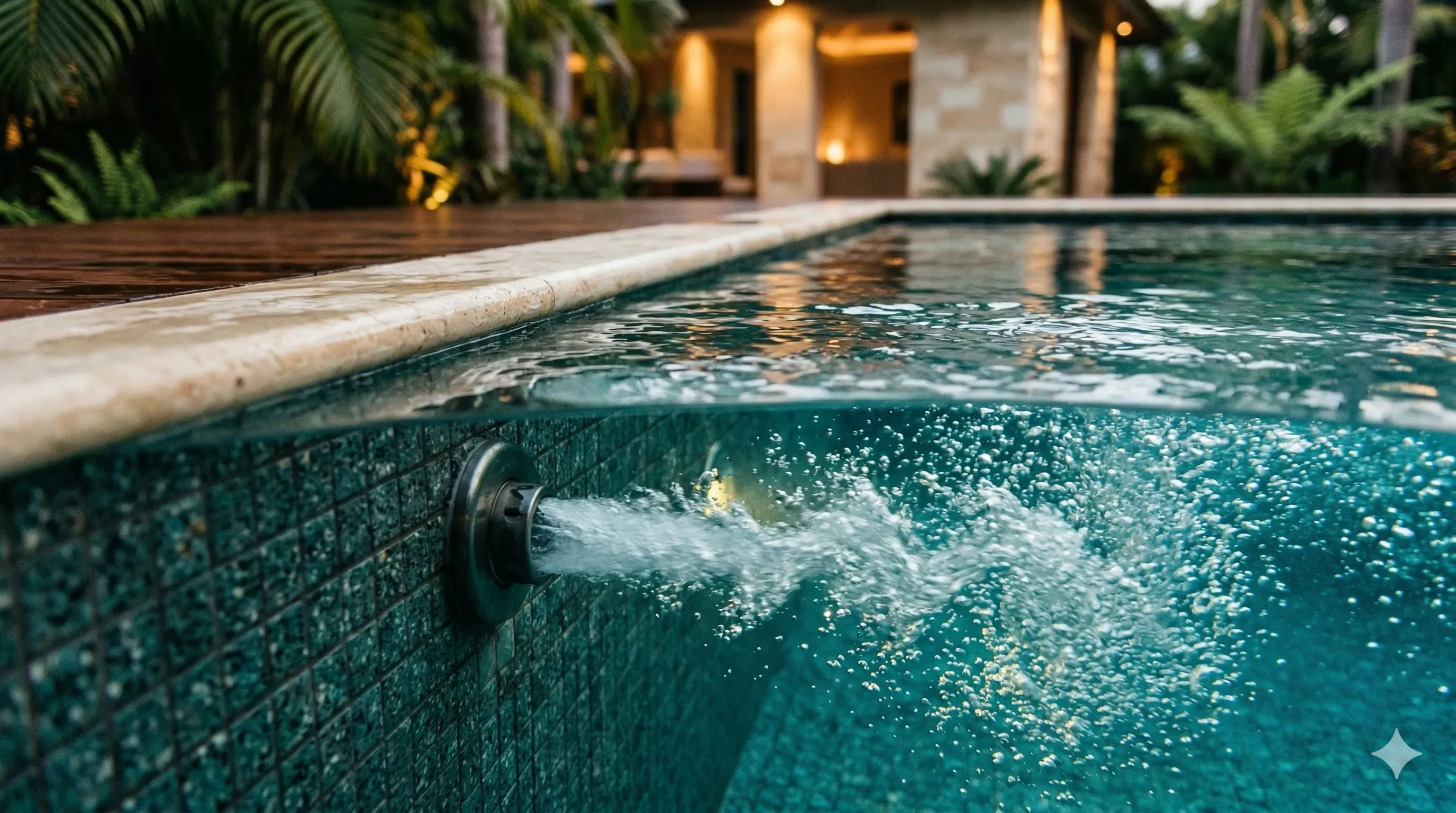
There’s a part of your hot tub you never see and can never scrub: the inside of the plumbing. Every pipe, manifold, jet body, and pump housing has an interior surface coated in a thin layer of biofilm that your sanitizer can’t touch. It builds up from day one and gets thicker over time, fed by the body oils, lotions, dead skin, and cosmetics that pass through the system with every soak.
Draining your tub doesn’t remove it. The water leaves but the biofilm clings to the pipe walls. When you refill, the fresh water flows through contaminated plumbing and picks up bacteria before it even reaches the tub. That’s why some owners get cloudy water or chlorine demand problems within days of a fresh fill.
A plumbing flush breaks that cycle. You circulate a cleaning product through the internal plumbing that strips the biofilm from the pipe walls and pushes it into the open water where you can see it, skim it, and drain it away.
When to flush
Before every drain and refill. Honestly, it’s the most important habit in hot tub maintenance that most people never learn. Every 3 to 4 months when you change water, flush the lines first. If you’ve been draining without flushing, you’ve been refilling into contaminated pipes every time.
When you get a new tub. Hot tubs are filled at the factory for leak testing, then drained for shipping. The plumbing is never fully dried. That residual moisture, sitting in dark warm pipes for weeks or months during transit and storage, breeds biofilm before you ever get in. Forum members have emphasized for over 15 years that 100% of brand new hot tubs are contaminated. The first thing you should do with a new tub is flush it.
When you buy a used tub. You have no idea what’s inside those pipes. Years of someone else’s body products, potentially months of neglect, possibly biofilm species you don’t want to think about. Flush it thoroughly. Plan for multiple rounds.
After a contamination event. If someone got hot tub rash, if the water went green or foul, if the tub sat unused for months, or if chlorine demand suddenly spiked and won’t come down, the plumbing is the likely source. Flush before trying to treat the water chemically.
Which product to use
Ahh-Some is the recommendation. Not because of marketing, but because of documented head-to-head testing across multiple independent sources.
In a controlled comparison on Trouble Free Pool, Oh Yuk released “a very small amount of light brown sticky material.” Ahh-Some then released roughly 10 times more material from the same tub. In the rvdoug.com purge shootout, Ahh-Some cleaned up residue that Bio-Ouster had left behind. In a Pool Spa Forum five-product comparison, Ahh-Some consistently pulled out the most material across multiple rounds.
The gel formula is what makes the difference. Liquid flush products dilute immediately in 300 to 500 gallons of water, reducing their concentration to levels that can’t penetrate biofilm’s protective lipid layer. Ahh-Some’s gel maintains higher concentration as it circulates, breaks through the lipid membrane, and lets water pressure push the dislodged material out. The biofilm floats to the surface as visible foam and gunk within minutes.
Dosing: 1 teaspoon per 125 gallons, or about 3/4 teaspoon per 100 gallons. For a 400-gallon tub, that’s roughly 3 teaspoons. You can run up to four 30-minute cycles on a single dose.
Other options ranked by effectiveness based on forum testing: SeaKlear System Flush (decent middle ground), Leisure Time Jet Clean (maintenance grade, not aggressive on biofilm), Natural Chemistry Spa Purge (enzyme-based, requires 5+ hour soak time, mixed results).
Skip vinegar flushes. Vinegar dissolves mineral scale but can’t penetrate biofilm’s lipid matrix. Skip dishwasher detergent. It’s an alkaline degreaser that handles oils and soap scum but doesn’t attack the biological structure of established biofilm.
Step by step flush procedure
-
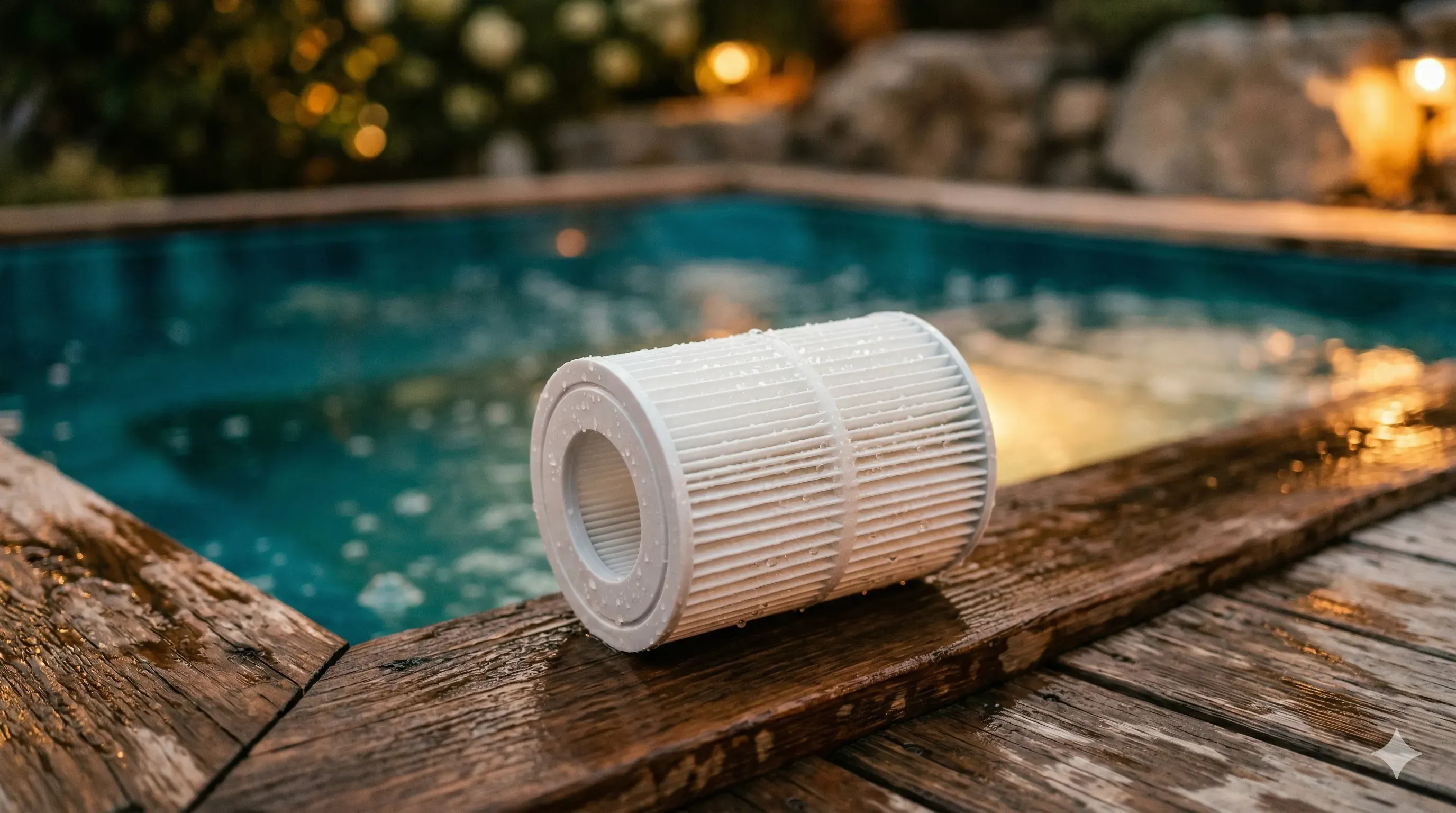
Remove all filters. Take out cartridge filters and set them aside for separate cleaning. Some owners place filters in the tub during the flush so the product cleans them too, but this can clog them with released gunk.
-
Open every jet, valve, and water feature. Turn all diverter valves to center position. Open air controls. Make sure every water path is open so the product reaches all plumbing lines, including the ones that don’t run during normal filtration.
-
Add the flush product to warm water. The existing water should still be in the tub, ideally at 95F or above. Warmer water helps but isn’t required. Add Ahh-Some directly to the water.
-
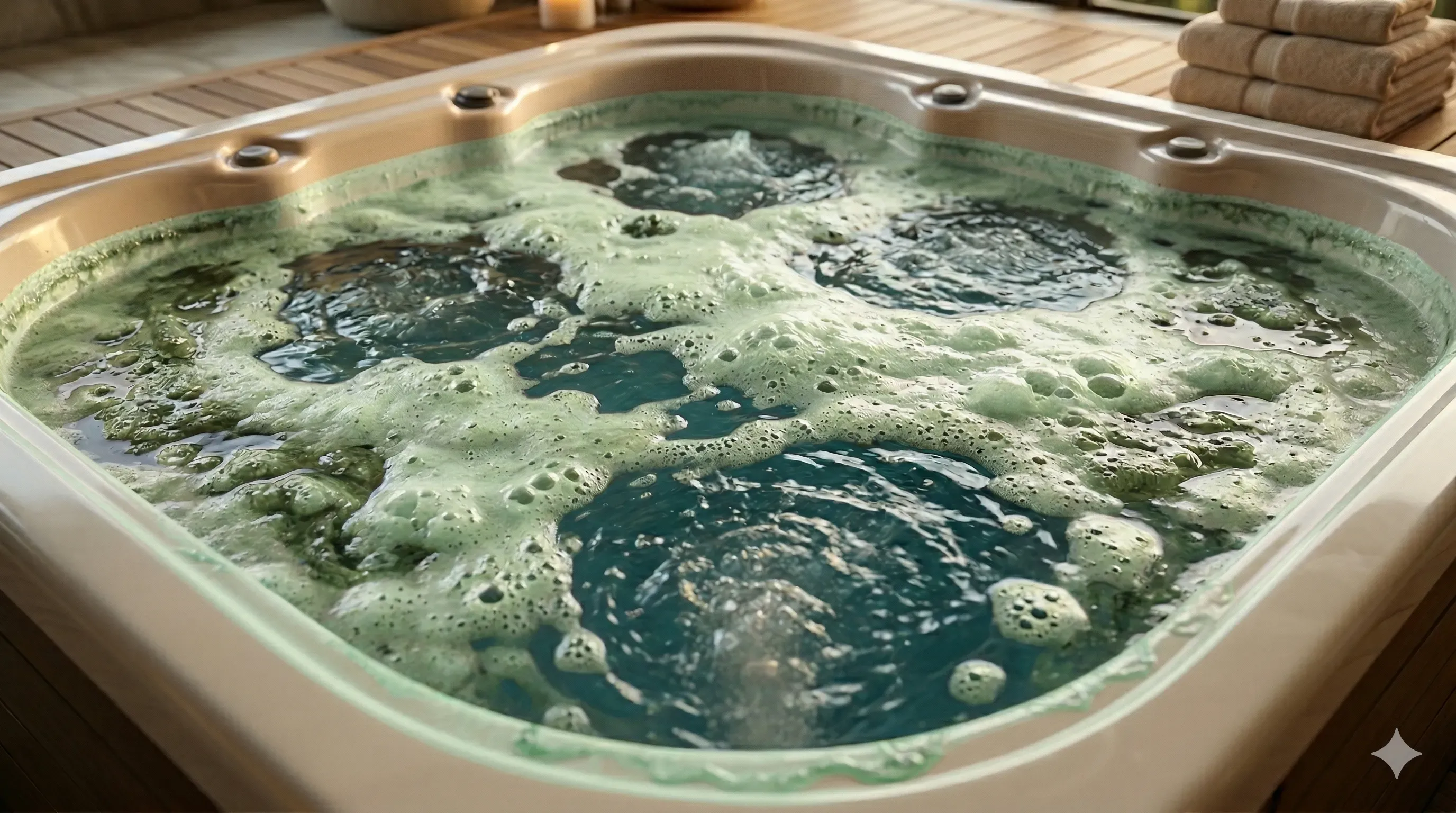
Run jets on high for 20 to 30 minutes. Turn on all pumps. If your tub has a blower, run it briefly to flush the air channel system. You’ll see foam appear within minutes. Brown, green, or white gunk will rise to the surface. Wipe away material that clings to the shell at the waterline before it dries. The polysaccharides in biofilm become extremely sticky when dry.
-
Assess whether you need another round. For tubs that are flushed regularly, one 30-minute cycle is usually enough. For first-time flushes or neglected tubs, run a second cycle. If significant gunk came out on round two, run a third. A tub that has never been flushed might need 3 to 4 rounds.
-
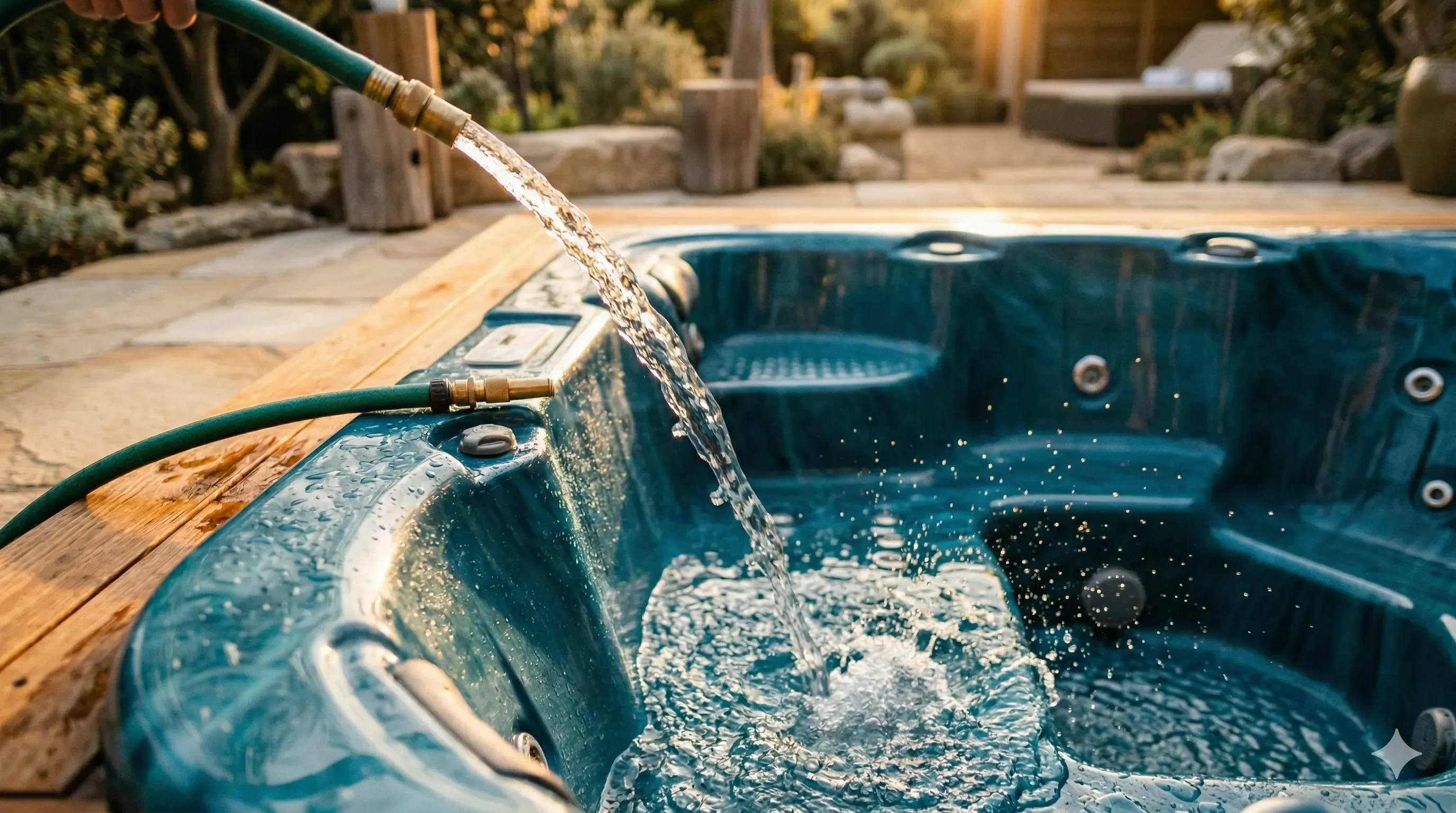
Drain completely. Use a submersible pump or the tub’s drain valve. Hose the interior walls while draining to rinse loose debris.
-
Wipe down the shell. Clean the entire interior, especially the waterline where gunk accumulated. Pay attention to jet housings and crevices. A 50/50 vinegar and water spray works well for the shell surface.
-
Optional rinse fill. Fill with a few inches of clean water, run jets for 2 to 3 minutes to rinse residual product from the plumbing, then drain again. This prevents foaming when you do the real refill. Not strictly necessary but recommended for first-time flushes.
-
Refill and balance immediately. Replace filters. Fill to the proper water line. Balance chemistry the same day. Don’t leave fresh, unsanitized water sitting in the plumbing. Biofilm regrowth is faster than initial colonization because residual bacteria on pipe walls are already adapted and skip the pioneer phase.
What the gunk tells you
The stuff that comes out of your pipes during a flush is not random. The color, texture, and amount all mean something.
Brown or dark sludge. The classic biofilm signature. A colony of bacteria, body oils, dead skin cells, and organic waste bound together in a protective polysaccharide matrix. The darker it is, the more established the colony. This is what you’re doing the flush to remove.
White flakes. Could be biofilm or could be calcium scale. To tell the difference: put some flakes in a cup of water with half a teaspoon of bleach. If they dissolve in 30 minutes, it’s biofilm. If they stay solid, it’s calcium. Both can come out during a flush, but they require different ongoing prevention. Biofilm prevention is sanitizer and flushing. Calcium prevention is water balance.
Oily film on the surface. Accumulated body oils, lotions, sunscreen, and hair products that coated the interior of your pipes over months. This is organic waste that feeds biofilm growth.
Thick foam that won’t stop. Normal during a flush. The surfactant in the product creates foam as it works. Excessive foam indicates a heavy organic load. If foam persists after draining and refilling, do the optional rinse fill step.
Green-tinted material. Usually indicates algae-containing biofilm or copper deposits being released. If your water has been turning green, this confirms the plumbing was the source.
Nothing comes out. Congratulations. Either your plumbing is genuinely clean (meaning you’ve been flushing regularly and maintaining good chemistry), or the product wasn’t aggressive enough. If you used something other than Ahh-Some and got nothing, try Ahh-Some before concluding the pipes are clean.
Why draining alone doesn’t work
When you drain a hot tub, only the water leaves. Biofilm adheres to pipe surfaces through molecular bonds. The EPS matrix (the protective slime shell around the bacteria) clings to the pipe walls like paint on a wall.
The damp, dark, warm interior of a drained tub’s plumbing is actually an ideal biofilm incubator. There’s moisture, no UV light, residual warmth, and no chemical intervention. Research shows that biofilm-embedded bacteria require 10 to 600 times more chlorine to kill than free-floating bacteria. If you’re not flushing before you drain, you’re leaving the problem in place and introducing fresh water into a contaminated system every time.
That explains why people hit the same problems after every drain and refill. Chlorine demand that spikes within days of a fresh fill. Cloudy water that won’t clear despite perfect chemistry. Foam that returns no matter how diligently people shower before soaking. The chemistry in the bulk water is fine. The plumbing is the reservoir.
Building flushing into your routine
Add it to your maintenance schedule as a quarterly task:
- Flush the plumbing (Ahh-Some, 20 to 30 min with jets on high)
- Drain completely
- Wipe down the shell and jets
- Clean or replace the filter
- Refill with fresh water (use a pre-filter if you have metals in your source water)
- Balance chemistry the same day
- Add sanitizer within hours
This cycle keeps biofilm from ever getting established enough to cause problems. Owners who flush regularly say the difference is night and day. Chlorine demand drops, water stays clearer between fills, and filters last way longer between cleanings.
Fair warning: the first flush is genuinely disgusting. You’ll wonder how you ever sat in that water. Second time around, much less comes out. By the third or fourth flush, the water barely changes color and you can stop feeling queasy about your plumbing.
Frequently asked questions
How often should I flush my hot tub plumbing? Before every drain and refill, which is usually every 3 to 4 months. Also flush when buying a used tub, when a new tub arrives from the factory, after a contamination event like a rash outbreak, or if the tub has been sitting unused with water in it.
What is the best hot tub plumbing flush product? Ahh-Some is the consensus winner across every independent comparison and forum community. Its gel formula penetrates biofilm’s protective lipid layer, which liquid flush products struggle to breach. In head-to-head testing, Ahh-Some pulled out 10 times more material than Oh Yuk from the same tub.
Do I need to flush a brand new hot tub? Yes. Tubs are wet-tested at the factory, and that water sits in the plumbing during weeks or months of shipping and storage. By the time you receive it, biofilm has already started forming inside the pipes. Multiple forum threads document new owners shocked by what comes out of a supposedly clean tub.
Can I use vinegar to flush my hot tub pipes? No. Vinegar dissolves mineral scale on surfaces but cannot penetrate or remove biofilm from inside plumbing. Biofilm’s protective slime layer is a lipid matrix that vinegar can’t break through. Vinegar is fine for cleaning the shell after draining, but it’s not a substitute for a surfactant-based flush product.
What is the brown stuff that comes out of my hot tub jets? Brown gunk is biofilm: a colony of bacteria, body oils, dead skin cells, and organic waste encased in a protective slime matrix. It has been building up inside your plumbing on surfaces you can’t see or reach. The brown color comes from the organic material. Darker and thicker gunk means more established biofilm.
Can I flush my hot tub plumbing without draining? You can run a flush product without immediately draining, but the contaminated water with all the released biofilm must be drained afterward. The flush dislodges the gunk from inside the pipes into the water. If you don’t drain, you’re soaking in everything that just came out of your plumbing.