How to Remove and Prevent Hot Tub Scale Buildup
That crusty white buildup could be calcium scale, biofilm, or something else entirely. Run the bleach test, identify the cause, and fix it for good.
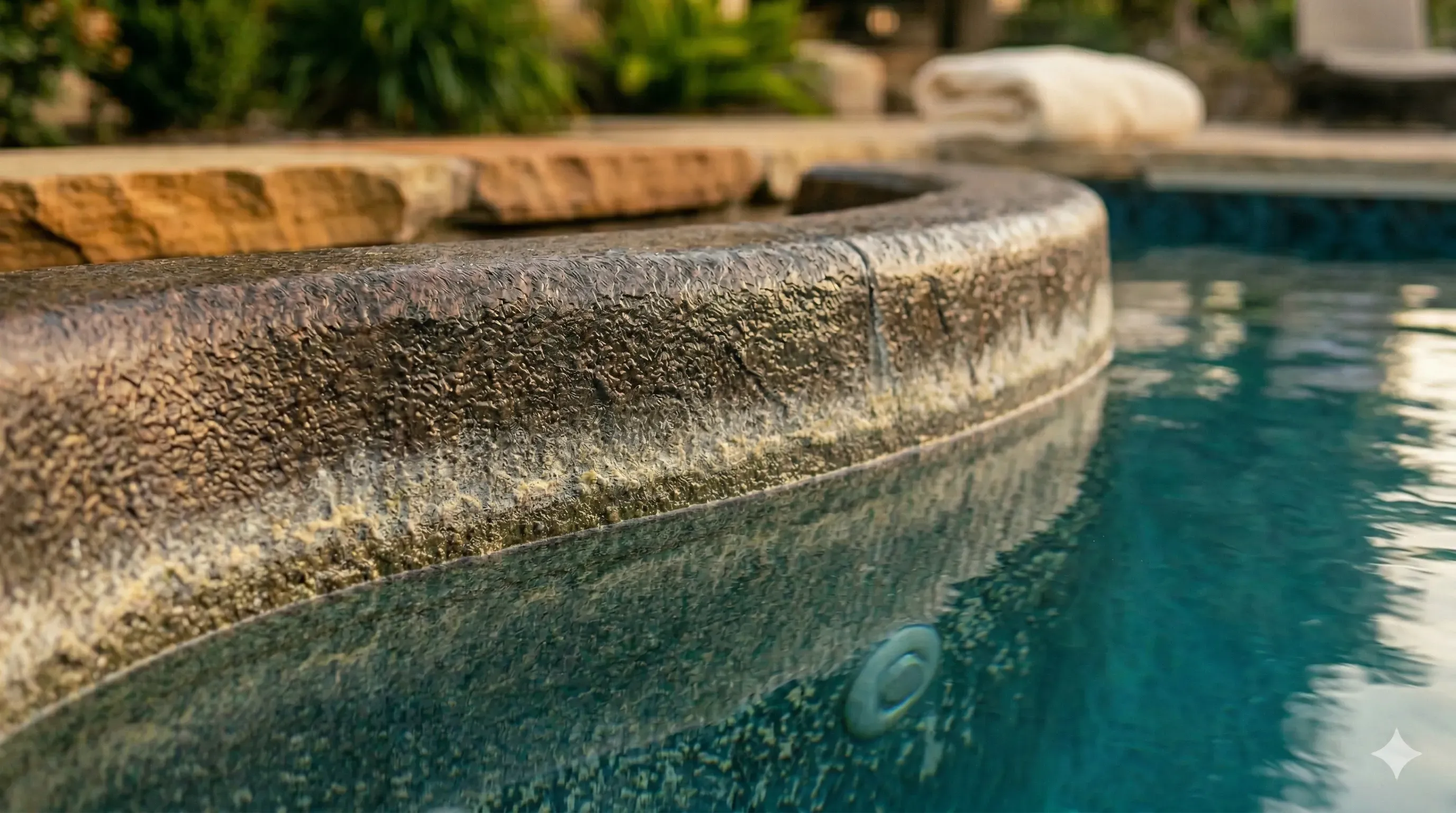
You run your hand along the shell and it feels like sandpaper. Or you notice a white crust forming along the waterline that won’t wipe off. Or white flakes start shooting out of the jets. These look similar but they’re three separate problems, and each one needs a different fix.
Most guides call everything white “scale” and reach for the vinegar bottle. Sometimes that works. Sometimes you’re wasting vinegar on biofilm, which needs a completely different approach.
Step 1: Figure out what you’re looking at
White deposits in a hot tub fall into three categories. The treatment for each one is different, so identification comes first.
Calcium scale (hard mineral deposits on surfaces)
What it looks like: White, chalky, crusty deposits that build up gradually on the shell, waterline, jets, and heater element. In early stages it looks like a white film. In advanced stages the surface feels like sandpaper and the buildup can be thick enough to see from across the room. One forum user reported scale covering 45% of their spa interior after seven years of neglect.
Where it forms first: The heater element, because it’s the hottest surface in the system. Scale then appears on the waterline (where evaporation concentrates minerals), jet bodies, and eventually the shell surface and interior plumbing.
Root cause: High calcium hardness (above 250 ppm) combined with high pH (above 7.8) and hot water. Calcium carbonate has inverse solubility: unlike most minerals, it becomes less soluble as temperature rises. Your heater surface is hotter than the surrounding water, which is why scale starts there.
Biofilm (white water mold)
Biofilm shows up as soft, sometimes translucent white flakes floating in the water or blowing out of jets. You’ll often catch a musty smell too, and the water might feel slippery or have oily bubbles. The flakes are tissue-like, not gritty. That’s your first clue it isn’t mineral scale.
Biofilm is a colony of bacteria living inside a protective slime layer, usually in the plumbing where sanitizer can’t reach it. When chunks break off, they appear as white flakes. Low sanitizer levels, infrequent shocking, and long periods of disuse allow it to establish.
Calcium flakes (free-floating mineral particles)
People confuse these with biofilm, but the feel is completely different. Small white or grayish particles floating in the water or settling on the bottom. Rub them between your fingers and they’re gritty. They crumble into powder.
These are old scale that formed inside the plumbing or on the heater and broke loose. This happens when scale deposits become thick enough to fracture, or when pH shifts dissolve part of the buildup. Salt chlorine generators with reverse-polarity cells can also shed calcium flakes when they clean themselves.
The bleach test (30 seconds, definitive answer)
Collect a cup of spa water with some of the flakes. Add half a teaspoon of bleach. Wait 30 minutes.
- Flakes dissolve → biofilm. Purge the plumbing and shock heavily.
- Flakes remain → calcium. Follow the scale removal steps below.
If you want a second confirmation, drop a small amount of muriatic acid or white vinegar directly on the remaining flakes. Calcium carbonate will fizz. Biofilm won’t react.
Removing calcium scale
Light scale (white film, slight roughness)
You can handle this without draining.
In-water method: Lower pH to 7.0 to 7.2 (but never below 7.0) by adding sodium bisulfate. The slightly acidic water will gradually dissolve light calcium deposits over several days. Turn off the heater during this process. Hot water working against you is the last thing you need, and a scaled heater element can overheat if the scale is insulating it. Run jets to circulate.
Maintain the lower pH for 3 to 5 days, testing daily. Once the roughness disappears, bring pH back to 7.4 to 7.6 and resume normal heating.
Waterline deposits: Spray a 50/50 mix of white vinegar and water directly on the waterline ring. Let it sit 10 to 15 minutes, then scrub gently with a soft sponge or microfiber cloth. Rinse. For stubborn spots, apply the vinegar undiluted and give it 20 minutes.
Heavy scale (sandpaper texture, thick crust, jet restriction)
This requires a drain and hands-on treatment.
- Run a plumbing flush product through the jets for 20 minutes to loosen deposits in the pipes
- Drain the tub completely
- Spray the shell with a commercial spa descaler (glycolic acid-based formulas are safer on acrylic than muriatic acid) or the vinegar solution for lighter areas
- Let the descaler sit per the product’s instructions (usually 10 to 20 minutes)
- Scrub with a soft, non-abrasive sponge. Never use stiff brushes, scouring pads, or pumice stones on acrylic. They scratch the surface, and micro-scratches make future scale adhesion worse
- Rinse thoroughly
- Refill, ideally through a hose pre-filter to reduce incoming mineral content
- Balance chemistry before turning the heater on
Scale on the heater element
This is the most damaging location for scale and the hardest to address directly. One millimeter of calcium carbonate on a heater element increases energy consumption by over 15%. A quarter inch of buildup can raise heating costs by 50% and eventually burn out the element.
You can’t scrub a heater element without disassembly. The best approach is a chemical descale: fill the tub, add a spa-safe descaling solution, and circulate with the heater off for several hours. The descaler dissolves the scale, and the filter catches the loosened particles. Some severe cases require a technician to remove and soak the heater assembly separately.
Prevention is far simpler than heater replacement. Keep pH below 7.6, calcium below 250 ppm, and use a sequestrant. That combination protects the heater more than anything else.
Scale inside plumbing
You can’t see it, but you’ll notice the symptoms: reduced jet pressure, slow heating, and white flakes blowing out when you turn on the jets.
A plumbing flush product run before each drain helps prevent buildup. For existing plumbing scale, lowering pH to 7.0 to 7.2 and running circulation for several days can dissolve moderate deposits. Severe plumbing scale may require a professional flush with a stronger descaling solution.
Why scale forms in the first place
Once you see the mechanism, prevention makes a lot more sense.
Calcium carbonate is behind almost all hot tub scale. Here’s the sequence that creates it:
- Your fill water contains dissolved calcium (every tap water does, in varying amounts)
- Hot water holds less dissolved calcium than cold water (inverse solubility)
- High pH shifts the carbonate equilibrium toward precipitation
- Aeration from jets drives off CO2, raising pH further
- Calcium that can no longer stay dissolved crystallizes on the nearest warm surface
Hot tubs scale more than pools even with identical water chemistry. The temperature difference alone pushes the water toward the scaling side of the Langelier Saturation Index.
The heater surface is the hottest point in the system. It’s ground zero for scale formation. Every degree of temperature at the element surface reduces calcium’s solubility a little more. Scale insulates the element, which forces it to run hotter, which causes more scale. It’s a feedback loop that accelerates until the element fails.
Where you live matters
Water hardness swings wildly depending on where you live. The USGS classifies water above 180 mg/L (ppm) as “very hard.”
Hardest water regions (expect scale problems):
- The Great Plains and Midwest (Kansas, Iowa, Indiana, Minnesota, Wisconsin) — limestone and dolomite bedrock
- The Southwest (Utah, Arizona, Nevada, parts of California) — arid climate concentrates minerals
- Texas, especially the Hill Country and Panhandle
- Florida, particularly the Tampa area
Softest water regions (may need to add calcium):
- Pacific Northwest (volcanic geology)
- New England (granite bedrock)
- Parts of the Southeast
If you live in a hard water area, you’re fighting scale from the first fill. Pre-filtering, lower pH targets, and weekly sequestrant doses are standard practice, not optional extras.
The calcium sulfate curveball
About 95% of hot tub scale is calcium carbonate. It dissolves readily in acid (vinegar, citric acid, dilute muriatic acid). But occasionally, owners encounter scale that acid doesn’t touch.
Calcium sulfate (CaSO4) forms when sulfate ion levels are high. It’s harder, sometimes forms sharp or transparent needle-like crystals, and does not dissolve in acid. Sulfate levels can rise from heavy use of sodium bisulfate (dry acid) for pH reduction, which adds sulfate ions with every dose.
If your scale doesn’t fizz when you apply acid, suspect calcium sulfate. The only practical removal is physical (very fine wet sanding on acrylic, with extreme caution) or full drain and professional treatment. Prevention is easier: if you use sodium bisulfate frequently, consider periodic partial water changes to keep sulfate levels from accumulating.
Prevention: the seven rules
Scale prevention is almost entirely about water chemistry maintenance. Get these right and you’ll rarely need to descale.
The chemistry targets are straightforward: pH between 7.2 and 7.6 (lean toward 7.2 to 7.4 in hard water areas), calcium hardness between 150 and 250 ppm, and alkalinity between 80 and 120 ppm. High alkalinity drives pH up, which drives scaling, so running it at 80 to 90 ppm in hard water areas helps keep pH manageable. Test monthly at minimum, and always after a refill.
Sequestrant is the most underrated product in hot tub care. It binds to dissolved calcium and other minerals, preventing them from crystallizing on surfaces. It doesn’t lower your calcium ppm reading; it keeps what’s already dissolved from turning into deposits. Add at every fill and weekly per the product label. Sequestrants get consumed over time and degraded by chlorine, so consistent dosing is the key.
A hose-end pre-filter removes calcium, iron, copper, and sediment before they enter the tub. If you have hard water, this is the single best purchase you can make for scale prevention.
Wipe the waterline after each soak. Takes 30 seconds. Mineral deposits start soft and harden over time. That crusty ring around the waterline? It started as something a damp cloth would have removed in one pass.
Drain every 3 to 4 months, more often in hard water areas. Even if your starting calcium was in range, months of evaporation and top-offs push it higher. Fresh water resets the mineral load. For more on timing, see our drain and refill guide.
The evaporation trap most people miss
This catches owners who start with perfectly balanced water and wonder why scale appeared three months later.
Every time water evaporates from your hot tub, the minerals stay behind. The water level drops but the calcium, alkalinity, and dissolved solids don’t leave with it. You top off with more tap water, adding even more minerals. Over weeks and months, mineral concentration slowly creeps upward even if you never adjusted calcium hardness directly.
That mineral creep is the real reason drain-and-refill cycles exist. It’s not just about dissolved solids or sanitizer buildup. It’s about resetting the mineral concentration before it crosses the scaling threshold.
Keep the cover on when not in use. It slows evaporation and preserves heat, which also means less chemical loss. Your mineral concentration stays more stable between water changes.
What products to look for
For prevention (weekly use): Look for a “stain and scale control” or sequestrant product at your pool supply store. These contain phosphonates or chelating agents that bind to dissolved calcium and metals, preventing them from crystallizing on surfaces. Add at every fill and weekly per the label. They work best as preventives, not cures. In genuinely hard water areas (300+ ppm calcium from the tap), a sequestrant adds a meaningful layer of protection.
For removal (when prevention wasn’t enough):
- White vinegar (50/50 with water) works well for light surface scale and waterline deposits
- A glycolic acid-based spa descaler is stronger than vinegar and safer on acrylic than muriatic acid
- A plumbing flush product purges biofilm and loose debris from pipes (not a chemical descaler, but essential for plumbing health before each drain)
For source water treatment: A hose-end pre-filter attaches to your garden hose and removes calcium, metals, and sediment during the fill. One of the most effective long-term investments for hard water areas.
A scale-free maintenance routine
Before every soak: Test pH. Correct if above 7.6. This single habit prevents more scale than any product.
After every soak: Wipe the waterline with a damp cloth.
Weekly: Add sequestrant per product label. Test alkalinity and adjust if needed. Shock the tub.
Monthly: Test calcium hardness. If it’s crept above 250 ppm and you aren’t due for a drain yet, a partial water change (drain 25 to 30%, refill with pre-filtered water) brings it back in range.
Every 3 to 4 months: Drain completely. Run a plumbing flush first. Inspect the shell for scale and clean it while the tub is empty. Refill through a pre-filter. Balance chemistry from scratch.
Descaling schedule based on water hardness:
- Soft water (under 120 ppm from tap): once a year
- Moderate (120 to 180 ppm): every six months
- Hard (above 180 ppm): every three to four months, timed with your drain
Frequently asked questions
What causes white crusty buildup in a hot tub? Calcium carbonate scale. It forms when calcium hardness exceeds 250 ppm, pH rises above 7.8, and the water is hot. High temperature reduces calcium’s solubility, forcing it out of solution and onto every warm surface, especially the heater element.
How do I tell if it’s calcium scale or biofilm? The bleach test. Collect flakes in a cup of spa water, add half a teaspoon of bleach, wait 30 minutes. Flakes dissolve means biofilm. Flakes remain means calcium scale. Scale also feels gritty like sandpaper. Biofilm feels slimy and often has a musty smell.
Will vinegar remove hot tub scale? For light to moderate surface scale, yes. Mix equal parts white vinegar and water, spray on deposits, wait 10 to 15 minutes, and scrub with a soft sponge. For heavy buildup, you need a commercial descaler or to lower pH in the filled tub and let the water dissolve it over several days.
How do I prevent scale in my hot tub? Keep pH between 7.2 and 7.6, calcium hardness between 150 and 250 ppm, and alkalinity between 80 and 120 ppm. Use a sequestrant weekly. Wipe the waterline after each use. Pre-filter your fill water if you have hard water.
Does scale damage hot tub equipment? It does, and the damage adds up fast. One millimeter of scale on a heater element increases energy consumption by over 15%. A quarter inch can raise heating costs by 50% and eventually burn out the element. Scale also restricts jet flow, coats temperature sensors with false readings, and clogs plumbing.
How often should I descale my hot tub? Depends on water hardness. Soft water areas: once a year. Moderate hardness: every six months. Hard water areas (Southwest, Midwest, Texas, Florida): every three to four months, timed with your drain and refill cycle.