How to Clean a Hot Tub Filter (The 3-Step Method)
Rinse weekly, soak monthly, replace yearly. Here's the exact process, what products to avoid, and how to know when cleaning won't save your filter.
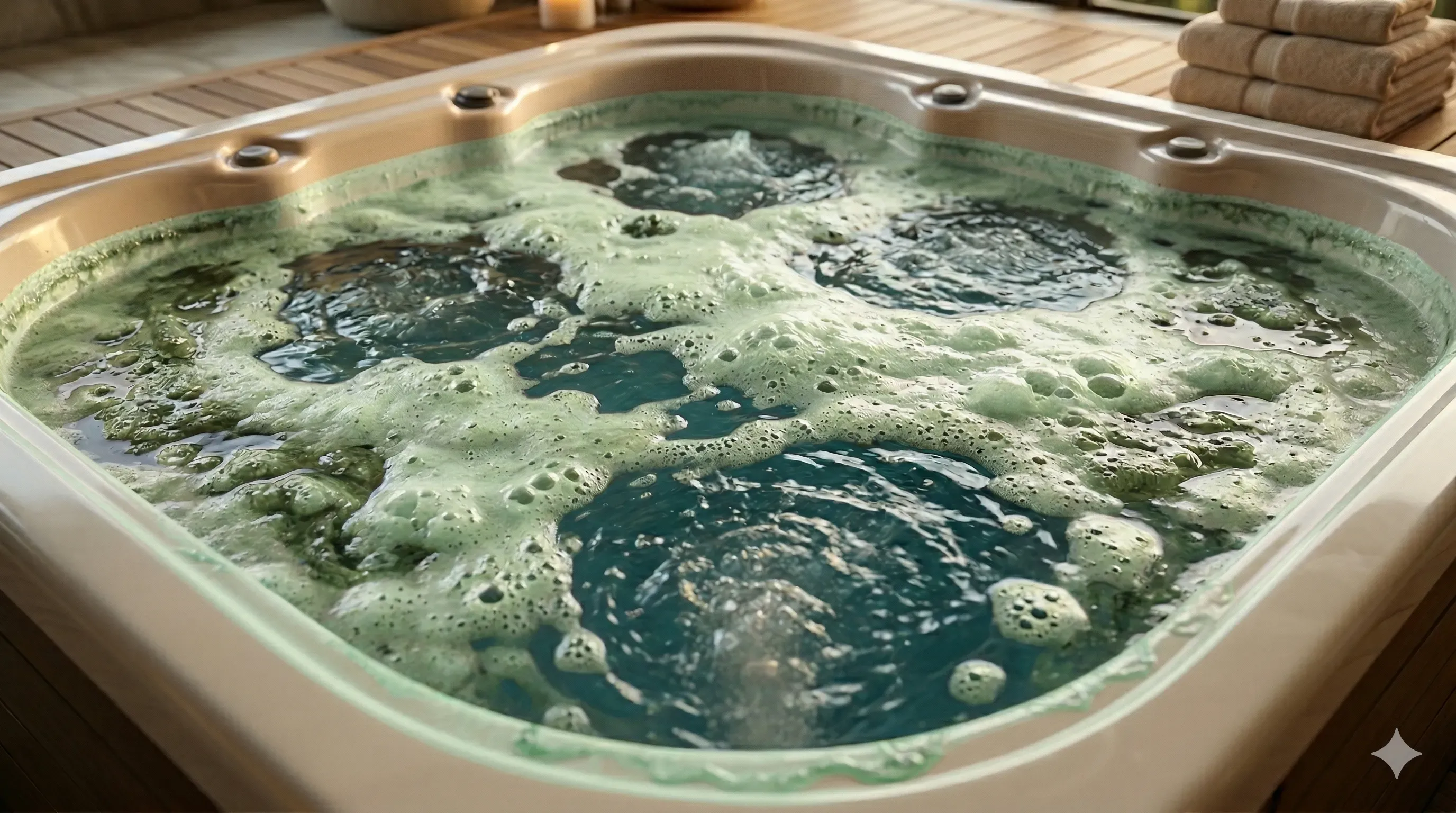
A dirty filter is behind more hot tub problems than most owners realize. Cloudy water, weak jets, poor circulation, high sanitizer demand, and even heater strain all trace back to the same place: a clogged filter that can’t do its job.
The cleaning process takes minutes. The payoff lasts all week. Here’s the method.
What’s inside your filter
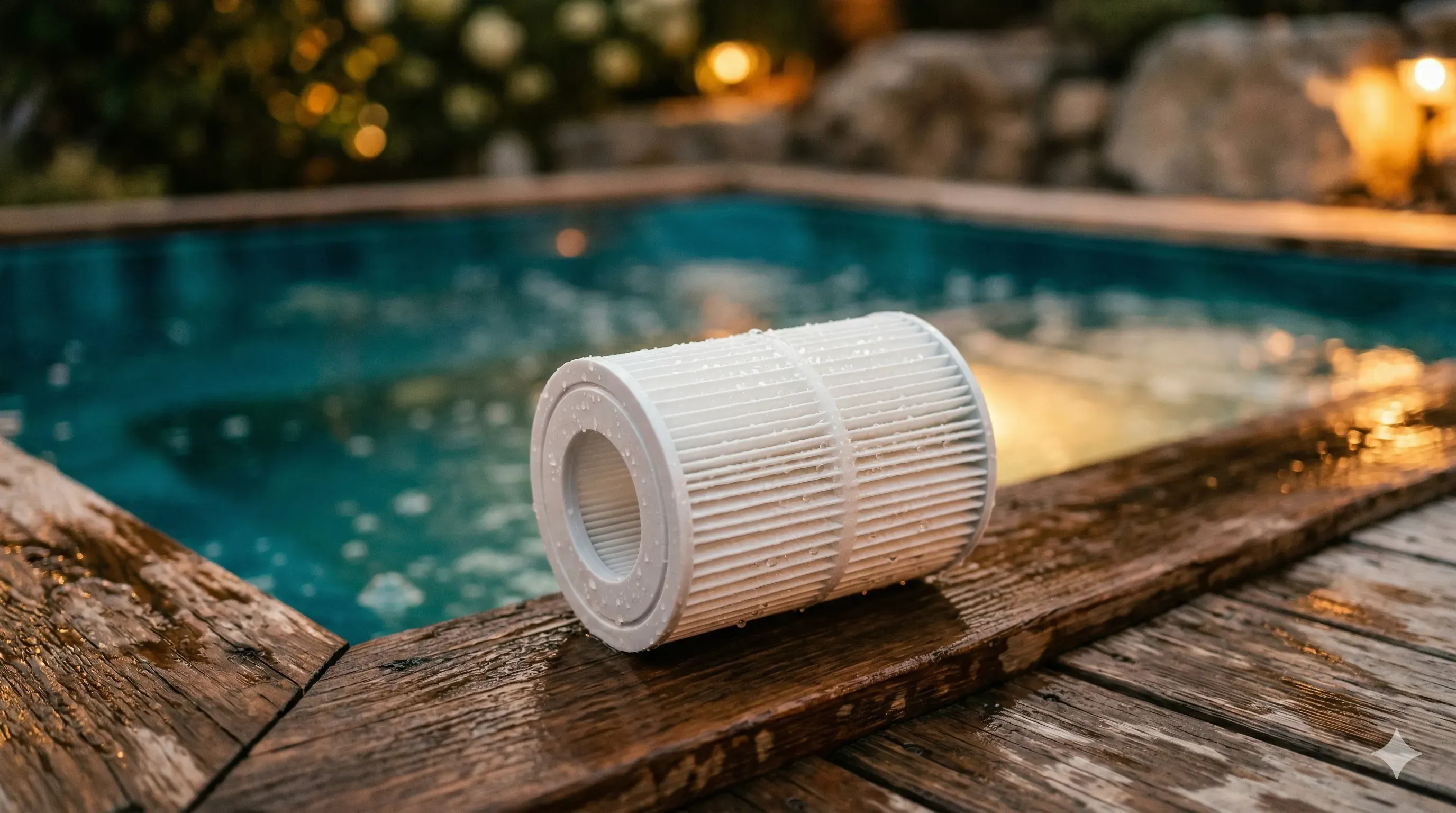
A hot tub filter cartridge has three parts. The pleated media is the white fabric that does the actual filtering. It’s usually polyester, folded into deep pleats to create maximum surface area. The core is the rigid plastic cylinder at the center that gives the cartridge structure and handles the water pressure. The end caps are the discs at top and bottom that seal the cartridge into the filter housing.
The pleated media is the part that gets dirty. Body oils, lotions, dead skin cells, cosmetics, hair products, and mineral deposits all get trapped in those folds. Over time, they pack tight enough that water can barely pass through. When flow drops, your pump works harder, your heater runs less efficiently, and your sanitizer can’t circulate where it needs to go.
Step 1: Weekly rinse (5 minutes)
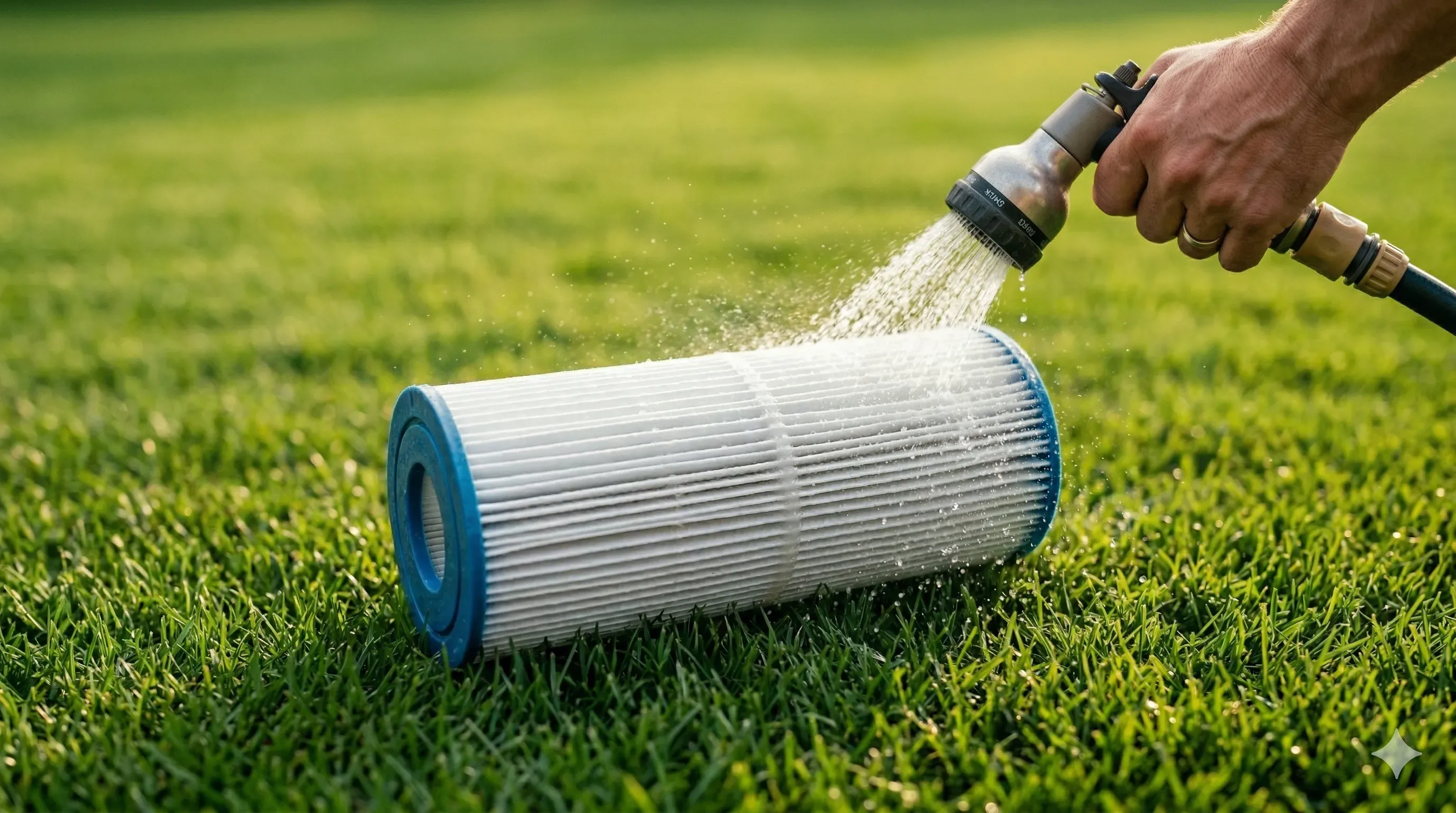
Pull the filter cartridge from the housing. Spray it with a garden hose using a standard nozzle, working from top to bottom, pleat by pleat. The goal is to flush out the loose debris that accumulated during the week.
Separate the pleats by hand as you spray. Debris collects at the base of each fold where the hose can’t reach if you just blast the outside surface. Get between them.
Do not use a pressure washer. High-pressure water damages the polyester fibers, opening holes that let particles pass through instead of getting caught. A regular garden hose at normal pressure is all you need.
Reinstall the filter and you’re done. Five minutes.
If you use the tub daily or have more than two regular bathers, rinse twice a week. The difference in water clarity is noticeable.
Step 2: Monthly deep soak (overnight)
A hose rinse removes surface debris but can’t dissolve the body oils, lotions, and mineral deposits that embed deep in the filter fabric. Those need a chemical soak.
Fill a 5 gallon bucket with warm water. Add a purpose-built spa filter cleaning solution following the product’s dosing directions. Submerge the filter cartridge completely and let it soak for 8 to 24 hours. Overnight is the easy default.
After soaking, rinse the cartridge thoroughly with clean water. Any residual cleaner left on the filter will foam when you reinstall it and turn the jets on. Rinse until the water runs clear.
The spare cartridge strategy: Keep a second filter on hand. When one goes into the soak bucket, swap the clean spare into the tub immediately. You never run the tub without filtration, and each cartridge gets more drying time between uses, which extends its life. This is the single most practical upgrade to your filter maintenance routine.
What not to use for deep cleaning
Bleach. It whitens the filter and makes it look clean. It also breaks down the polyester fibers, weakening the media and reducing how long the filter lasts. A bleached filter may look great but filters poorly.
Dish soap or laundry detergent. Residue from household soaps causes persistent foaming in the tub. It’s nearly impossible to rinse completely out of pleated media. One soak in dish soap can produce foam for weeks.
Vinegar gets recommended a lot online. It dissolves mineral buildup (calcium, scale) but has zero effect on body oils and organic contamination. Since oils are the primary contaminant in a hot tub filter, vinegar alone leaves most of the problem untouched. Use it as a supplement for hard water scale, not as your only cleaner.
And the dishwasher? Sounds logical but doesn’t work. Retailer testing found debris still lodged deep in the pleats after a full dishwasher cycle. The heat can also warp or damage the filter media. Skip it.
A dedicated spa filter cleaner is formulated to cut through both oils and minerals without damaging the fabric. That’s why it exists.
Step 3: Replace every 12 to 18 months
No amount of cleaning restores a worn-out filter. The polyester media stretches, thins, and loses its ability to trap fine particles over time. After 10 to 15 deep-clean cycles, the cartridge is done.
Signs it’s time to replace:
The filter stays brown, gray, or green even after an overnight soak. The pleats are flattened, frayed, or the fabric is visibly thinning. You’re cleaning more frequently just to maintain water clarity. Cloudy water persists despite good chemistry and regular shocking. Jet pressure has dropped even though the pump sounds normal. The end caps are cracked or warped.
When you pull the old filter and install a fresh one, the improvement in water flow is immediate. It’s one of those maintenance items where you don’t realize how bad it was until you see how good it should be.
How often to run your filter
Cleaning the filter is half the equation. The other half is running it enough to keep the water clear.
The baseline: run your filter cycles at least twice a day for two hours each time. That’s the minimum to pass all the water through the filter at least once every 24 hours. More is better. If your tub has a dedicated circulation pump that runs 24/7, you still want to fire up the main pump briefly twice a day to push water through the plumbing at higher flow rates.
Increase filter run time during periods of heavy use. If you hosted a party Saturday night, run the filter longer on Sunday. If the water looks slightly hazy, more filtration time is the first thing to try before reaching for chemicals.
If your tub has programmable filter cycles, set them for early morning and late evening when you’re least likely to be using it. Some newer tubs adjust filtration automatically based on usage patterns.
The connection between dirty filters and everything else
A clean filter makes every other part of hot tub care easier. Sanitizer lasts longer because it’s not fighting suspended particles. pH stays more stable because contaminants aren’t accumulating in the water. The heater runs more efficiently because water flows freely across the element. You use fewer chemicals because the filter is doing its job before chemistry has to.
A dirty filter reverses all of that. Particles recirculate. Chlorine gets consumed fighting debris. The pump strains against restricted flow. Energy costs creep up.
The weekly rinse takes five minutes. The monthly soak is five minutes of active work plus overnight passive time. The filter is one of the cheapest parts to maintain and one of the most impactful. Don’t skip it.
Frequently asked questions
How often should you clean a hot tub filter? Rinse with a garden hose every week. Deep soak in filter cleaning solution once a month. Replace the cartridge every 12 to 18 months or after 10 to 15 deep-clean cycles. If you use the tub daily or have more than two regular bathers, increase the rinse frequency to twice a week.
Can I clean my hot tub filter with vinegar? Vinegar dissolves mineral and calcium buildup but does nothing for body oils, lotions, and organic contaminants, which are the primary things clogging your filter. A purpose-built filter cleaning solution handles both. Use vinegar only as a supplement for hard water scale, not as your main cleaner.
Can you put a hot tub filter in the dishwasher? No. Pool supply retailers have tested this and found debris still trapped deep in the pleats after a full cycle. The heat and detergent can also damage the polyester filter media. Stick to a hose rinse and chemical soak.
How do I know when to replace my hot tub filter? Replace when the filter stays discolored after a deep soak, pleats are flattened or frayed, the media is shredding, cleaning frequency has increased, or you’ve done 10 to 15 deep-clean cycles. Cloudy water or weak jets with balanced chemistry often point to a filter that’s past saving.
Should I keep a spare hot tub filter? Yes. Rotating between two cartridges means you always have a clean one ready while the other soaks overnight. You never run the tub without filtration during a deep clean, and each filter lasts longer because it gets more drying time between uses.