5 Signs Your Hot Tub Water Needs Attention
Your hot tub often tells you something's off before your test strips do. Here are five signals to watch for — and what each one means.
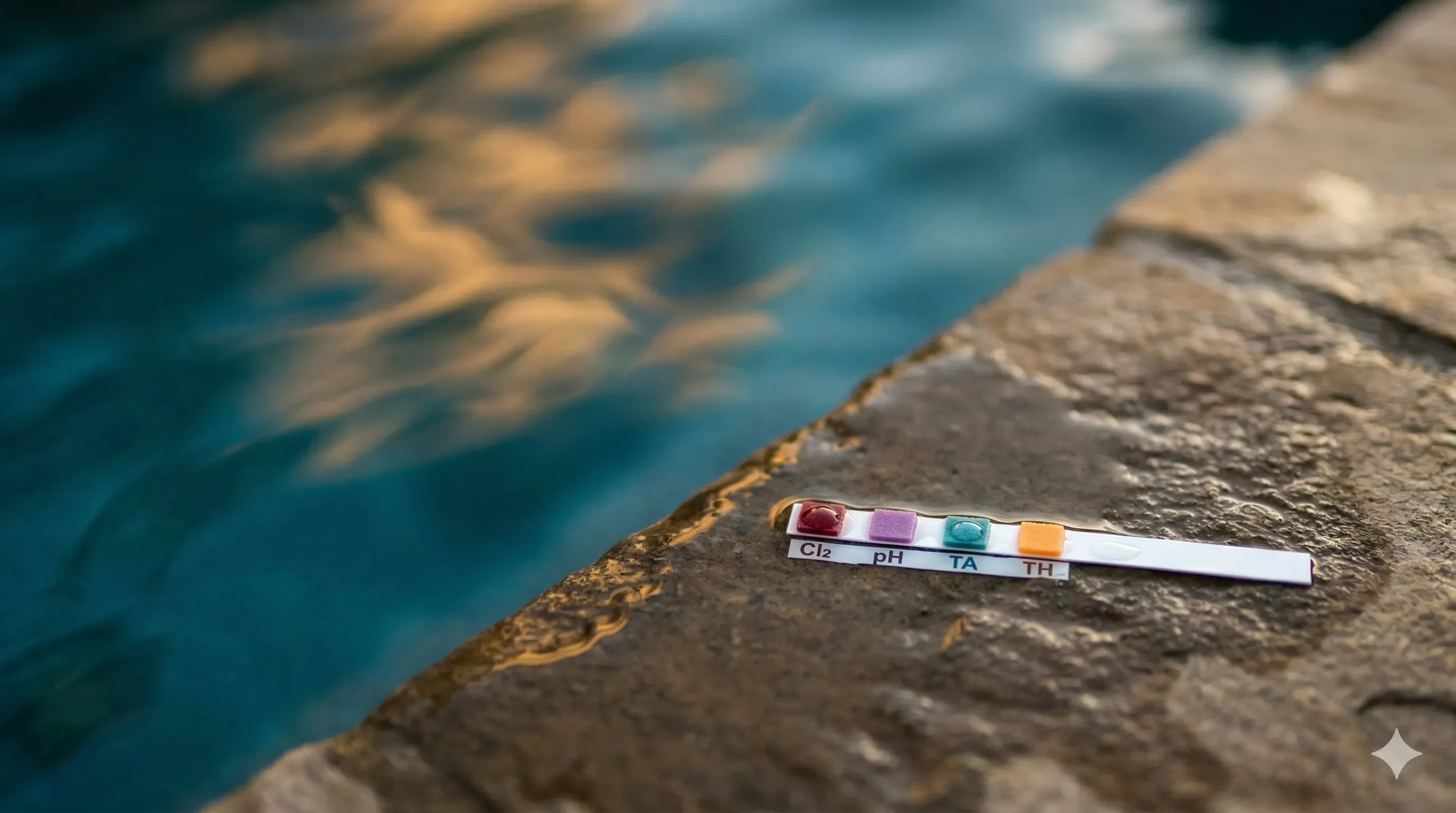
Test strips are essential. But your senses are pretty good diagnostic tools, too. Here are five things your hot tub might be telling you — and what to do about each one.
1. The water looks cloudy
Cloudy water is the most common complaint, and it has several possible causes. The usual suspects:
- Inadequate sanitizer. If free chlorine or bromine levels have dropped, bacteria and organic matter make the water hazy. Test and shock if needed.
- High calcium hardness. Excess minerals precipitate out of solution, especially in hot water. If your hardness is above 250 ppm, dilute with fresh water.
- Dirty filter. A clogged filter can’t do its job. Rinse it weekly and deep-clean it monthly.
Start with the simplest fix first: check your sanitizer levels and clean the filter. That resolves most cloudiness.
2. There’s a strong chemical smell
Counterintuitively, a strong “chlorine” smell usually means you need more sanitizer, not less. That smell comes from chloramines — compounds formed when chlorine combines with nitrogen from sweat, oils, and other organic matter. Chloramines are irritating and ineffective as sanitizers.
The fix: shock the water. A good oxidizing shock breaks down chloramines and restores free chlorine. After shocking, leave the cover off for 20 minutes to let the gases dissipate.
3. The water feels “off” on your skin
If the water feels slippery or soapy, your pH is likely too high (above 7.8). If it feels dry or causes itching, pH may be too low (below 7.2).
Either way, test your pH and alkalinity. Adjust alkalinity first if it’s out of range, then correct pH. Your skin is surprisingly good at detecting when things are off — trust what you feel.
4. Foam on the surface
A thin layer of foam when the jets are running is normal. Persistent foam that doesn’t dissipate is not. Common causes:
- Body products. Lotions, deodorants, and laundry detergent residue on swimsuits are the most frequent offenders. Shower before soaking and rinse suits in plain water.
- Low calcium. Soft water foams more easily. Check your hardness and increase if it’s below 150 ppm.
- Old water. Total dissolved solids accumulate over time. If it’s been more than 3–4 months since your last drain, it might be time.
An enzyme-based clarifier can help break down organic foaming agents between drain cycles.
5. Green or brown tinting
Green water usually means algae, which is rare in properly sanitized hot tubs but can happen if the water has been sitting untreated. Shock heavily and scrub the surfaces.
Brown or rust-colored water points to metals — typically iron or copper from your source water or from corroding components. A metal sequestering agent will bind the metals and let your filter remove them. If it keeps happening, test your fill water for metals and consider a pre-filter.
None of these issues are emergencies. Most are fixed in an afternoon with the right approach. The key is not to ignore them — small problems become expensive problems when they go untreated.
And if you’d rather not diagnose on your own, that’s exactly what your Water Care Club kit is designed to prevent. When your chemicals match your water, these issues rarely come up in the first place.