What Happens If You Don't Put Chemicals in Your Hot Tub?
Skipping chemicals sounds tempting until you learn what grows in warm, untreated water. This is what happens, day by day.
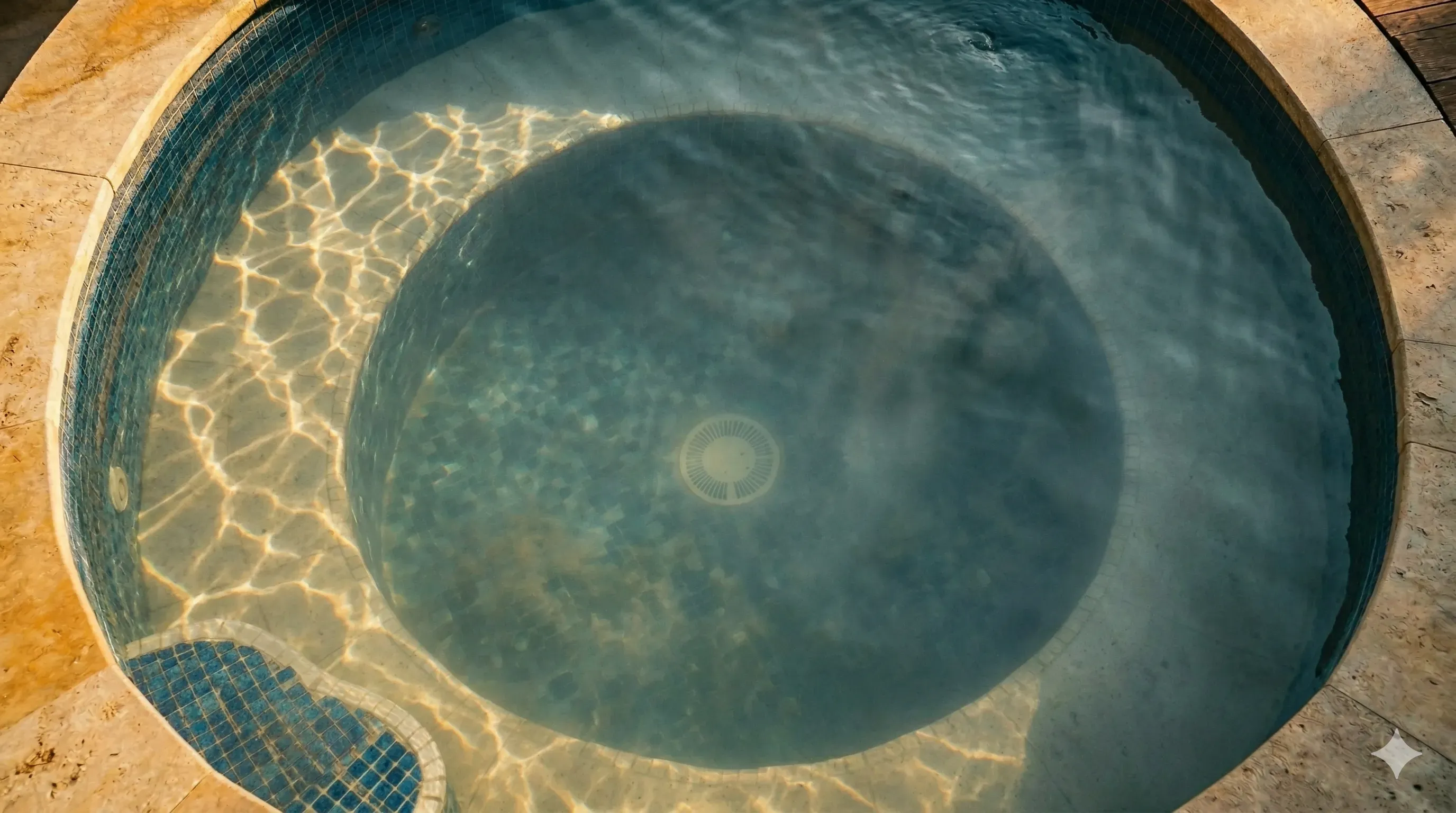
Warm water, no chemicals, no testing, no fuss. It sounds great in theory. But hot tubs sit at 100°F to 104°F, which also happens to be the ideal growth temperature for some of the most dangerous bacteria found in residential settings. Skip the sanitizer and your tub doesn’t just get “a little dirty.” It becomes a warm, dark incubator.
Here’s what actually happens, broken down by timeline, and what you should do if you’ve already let your water go.
Day 1: It looks fine. It’s not.
Bacteria don’t wait for the water to look bad before they start multiplying. Within hours of the last sanitizer dose wearing off, organisms from your skin, hair, sweat, and the surrounding air begin reproducing. At 102°F, bacterial populations can double every 20 to 30 minutes. Do the math on that: a single bacterium becomes over a million in about 10 hours.
You won’t see anything yet. The water looks clear, calm, inviting. But underneath, the chemistry is already shifting. pH starts drifting (usually upward, because hot water outgasses CO2). Organic matter from your last soak is accumulating. And on the inside walls of your plumbing, a thin layer of biofilm has already started forming.
Most people look at clear water and assume everything is fine. That assumption is the dangerous part.
Day 3 to 7: The water starts talking
By the end of the first week without sanitizer, you’ll notice changes. The water might develop a slight cloudiness, almost like someone added a drop of milk. You might catch a faint smell, sometimes earthy, sometimes sharply chemical (which is actually chloramines or bromamines from the last traces of sanitizer reacting with organic waste).
The surface of the water may feel slightly different on your skin. Some people describe it as “slippery” or “oily.” That’s dissolved body oils and the beginning of organic film on the water surface.
At this point, the biofilm inside your plumbing has become established. It’s no longer just a thin layer. It’s a structured colony of bacteria protected by a polysaccharide matrix (essentially a slime shield) that makes it resistant to chemicals even if you were to add sanitizer now. This is why just dumping chlorine into neglected water often doesn’t fix the problem. The biofilm in the pipes survives.
Day 7 to 14: Visible problems
This is when things get obvious. The water may turn cloudy, green, or develop a brownish tint. Foam appears when the jets run. The smell becomes harder to ignore.
If you run the jets after the water has been sitting, you might see white or brown flakes coming out of the jet nozzles. Those are pieces of biofilm breaking off from the plumbing walls and circulating through the water. Each flake carries bacteria back into the tub.
The water’s pH has likely drifted well outside the safe range by now (often above 8.0 or below 7.0), which means even if there were any residual sanitizer, it would be barely functional. Chlorine at a pH of 8.0 is only about 22% active (more on why that matters in our guide to balancing hot tub pH). At that point, it’s almost decorative.
What’s actually growing in there
Three pathogens cause the most trouble in poorly maintained hot tubs, and all three thrive at spa temperatures.
Pseudomonas aeruginosa is the most common. It causes “hot tub folliculitis,” the itchy red bumps that appear a few hours to a few days after soaking. The rash usually covers areas where your swimsuit trapped water against the skin. It’s not life threatening for most people, but it’s miserable, it can last a week or more, and it keeps coming back every time you soak in the contaminated water.
How common is Pseudomonas? Between 2000 and 2014, CDC surveillance data shows it caused 43% of all hotel hot tub outbreaks. Residential tubs are just as vulnerable. The only difference is nobody reports home outbreaks to the health department.
Legionella pneumophila is the serious one. It causes Legionnaires’ disease, a severe form of pneumonia with a fatality rate between 5% and 10% even with treatment. You don’t catch it by touching the water or swallowing it. You catch it by breathing in the steam and aerosolized droplets that rise off the surface of the hot tub. Every time you sit in an untreated hot tub and breathe, you’re inhaling whatever is living in that water.
The CDC linked 65 recreational water outbreaks to Legionella between 2015 and 2019. Thirteen people died. The majority of those outbreaks were associated with hot tubs and spas, not swimming pools.
Mycobacterium avium causes “hot tub lung,” a hypersensitivity pneumonitis triggered by inhaling aerosolized bacteria from the water surface. Symptoms start out feeling like the flu: persistent cough, fatigue, shortness of breath, low grade fever. Many people mistake it for a cold that won’t go away. Left untreated, the lung damage can become permanent. It’s underdiagnosed because most doctors don’t think to ask about hot tub exposure.
Biofilm: the problem inside your pipes
Most people don’t understand biofilm, and that’s the reason why simply shocking neglected water doesn’t fix things.
Biofilm is a structured colony of bacteria that attaches to surfaces inside your plumbing: pipe walls, jet housings, pump impellers, fittings, and anywhere water sits or moves slowly. The bacteria produce a protective slime layer (technically an extracellular polysaccharide matrix) that shields the colony from chemicals in the water. Think of it as a bacterial fortress.
Here’s what makes biofilm particularly nasty: you can superchlorinate the open water in your tub to 20 ppm and the biofilm in the pipes will survive. The chlorine can’t penetrate the slime layer fast enough to kill the bacteria inside before it gets neutralized. So the water tests clean, you get in, and the biofilm releases a fresh batch of bacteria into the water through the jets. This is why some people get hot tub rash repeatedly even though “the chlorine was fine.”
Biofilm starts forming within 24 to 48 hours on wet surfaces. By two weeks, it’s well established. By a month, it’s deeply embedded and requires a dedicated plumbing flush (using a product like Ahh-Some or Oh Yuk) to remove. You can’t just shock it away.
What “not enough” chemicals actually looks like
Most water problems don’t come from people using zero chemicals. They come from inconsistent use. Testing once a month. Adding chlorine only when the water starts looking cloudy. Relying on an ozone generator or a mineral cartridge as the sole sanitizer.
Ozone and UV systems are useful supplements. They kill bacteria while the water passes through the treatment unit. But the moment that water returns to the tub and sits there, nothing is protecting it. A residual sanitizer (chlorine at 1 to 3 ppm or bromine at 3 to 5 ppm) stays active in the water around the clock. Without that residual, there are stretches every day where your tub has zero defense.
Mineral cartridges (silver and copper ions) reduce the amount of chlorine or bromine you need, but they don’t eliminate it. You still need a measurable residual of at least 0.5 to 1 ppm chlorine alongside the mineral system. No major health authority recommends running a hot tub on minerals alone.
There’s one pattern in particular that does more damage than people realize: the “soak first, sanitize later” approach. You get in, enjoy the tub, then add chlorine afterward. But during the soak, you introduced body oils, sweat, and bacteria into unsanitized water. Those contaminants had 20 to 30 minutes of unprotected contact time to feed the biofilm in your pipes. The chlorine you add after gets consumed fighting the load you just introduced, leaving less residual for ongoing protection.
Why consistent treatment beats everything else
A corroded heater means a service call and downtime. A full biofilm decontamination means draining, flushing, scrubbing, and starting over from scratch. Folliculitis means antibiotics and a week of discomfort. Legionnaires’ disease means a hospital stay. All of these are avoidable with a basic maintenance routine.
You don’t need a cabinet full of specialty products. You need a residual sanitizer in the water at all times, pH in the right range so that sanitizer actually works, and a testing habit that catches problems before they grow. A few minutes of attention two to three times a week is the simplest protection your hot tub has.
Frequently asked questions
How long can a hot tub go without chemicals? At spa temperatures (100°F to 104°F), bacteria reach dangerous levels within 24 to 48 hours. The water can still look perfectly clear during this time. Don’t judge safety by appearance. Always test.
Can bacteria grow in a hot tub overnight? Absolutely. Populations double every 20 to 30 minutes at spa temperatures. One soak’s worth of contamination can become millions of organisms by morning.
Is it safe to sit in a hot tub without chlorine? Not beyond a day or two. Chlorine and bromine are the most common residual sanitizers that stay active between uses. Ozone and UV systems only treat water while it passes through the unit, leaving the rest of the tub unprotected. You need a measurable residual in the water at all times.
What diseases can you get from an untreated hot tub? The most common is hot tub folliculitis from Pseudomonas bacteria (itchy red bumps on the skin). More serious risks include Legionnaires’ disease (a severe pneumonia from inhaling Legionella in steam) and hot tub lung (a respiratory condition from Mycobacterium avium). The CDC linked 65 Legionella outbreaks to recreational water between 2015 and 2019, resulting in 13 deaths.
Can you use a hot tub with just a mineral cartridge and no chlorine? Mineral cartridges (silver and copper ions) reduce the amount of sanitizer needed but don’t eliminate the need entirely. You still need at least 0.5 to 1 ppm of chlorine or bromine as a residual alongside the mineral system. No major health authority recommends zero chemical sanitizer in a hot tub.
My hot tub has been sitting unused for a month. Can I just shock it? Probably not enough on its own. After a month without chemicals, biofilm has established itself in your plumbing and won’t be killed by shocking the open water alone. You’ll need to run a plumbing flush (Ahh-Some or Oh Yuk), drain, scrub, refill, and rebalance from scratch. See the recovery protocol above.