White Flakes in Your Hot Tub? Here's What They Are
White flakes floating in your hot tub are either calcium scale or biofilm. Here's a simple test to tell them apart and how to fix each one.
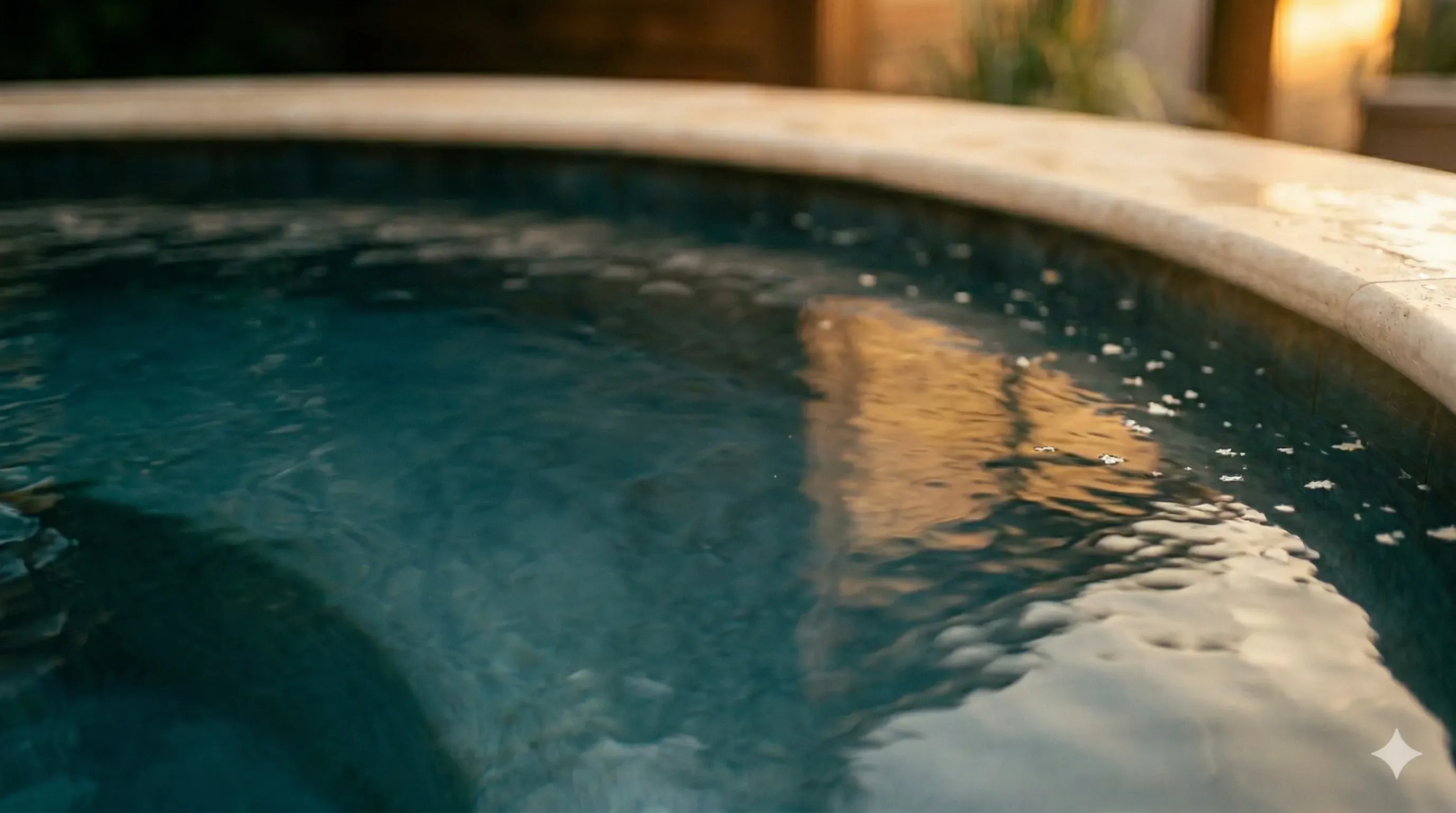
You fill your hot tub, balance the chemistry, get everything dialed in, then one morning you see white stuff floating on the surface. It looks like shredded tissue paper or dandruff. You fish some out and wonder: is that mineral buildup, mold, or something worse?
The short answer: it’s one of two things, and a 30 second test tells you which.
The bleach test
Scoop some flakes into a cup with about 4 to 6 ounces of water. Add 15 to 20 drops of liquid bleach. Wait 30 minutes.
If the flakes dissolve: You’re dealing with white water mold or biofilm. Organic material that bleach can break down.
If the flakes stay solid: Calcium scale. Mineral deposits that no amount of bleach will dissolve.
Do this test before you do anything else. The fixes are completely different depending on which type you have, and treating for the wrong one wastes time and chemicals.
Calcium scale flakes
Calcium scale forms when dissolved calcium precipitates out of the water and deposits on surfaces. It builds up on heater elements, jet housings, plumbing walls, and the shell itself. Over time, chunks flake off and float.
Two conditions cause this: high calcium hardness (above 250 ppm) or high pH (above 7.8). When both are elevated at the same time, scale forms fast. The heater element is usually the first victim because heat accelerates calcium precipitation.
How to fix it
Test your calcium hardness and pH. If calcium is above 250 ppm, you need to dilute. Drain a portion of the water (or do a full drain and refill) and refill with softer water. A hose pre-filter helps if your tap water runs hard.
If calcium is in range (150 to 250 ppm) but pH has been running high, the flakes are from past scale buildup that’s now breaking loose. Get pH back to 7.4 to 7.6 and keep it there. The existing scale may continue flaking for a while. Clean your filter more frequently until the loose material clears.
A stain and scale preventer (sequestering agent) can help bind excess calcium and keep it in solution. It won’t remove existing scale, but it slows new deposits from forming.
Biofilm and white water mold flakes
If the bleach test dissolved your flakes, the problem lives inside your plumbing. Not on the surfaces you can see and scrub, but in the pipes, jet housings, and fittings you can’t reach.
White water mold is a fungus (not algae) that thrives in warm, damp environments with low sanitizer exposure. It forms a slimy layer inside plumbing where chlorine or bromine at normal levels can’t touch it. Over time, chunks break loose and float into the main water body. They look like soft white tissue paper and feel slick between your fingers.
The disturbing part: your main water chemistry can test perfectly fine. Free chlorine at 3 to 5 ppm, pH at 7.4, alkalinity stable. The biofilm doesn’t care. It lives inside the pipes where surface sanitizer doesn’t reach. As one water care expert put it: normal sanitizer levels are a joke to an established biofilm. The protective matrix is so dense that even very high chlorine concentrations barely scratch it.
Signs you have biofilm (beyond the flakes)
Water that feels slightly slippery or oily even after shocking. An unusual odor that doesn’t smell like chlorine but isn’t quite right. Foam that keeps coming back. Pink or orange slime near the filter housing or above the waterline. Chlorine that disappears faster than it should, even when nobody is using the tub.
If flakes appear within a day or two of a fresh fill, biofilm is almost certainly the cause. The new water loosens chunks from established colonies in the old plumbing.
How to fix it
Regular chlorine won’t cut it. You need a plumbing purge.
Step 1: Remove your filter cartridge (so the loosened gunk doesn’t clog it).
Step 2: Add a pipe flush cleaner to the existing dirty water. Ahh-Some is the most recommended product in the hot tub community, and independent testing has shown it outperforms alternatives. Use about 1 tablespoon per 250 gallons. Other options include Natural Chemistry Spa Purge.
Step 3: Run every jet on high for 20 to 30 minutes. Open all diverter valves and run the air blower if you have one. You want the product reaching every line in the system. You’ll see foam and brown gunk rise to the surface. That’s the biofilm coming out.
Step 4: Let the tub sit overnight with the circulation pump running. The next morning, run the jets on high for another 5 minutes to loosen any remaining deposits.
Step 5: Wipe the waterline scum, then drain completely. Clean the shell with a spa-safe cleaner.
Step 6: Refill with fresh water (through a hose pre-filter if you have hard water). Balance chemistry in order: alkalinity, pH, calcium, then sanitizer. Shock to 10 ppm to sanitize the fresh fill.
One round may not be enough. If the tub has never been purged, or if you bought it used, expect to do two or even three purge cycles before the water comes out clean.
The cause nobody talks about: calcium stearate
There’s a third, rarer cause documented by spa technicians and repair forums. Between roughly 2014 and 2016, some hot tub manufacturers used plumbing components that were extruded with excessive soy oil as a lubricant. That oil reacted with calcium in the water to form calcium stearate, which is essentially soap residue inside the air injection tubing.
These flakes are white and waxy, don’t dissolve in bleach (they look like calcium in the test), and keep coming back no matter how many times you drain. The giveaway is that they’re specifically associated with the air injection system, not the water jets. If you only see flakes when the air blower runs, this could be the cause.
The fix usually requires replacing the affected plumbing. It’s uncommon and brand-specific, but worth knowing if you’ve ruled out both calcium hardness and biofilm and the flakes persist.
Prevention
For calcium scale: maintain calcium hardness between 150 and 250 ppm, keep pH at 7.4 to 7.6, and test monthly. Calcium doesn’t drift fast, so monthly checks are enough. If your fill water is above 250 ppm, use a hose pre-filter when filling.
For biofilm: purge the plumbing at every drain cycle (every 3 to 4 months). Maintain free chlorine at 3 to 5 ppm or bromine at 3 to 5 ppm at all times. Shock weekly with an oxidizer. Replace filter cartridges every 12 to 18 months since biofilm embeds in filter media.
One thing most people miss: even brand new hot tubs can have biofilm. Tubs are water-tested at the factory and then drained, but the plumbing stays damp during shipping and storage. That’s weeks or months of warm, moist, unsanitized pipes. Running a purge before your very first fill is one of the best things you can do for a new tub.
Frequently asked questions
What are the white flakes floating in my hot tub? They’re either calcium scale (hard, gritty mineral deposits flaking off surfaces) or white water mold and biofilm (soft, slimy organic chunks breaking loose from plumbing). Put some flakes in a cup of water with 15 to 20 drops of bleach. If they dissolve in 30 minutes, it’s biofilm. If they stay, it’s calcium.
Is white water mold in a hot tub dangerous? White water mold itself isn’t usually harmful to healthy adults, but it signals that your sanitizer isn’t reaching the plumbing where bacteria thrive. Biofilm can harbor Pseudomonas, Legionella, and E. coli. The mold is the visible sign of a bigger sanitation problem that needs to be addressed.
Why does my hot tub have white flakes even with good chlorine levels? If your free chlorine reads 3 to 5 ppm and you still see flakes, biofilm in the plumbing is the likely cause. Sanitizer in the main water body can’t penetrate the protective biofilm layer inside pipes and jet housings. The only fix is a plumbing purge followed by a full drain and refill.
How do I prevent white flakes from coming back? For calcium flakes: keep calcium hardness between 150 and 250 ppm and pH at 7.4 to 7.6. For biofilm flakes: purge the plumbing at every drain cycle (every 3 to 4 months), maintain sanitizer at 3 to 5 ppm, and shock weekly.
Can new hot tubs have white flakes? Yes. Brand new tubs are water-tested at the factory, then sit in warehouses for weeks or months with damp plumbing. Running a plumbing purge before your very first fill prevents flakes from showing up in the first week of ownership.