First Time Hot Tub Setup: Every Chemical You Need
New hot tub owners get sold 15 products when they need 6. Here's what's essential, what you can skip, and the exact startup sequence for day one.
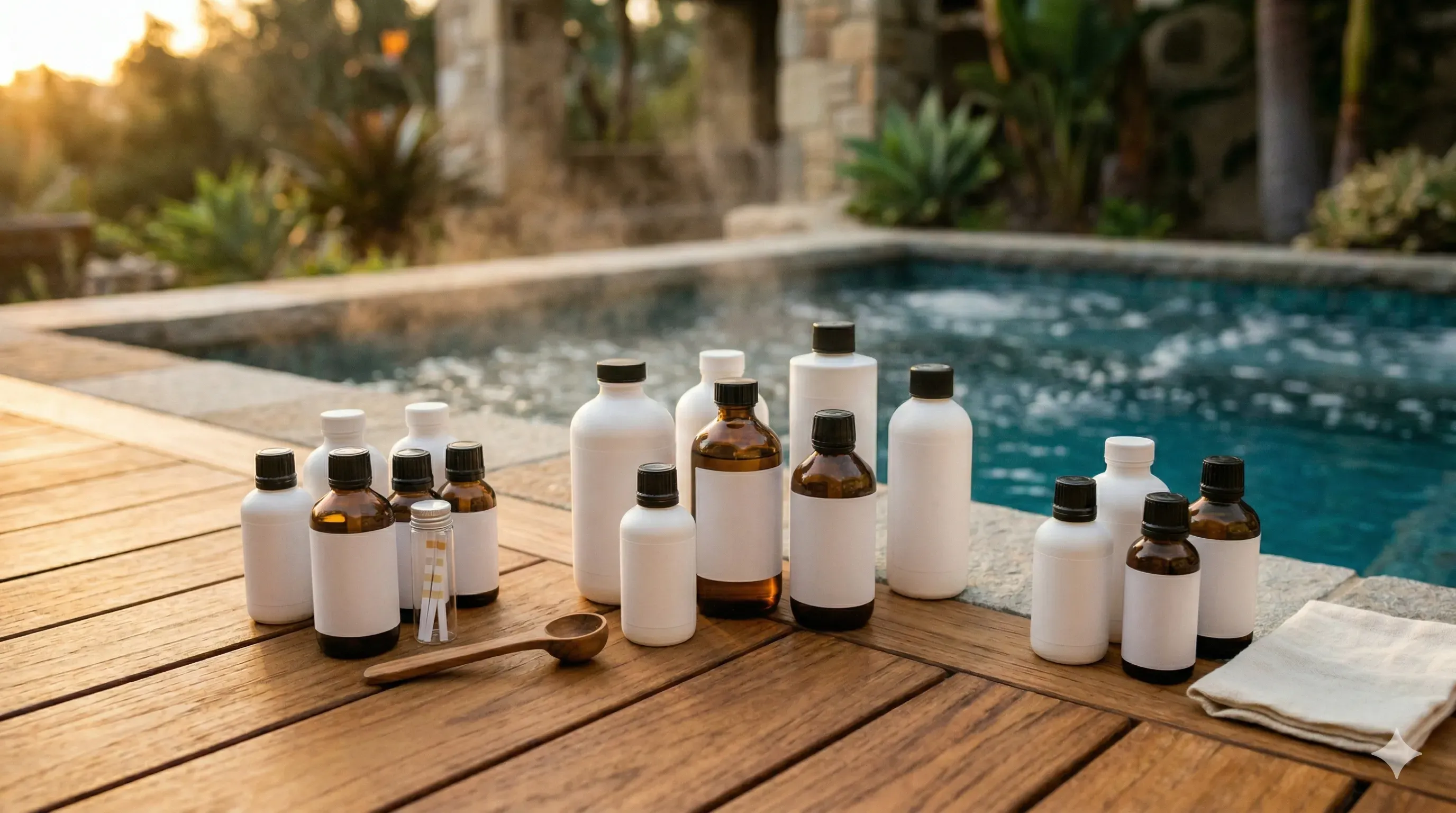
The pool store experience goes something like this: you walk in for chlorine, someone asks what kind of tub you have, and twenty minutes later you’re carrying a bag with twelve bottles and zero confidence about which one to open first. It doesn’t need to be this complicated.
You need six products to get started. Everything else is either a specialty add on for specific situations, or something the store talked you into buying that you’ll never open. Here’s the full list, what each product does, and the exact order to add everything.
First things first: flush the plumbing before your real fill
Most people don’t know this, but new hot tubs ship with antifreeze in the plumbing. Manufacturers add it to prevent freeze damage during transit and storage. Depending on how long your tub sat in a warehouse or on a dealer’s floor, there could also be stale water residue and early biofilm formation in the pipes from the factory wet-test.
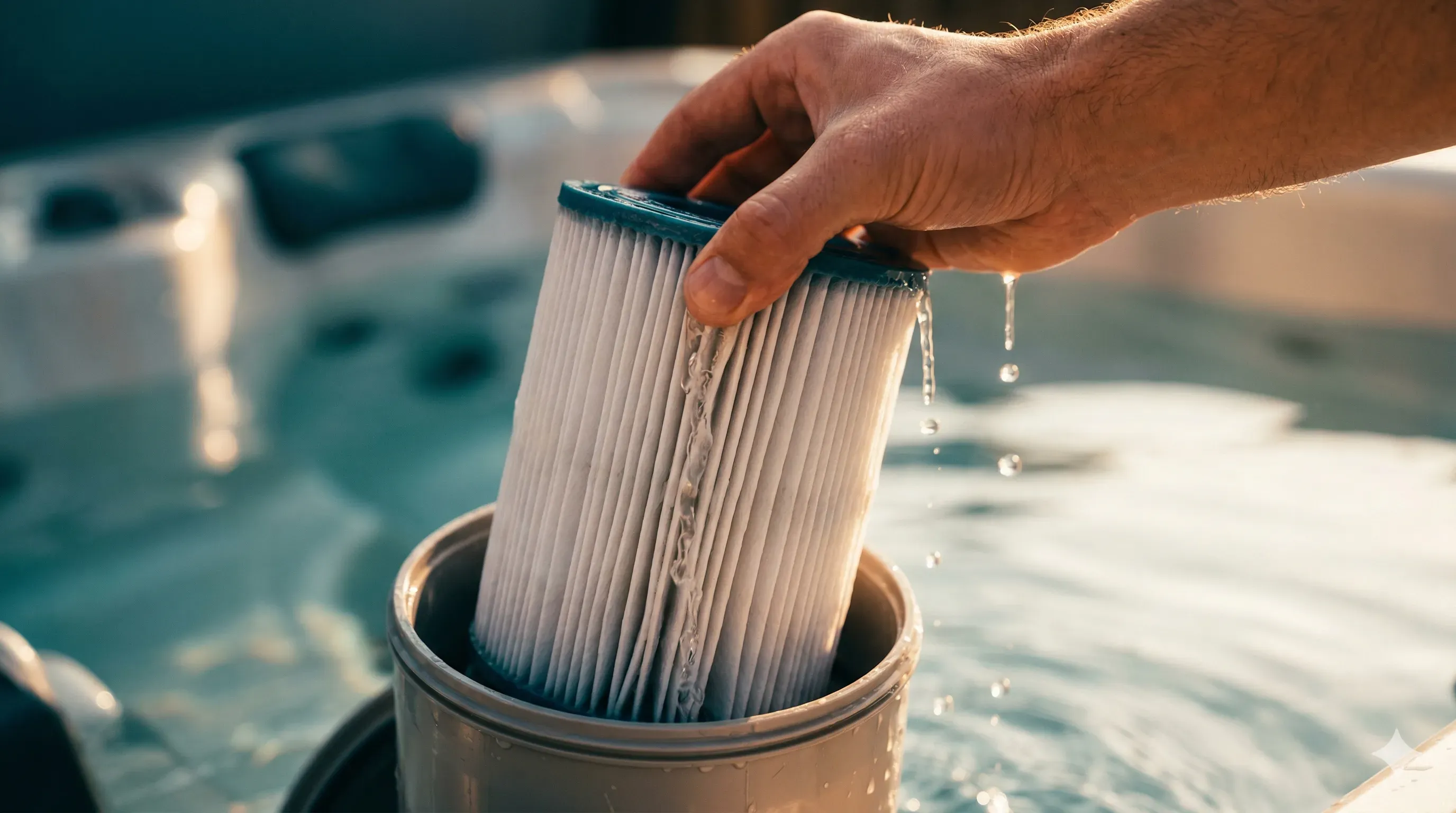
Fill the tub, run every jet group for five minutes, then drain completely. If the water has a blue or pink tint, that’s antifreeze flushing out. If you see foam or flakes, that’s manufacturing residue or biofilm. Repeat until the water runs clear.
This takes an extra 30 to 60 minutes. It’s worth every minute. Skipping it means your first fill is contaminated from the start, and you’ll wonder why your water won’t balance or why it’s foaming when nobody has even used the tub yet.
For an even more thorough flush, add a pipe cleaner like Ahh-Some (about 1 tablespoon per 250 gallons) during this initial fill-and-drain cycle. Run it through the jets for 20 minutes before draining. The amount of gunk that comes out of a “brand new” tub surprises most people.
The six chemicals you actually need
1. Test strips or a liquid test kit
Without a way to measure your water, you’re guessing. And guessing with chemicals is how people end up with corroded heaters or skin rashes.
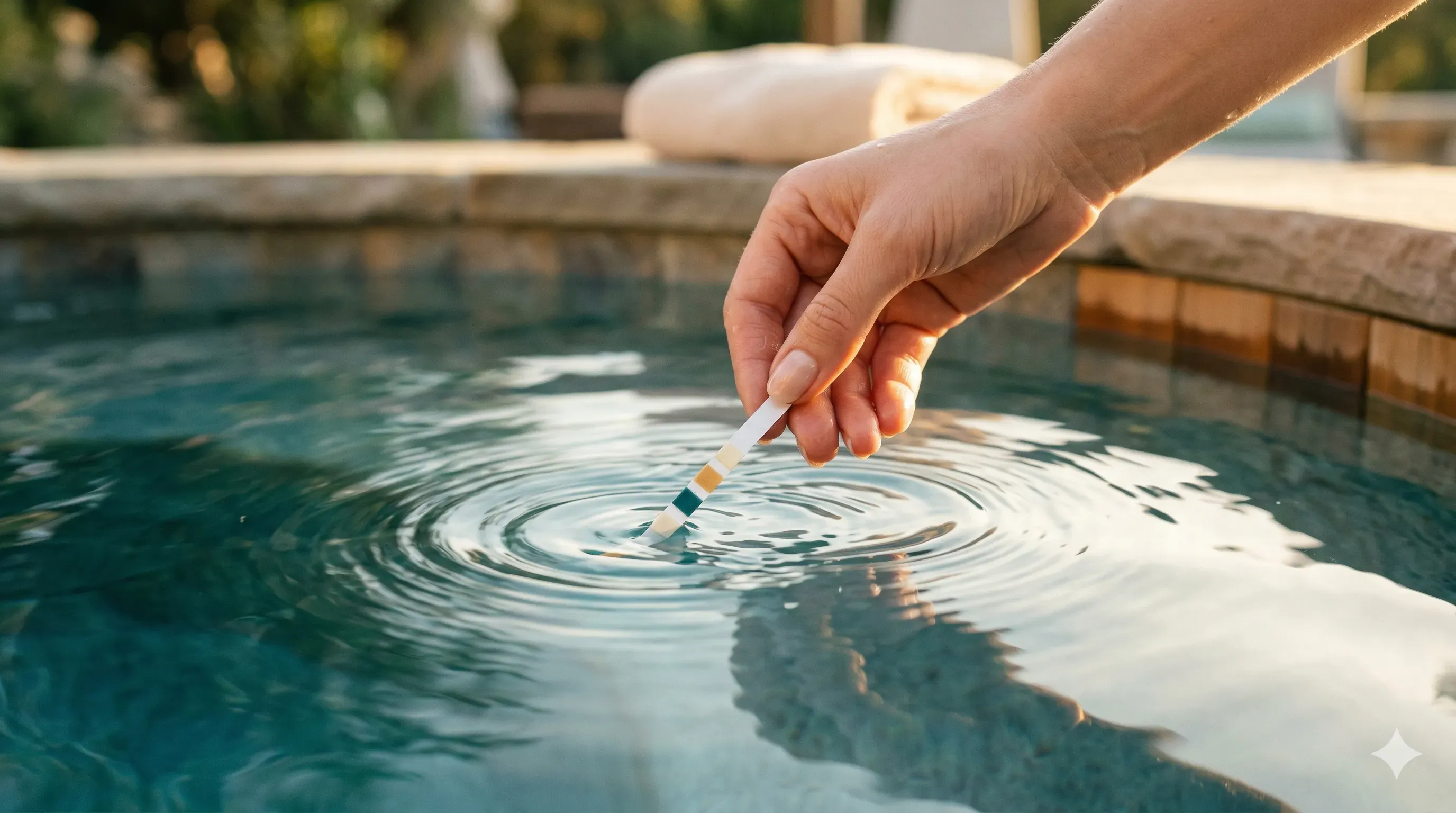
Test strips are the most common choice for beginners. They’re fast (results in 15 seconds), accurate enough for routine maintenance, and a bottle of 50 lasts two to three months. Look for strips that read at least four parameters on a single dip: free chlorine (or bromine), pH, total alkalinity, and calcium hardness.
Liquid test kits are more precise. The Taylor K2006 is considered the gold standard by the hot tub community, though it takes a few minutes per test instead of seconds. It’s overkill for most beginners, but it’s worth having if you want to verify your strip readings periodically. Strips can drift in accuracy over time, especially if the bottle is stored in a humid environment (like next to a hot tub).
Whichever you choose, the rule is: test before you add anything. Always.
2. Alkalinity increaser (sodium bicarbonate)
Total alkalinity acts as a buffer for your pH. When alkalinity is in range (80 to 120 ppm), pH stays stable. When alkalinity is low, pH bounces around with every small change and you end up chasing numbers all week, adding pH increaser one day and pH decreaser the next.
Most tap water needs an alkalinity boost. Here’s something the pool store probably won’t tell you: alkalinity increaser is just sodium bicarbonate. That’s baking soda. The exact same chemical. The spa-branded version uses the same active ingredient in fancier packaging.
Dosing: About 1 tablespoon per 100 gallons raises alkalinity by roughly 10 ppm. If your 400 gallon tub tests at 50 ppm and you want to reach 90 ppm, that’s 16 tablespoons (1 cup) total. Always add with the jets running and retest after 20 minutes.
Always adjust alkalinity first, before touching pH. Getting this order wrong is the second most common beginner mistake (the first is buying the wrong chlorine).
3. pH decreaser (sodium bisulfate)
Fresh fill water almost always comes in with a pH above 7.6, sometimes as high as 8.0 or more. That’s too high for your sanitizer to work. At a pH of 7.4, about 53% of your free chlorine is in the active form (hypochlorous acid). At pH 8.0, only about 22% is active. You’re adding sanitizer and it’s barely doing anything. More than half your chlorine is going to waste.
pH decreaser (also called “pH minus” or “dry acid”) brings it down. The active ingredient is sodium bisulfate.
Dosing: Start small. About 1 tablespoon per 200 gallons for a 0.2 pH reduction. Circulate for 15 to 20 minutes, retest, and repeat. It’s much easier to add more than to overshoot and then need pH increaser to correct your correction.
You may also need a pH increaser (sodium carbonate, also called soda ash) if your water comes in acidic, but this is far less common with municipal water. Buy it only if your test shows pH below 7.2. Don’t buy it “just in case.”
4. Sanitizer: chlorine granules or bromine tablets
Your sanitizer is what actually kills bacteria and keeps the water safe to soak in. Of everything on this list, your sanitizer matters the most. It’s also where the most damaging beginner mistake happens.
Chlorine (dichlor granules) is the most popular choice for beginners and experienced owners alike. It’s fast dissolving (one to three minutes in warm water), has a near neutral pH (6.5 to 7.0) so it barely affects your water balance, and is easy to dose precisely. Add it after each soak, targeting 1 to 3 ppm of free chlorine for maintenance.
The critical detail: buy granules that say sodium dichloro-s-triazinetrione on the active ingredient label. Do not buy trichlor tablets (trichloroisocyanuric acid), even if they’re sold in the same aisle. Trichlor has a pH of 2.8 (we explain why it’s dangerous for hot tubs in detail), which is acidic enough to corrode your heater, etch your shell, and degrade rubber seals over time. It’s designed for swimming pools with 15,000+ gallons of water where the acidity gets diluted. In a 300 gallon hot tub, it’s concentrated enough to cause real damage.
The number one chemical mistake new hot tub owners make, because pool stores stock trichlor prominently and it looks like it should work for spas too. Check the label. Every time.
Bromine tablets are the main alternative. They dissolve slower than dichlor (dispensed from a floating feeder) and work across a wider pH range, which makes them slightly more forgiving if your pH drifts. The target is 3 to 5 ppm. Bromine has a distinct smell that some people notice, though it’s different from chlorine’s smell rather than stronger.
Either one works. Pick one and stick with it. Don’t mix them. Running both chlorine and bromine in the same water creates bromochloramines that make the water harder to manage and can irritate skin. Not sure which to pick? Our bromine vs chlorine comparison breaks down the real differences.
5. Shock oxidizer
Shocking is a different job than sanitizing. Your daily sanitizer kills bacteria. Shock oxidizer breaks down the accumulated organic waste (body oils, sweat, lotions, sunscreen, dead bacteria) that your sanitizer produces as byproducts. Without regular shocking, this waste builds up as combined chlorine (chloramines) or combined bromine (bromamines). That’s what creates cloudy water, foam, and the strong “chemical smell” that people associate with pools. Ironically, that smell means your water needs more treatment, not less.
Chlorine shock (dichlor at a higher dose): Kills bacteria AND oxidizes waste at the same time. Raises free chlorine to 10+ ppm temporarily. Use for your initial startup and whenever the water looks or smells off. Downside: you’ll need to wait several hours (until chlorine drops below 5 ppm) before soaking.
Non-chlorine shock (MPS, potassium monopersulfate): Oxidizes waste without adding chlorine. The benefit is a much shorter wait time before soaking (15 to 20 minutes). Downside: it doesn’t kill bacteria, so it’s not a substitute for sanitizer. It’s purely an oxidizer.
Most owners keep both on hand. Use MPS for routine weekly shocking (quick turnaround), use chlorine shock for deep resets or when the water has an issue. Our complete guide to shocking covers exact dosing amounts by tub size.
6. Calcium hardness increaser (calcium chloride)
If your fill water is soft (calcium below 150 ppm), you need to raise it. Low calcium water is aggressive. It’s hungry for dissolved minerals, so it pulls them from any surface it touches: your heater’s copper elements, your shell’s acrylic surface, your pump’s seals and gaskets. The damage is slow and invisible until something fails.
Dosing: About 1 tablespoon of calcium chloride per 100 gallons raises hardness by roughly 10 ppm. Dissolve it in a bucket of warm water first, then pour the solution into the tub with the jets running. Adding dry calcium chloride directly can leave white residue on the shell that’s stubborn to remove.
Important: If your fill water already tests between 150 and 250 ppm, skip this product entirely. Many areas with hard tap water don’t need it. And if your water tests above 250 ppm, don’t add any. You actually have the opposite problem (scale formation) and should look into a hose pre-filter for your next fill.
Calcium hardness is the one measurement where overcorrection is truly unforgivable. Unlike pH or alkalinity, there’s no chemical that lowers calcium hardness. Once it’s too high, your only option is draining some water and replacing it with lower-calcium water. Always test before adding. Always add less than you think you need.
What you probably don’t need right now
Pool stores will sell you ten more products if you let them. Here’s what each one does and when (if ever) you’ll actually need it.
Clarifier clumps tiny particles so your filter can trap them. If your chemistry is balanced and your filter is clean, you shouldn’t need this. Buy it when you have a specific cloudiness problem that shocking doesn’t solve, not before.
Defoamer knocks down foam on contact, but it’s treating a symptom. Foam comes from body oils, laundry detergent residue on swimsuits, and dissolved organic waste. Proper shocking and draining on schedule prevents foam. Defoamer is a band-aid, not a solution.
Aromatherapy crystals smell nice. They do nothing for water quality and some leave oily residue that contributes to scum lines and filter clogging. Enjoy them if you want, but understand they’re a luxury item, not maintenance.
Metal sequestrant binds dissolved metals (iron, copper, manganese) to prevent staining. Only needed if your fill water contains metals. You’ll know because the water comes out of the tap with a brown, green, or reddish tint, or you see staining on the shell within the first few days. Clear tap water? Skip it.
Enzyme treatment (products like Spa Marvel, Natural Chemistry Spa Perfect) breaks down body oils and organic waste, reducing scum lines and extending the time between drains. It’s a genuinely useful product for heavy use, but it’s an optimization, not a startup essential. Consider it after your first month once you’ve learned your water.
Stain and scale preventer is useful if you have hard water or metals, but if your calcium hardness is in range and your water is clear, it’s unnecessary at startup.
If you’re evaluating a pre-packaged kit instead of buying individually, our starter kit checklist shows what to look for and what’s usually missing.
The startup sequence with specific amounts
Once you have your six products and your tub is filled with clean water at 80°F or above:
-
Test the water. Write down alkalinity, pH, calcium hardness, and any existing chlorine.
-
Adjust alkalinity to 80 to 120 ppm. (1 tablespoon sodium bicarbonate per 100 gallons = ~10 ppm increase.)
-
Wait 20 minutes with jets running. Retest. Adjust if needed.
-
Adjust pH to 7.4 to 7.6. (1 tablespoon sodium bisulfate per 200 gallons for a small decrease.)
-
Wait 20 minutes. Retest.
-
Adjust calcium hardness to 150 to 250 ppm if needed. (Pre-dissolve calcium chloride in a bucket. 1 tablespoon per 100 gallons = ~10 ppm increase.)
-
Add sanitizer. For chlorine: 1 teaspoon dichlor per 100 gallons for a startup dose of ~5 ppm. For bromine: 2 tablespoons sodium bromide, then chlorine shock.
-
Shock the water. Bring free chlorine to 8 to 10 ppm. That’s roughly 1.5 to 2 teaspoons of dichlor per 100 gallons above your maintenance dose.
-
Leave the cover cracked open for 30 minutes to vent off-gases.
-
Wait 4 to 6 hours (overnight is ideal), then test everything one final time.
When all readings are in range and free chlorine is below 5 ppm, you’re good to soak.
How long each product lasts
One of the biggest frustrations for new owners is not knowing when they’ll need to restock. Here’s a realistic guide for a 300 to 400 gallon tub used three to four times per week by two people:
| Product | Typical supply size | How long it lasts |
|---|---|---|
| Test strips | 50 count bottle | 2 to 3 months |
| Dichlor granules | 2 lbs | 6 to 10 weeks |
| pH decreaser | 2 lbs | 3 to 4 months |
| Alkalinity increaser | 2 to 5 lbs | 3 to 6 months |
| Non-chlorine shock (MPS) | 2 lbs | 1 to 2 months |
| Calcium hardness increaser | 2 lbs | As needed (many people never use this) |
The biggest variable is sanitizer consumption, which depends on bather load. A couple soaking twice a week uses roughly half the sanitizer of a family of four soaking daily. Your first month will teach you your actual consumption rate. Adjust from there.
One thing that catches people off guard: you’ll need to drain and refill every three to four months, which means going through startup chemicals again (mainly alkalinity increaser, pH adjuster, and a shock treatment).
Mistakes that cause the most damage
Buying the wrong chlorine. Trichlor tablets (the 3 inch pucks sold for swimming pools) have a pH of 2.8 and will corrode your heater, etch your shell, and degrade seals over time. Always buy dichlor granules. Check the active ingredient label every time you purchase.
Overdosing calcium hardness. There’s no way to remove excess calcium from water short of draining. If your tap water already has 200+ ppm calcium, you don’t need to add any at all. Always test first. Add less than you calculate. You can always add more, but you can never take it back.
Closing the cover right after shocking. Off-gases from chlorine shock (primarily nitrogen trichloride) are corrosive. Trapping them against the underside of the cover destroys the vinyl and foam core within months. Crack the cover for 20 to 30 minutes after every shock treatment.
Adding chemicals to cold water. Below 80°F, granular chemicals dissolve poorly and can settle on the shell, leaving stains or white deposits. Wait until the water reaches 80°F before adding anything.
Skipping the plumbing flush on a new tub. Factory antifreeze and biofilm from the wet-test contaminate your first fill. The chemicals you add fight that contamination instead of balancing the water, and you spend your first week chasing problems that shouldn’t exist.
Frequently asked questions
What chemicals do I need for a brand new hot tub? Six products: test strips (or a liquid test kit), alkalinity increaser, pH decreaser, a sanitizer (dichlor granules or bromine tablets), shock oxidizer, and calcium hardness increaser if your water is soft. A standard size of each product lasts two to three months for a typical tub.
Do I need to flush a new hot tub before using it? Yes. Manufacturers add antifreeze to plumbing during shipping. Fill the tub, run the jets for five minutes, and drain. If the water has a blue or pink tint, that’s antifreeze. Repeat until clear, then do your real fill. For a more thorough flush, add Ahh-Some or Oh Yuk during this first cycle.
Should I use chlorine or bromine? Either works well. Chlorine (dichlor granules) dissolves faster and is the most popular. Bromine works across a wider pH range and is slightly more forgiving, but has a distinct smell. Pick one and commit. Don’t switch back and forth and definitely don’t mix them.
How soon can I use my hot tub after adding chemicals for the first time? After the full startup sequence and shock treatment, wait until free chlorine drops below 5 ppm. That takes 4 to 8 hours depending on your shock dose. Test before you get in. Overnight circulation after startup is ideal.
Do I need all the products the pool store recommends? Almost certainly not. Pool stores sell solutions to problems you don’t have yet. Clarifier, defoamer, aromatherapy crystals, enzyme treatments? Those are for specific situations that may never apply to your tub. Start with the six essentials. Learn your water over the first month. Buy specialty products only when a real problem requires them.