Hot Tub Maintenance Schedule: What to Do and When
A complete hot tub maintenance checklist broken down by frequency. Every task, how long it takes, and what happens if you skip it.
Hot tub maintenance sounds complicated until you see it broken into pieces. Most of the work happens in sessions of two to three minutes, a few times a week. The monthly and quarterly tasks take longer but they’re infrequent. The total time commitment for a well-maintained tub runs about 15 to 20 minutes per week, plus a few hours once a quarter.
The problem isn’t that maintenance is hard. It’s that people don’t know what actually matters versus what’s optional. Pool stores will hand you a 30-step checklist and sell you 15 products to match. In reality, a handful of consistent habits keep a hot tub clean and safe.
Below is every task, how often it needs to happen, how long it takes, and what goes wrong if you skip it.
Before every soak (30 seconds)
Quick visual check. Glance at the water before you get in. Clear? Good. Cloudy, foamy, or tinted? Something is off. Don’t get in until you test and address whatever changed.
Check the temperature. Most tubs display the current temperature. If it’s significantly lower than your set point, the heater or circulation pump may need attention. If it’s higher than expected, a sensor or thermostat issue needs investigation before you soak.
That’s it. Two things. Half a minute.
Two to three times per week (2 to 3 minutes each)
This is the core of hot tub ownership. Everything else is secondary to this routine.
Test the water. Use test strips or a liquid test kit to check free chlorine (or bromine), pH, and total alkalinity. These three numbers tell you almost everything about your water’s condition.
Your targets:
- Free chlorine: 3 to 5 ppm
- Bromine: 3 to 5 ppm
- pH: 7.4 to 7.6
- Total alkalinity: 80 to 120 ppm
Dose your sanitizer. Based on the test results, add dichlor granules or bromine tablets to bring sanitizer into range. For chlorine: about 1 teaspoon of dichlor per 100 gallons raises free chlorine roughly 5 ppm. Sprinkle it over the water with jets running.
Adjust pH if needed. pH drifts constantly in hot tubs. Hot water outgasses CO2, which pushes pH upward. Bathers, sanitizer additions, and source water chemistry all pull it around. Small adjustments every few days are normal and much easier than big corrections after a week of drift. Here’s the full breakdown on pH management.
Keep a mental note of patterns. If pH always drifts high, your alkalinity might be too elevated. If sanitizer disappears fast, your bather load might be heavier than you think. Patterns reveal more than any single test.
Weekly (10 to 15 minutes)
Shock the tub. Once a week, even when the water looks and smells fine. Shocking oxidizes the accumulated organic waste (sweat, oils, dead skin, cosmetics) that your sanitizer creates as byproducts. Without weekly oxidation, combined chlorine builds up, the water starts smelling harsh, and clarity degrades.
For routine weeks, non-chlorine shock (MPS) is enough. About 1 ounce per 250 gallons, 15 to 20 minutes with jets running, and you can soak right after. Use chlorine shock (dichlor) for heavier situations: after parties, after the tub sits idle for several days, or when the water smells off.
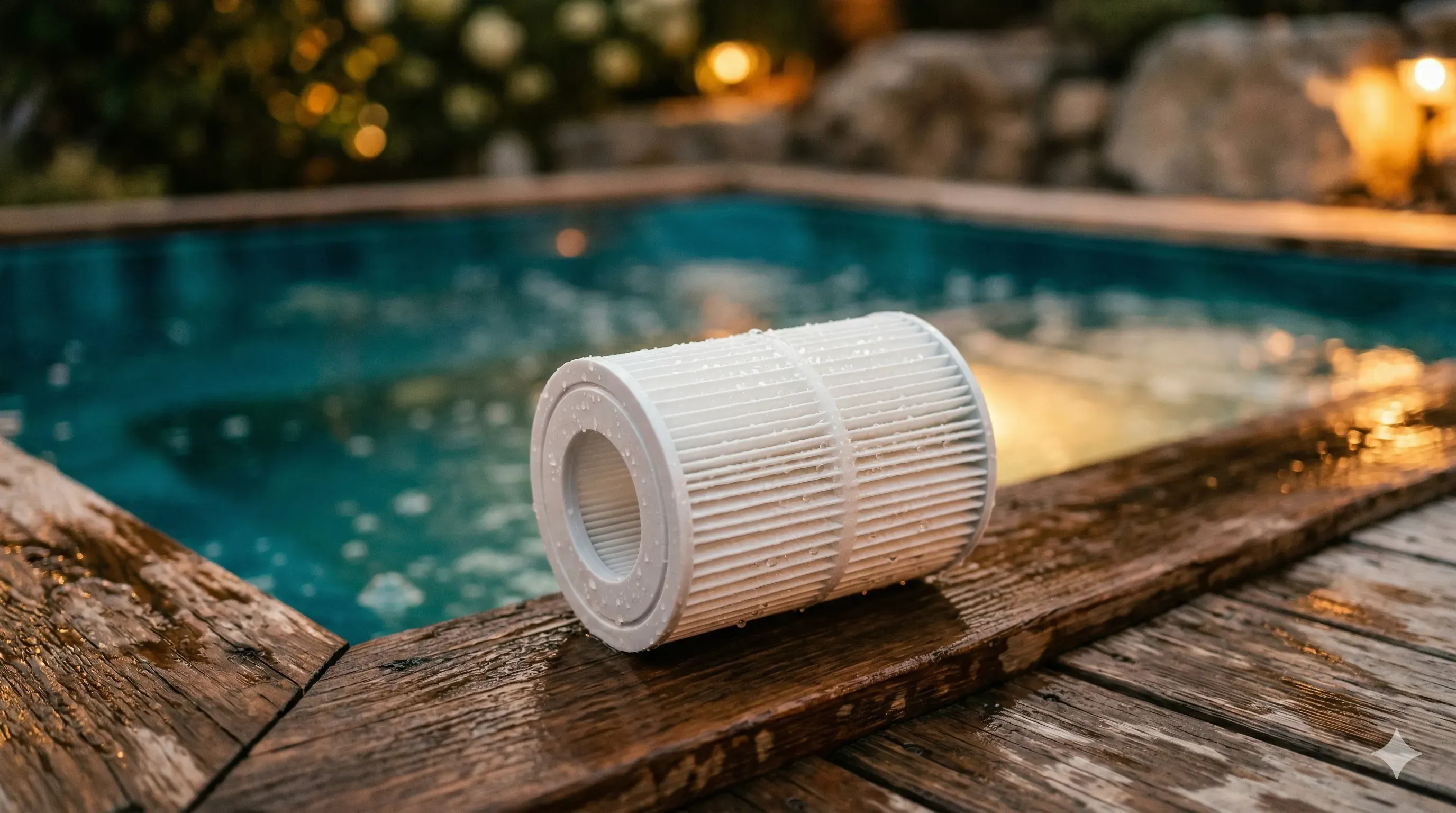
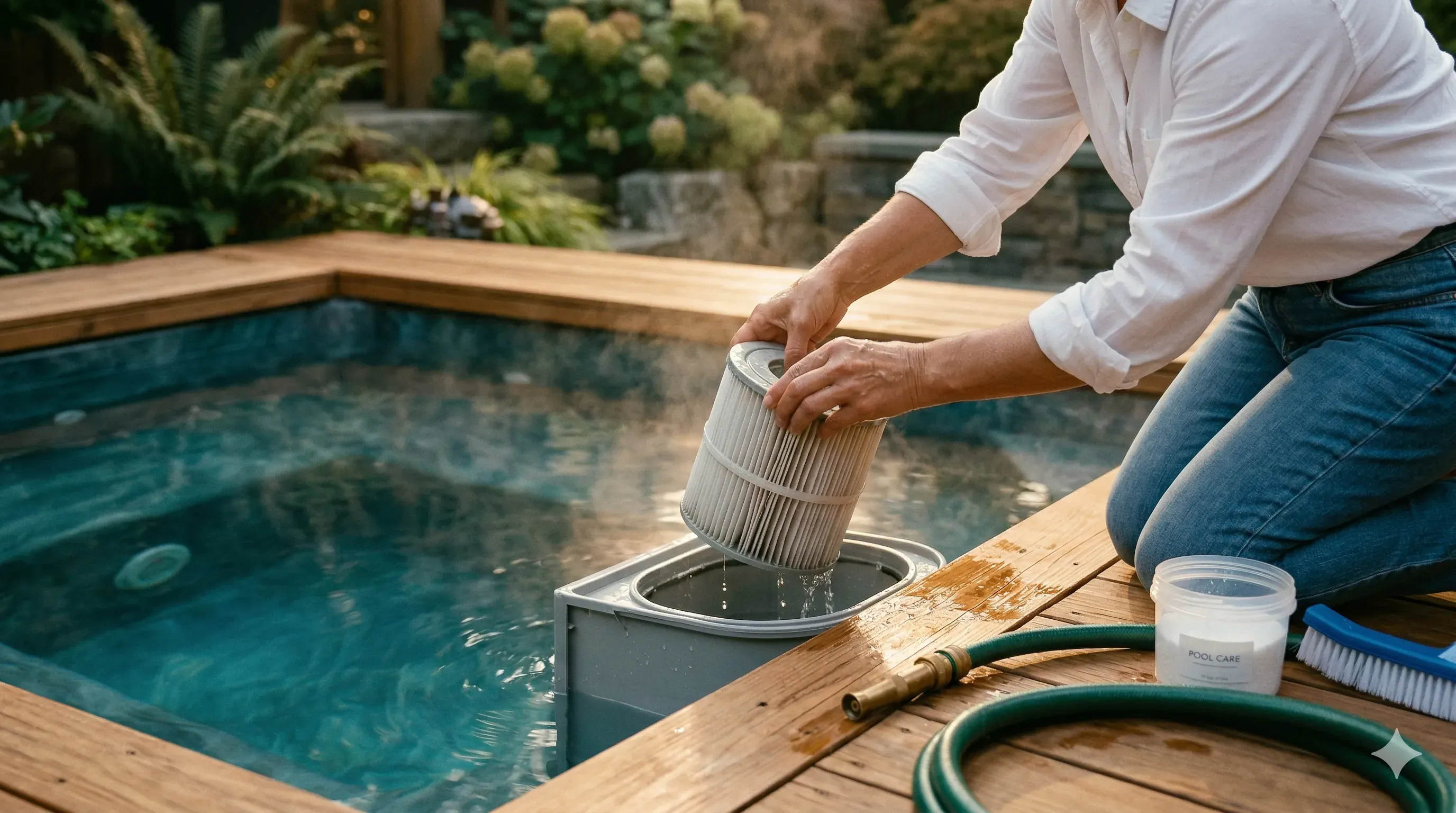
Rinse the filter. Pull the cartridge out and spray it down with a garden hose. Focus on getting between the pleats where debris collects. This takes about five minutes and makes a noticeable difference in water clarity and flow rate.
Wipe the waterline. That ring of grime that forms at the water’s surface? Body oils and organic residue. A quick wipe with a spa-safe surface cleaner keeps it from building up into a stubborn layer. Leave it for a few months and you’ll need a scrub brush and real effort to get it off.
Check the cover. Is it sitting properly? Any damage to the seal or vinyl? Water pooling on top should be removed to prevent the cover from sagging. A sagging cover loses its insulation and eventually breaks its internal foam core.
Monthly (20 to 30 minutes)
Deep clean the filter. A weekly rinse removes surface debris, but oils and minerals embed deeper into the filter fabric over time. Once a month, soak the cartridge overnight in a filter cleaning solution (available at any pool store). Rinse thoroughly the next day. The difference in water clarity after a deep clean is surprisingly noticeable.
If you have a second filter cartridge, swap it in while the first soaks. Always having a clean filter ready keeps your water clear without downtime.
Test calcium hardness. Calcium doesn’t change as fast as sanitizer or pH, but it drifts over time as water evaporates and gets topped off. Hard water areas trend upward. Soft water areas may drop if you’re diluting with top-offs.
Target: 150 to 250 ppm. Above 300 ppm, scale starts forming on your heater and jets. Below 150 ppm, the water gets aggressive and corrodes metal components.
Inspect the cabinet and equipment area. Look underneath (if accessible) for leaks, drips, or moisture. Check the pump for unusual noise. A slow drip you catch now saves you from the panicked call to a spa tech six months later.
Clean the cover. Wipe down the vinyl top with a UV protectant to prevent cracking. Open the cover and clean the underside where moisture and chemical off-gases accumulate. This extends cover life significantly.
Every 3 to 4 months (2 to 3 hours)
The big reset. A full drain, clean, and refill starts your water over from scratch.
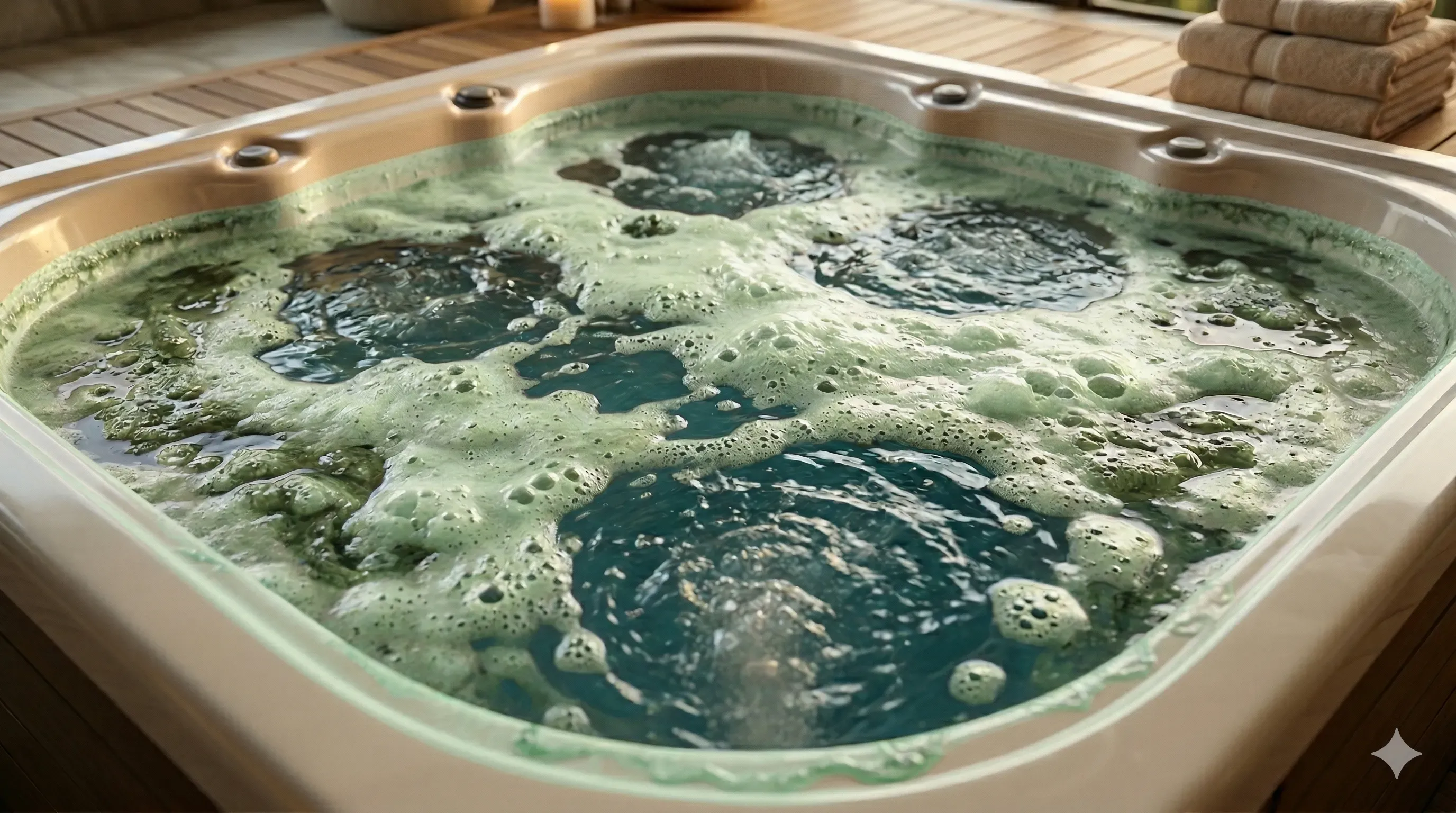
Flush the plumbing first. Before draining the old water, add a pipe flush product (Ahh-Some or Oh Yuk) and run every jet on high for 20 to 30 minutes. This strips biofilm from inside the plumbing. Biofilm survives normal sanitizer levels and contaminates fresh water if you don’t remove it before refilling. The foam and gunk that rises to the surface during a flush is proof of why this step matters.
Drain completely. Use the tub’s built-in drain valve or a submersible pump. A pump is faster.
Clean the shell. Wipe down every surface with a spa-approved cleaner. Pay attention to the waterline, jet faces, headrests, and any crevices. Don’t use household cleaners. The surfactants in products like dish soap or bathroom cleaner cause persistent foaming problems in the new water.
Refill and rebalance. Fill through the filter housing to push air out of the plumbing lines. Then follow the startup chemical sequence: adjust alkalinity first (80 to 120 ppm), then pH (7.4 to 7.6), then calcium hardness if needed (150 to 250 ppm), then add sanitizer, then shock.
If your fill water is hard (calcium above 200 ppm) or contains metals, use a hose pre-filter when filling. It removes the contaminants at the source.
Replace the filter if it’s older than 12 months or if cleaning doesn’t restore good flow. Filters degrade even with regular maintenance. The fabric stretches and loses its ability to trap fine particles. A new filter every 12 to 18 months keeps filtration effective.
Twice a year
Your cover takes more abuse than any other part of the hot tub. UV, rain, snow, chemical off-gases from underneath. Apply a vinyl conditioner and UV protectant to the outer surface twice a year. Treat the underside with a mildew-resistant cleaner. Inspect the stitching and zipper along the fold line. A neglected cover fails years before it should.
While you’re doing that, rotate each jet and check for cracking, stiffness, or mineral buildup. White vinegar on a cloth handles calcium deposits. Look at the gaskets and seals around the jets too. If water is seeping behind the shell, a gasket needs replacing before the leak gets worse.
The heater element is worth a glance if you can access it. Scale builds up on the element and insulates it, which forces it to run hotter and eventually burn out. Keeping calcium and pH in range prevents most scale, but a visual check twice a year catches problems before they cost real money.
Once a year
Once a year, do a full walk-around. Check the pump for vibration, noise, or leaks. Inspect electrical connections (with the power off). Look at the circ pump if your tub has a separate one. Test the GFCI breaker by pressing the test button and confirming it trips. If the breaker doesn’t trip, get an electrician.
The pump unions, drain valve, and filter housing all have rubber o-rings and gaskets that dry out over time. A silicone-based lubricant (never petroleum-based, which destroys rubber) keeps them flexible and leak-free. Five minutes of lubrication once a year can prevent a service call that ruins your weekend.
Finally, take a look at your chemical consumption over the past year. Are you burning through sanitizer faster than expected? That could point to a slow leak diluting your chemistry, a heavier bather load than you realize, or a change in your source water.
The quick reference table
| Frequency | Tasks | Time |
|---|---|---|
| Before every soak | Visual check, temperature check | 30 seconds |
| 2 to 3 times per week | Test water, dose sanitizer, adjust pH | 2 to 3 minutes |
| Weekly | Shock, rinse filter, wipe waterline, check cover | 10 to 15 minutes |
| Monthly | Deep clean filter, test calcium, inspect equipment area, clean cover | 20 to 30 minutes |
| Every 3 to 4 months | Flush plumbing, drain, clean shell, refill, rebalance, replace filter if due | 2 to 3 hours |
| Twice a year | Condition cover, inspect jets and seals, check heater | 30 to 45 minutes |
| Annually | Equipment inspection, lubricate o-rings, review chemical usage | 1 hour |
What people actually skip (and what it costs them)
The plumbing flush gets skipped more than anything. And it’s the most consequential shortcut. You drain and refill with fresh water, everything looks great for a week, then cloudiness creeps back. That’s biofilm from the old water contaminating the new fill. Now you’re either fighting an uphill battle with chemicals or draining again. A 20-minute flush before draining prevents the whole cycle.
Not testing between soaks. Plenty of owners only test when they’re about to get in, and only dose when the numbers are off. But sanitizer depletion doesn’t pause because nobody’s soaking. Bacteria multiply constantly at spa temperatures, and a few days without adequate sanitizer is enough for biofilm to start establishing. Test two to three times per week whether you’re soaking or not.
The filter gets ignored. A cartridge that’s never cleaned or replaced becomes a bottleneck that no amount of chemicals can overcome. Particles that should be trapped just recirculate endlessly. The fix is so simple (a weekly rinse, a monthly soak, an annual replacement) that there’s no good reason to skip it.
The quarterly drain gets postponed. Every chemical you add raises total dissolved solids. Evaporation concentrates them further. After three to four months, the water is saturated with accumulated byproducts. Chemistry becomes harder to balance, the water looks dull even when test strips read normal, and the tub just doesn’t feel as clean. Fresh water resets everything.
What you can safely skip
Pool stores will tell you every product on the shelf is essential. Most aren’t.
Enzyme treatments are a nice-to-have for heavy use tubs but not mandatory if you’re shocking weekly and draining on schedule.
Clarifiers are a band-aid. If your chemistry is balanced and your filter is clean, you shouldn’t need clarifier. If you’re reaching for it regularly, something else is wrong.
Defoamer treats a symptom. Foam comes from organic contamination. Proper shocking, showering before soaking, and draining on schedule prevent it.
Aromatherapy products smell nice but contribute nothing to water quality and some leave residue that clogs filters.
If your basics are solid (sanitizer, pH, shock, filter, drain schedule), the basics are all you need. The five or six core chemicals handle the real work.
Frequently asked questions
How often should I test my hot tub water? Two to three times per week at minimum. Check sanitizer, pH, and alkalinity. Always test before adding chemicals and 20 minutes after to confirm the adjustment landed. If you’re having people over or using the tub every day, bump that to daily. It takes 30 seconds and catches problems before they become visible.
How often should you drain and refill a hot tub? Every three to four months under normal use. The rough formula: tub gallons divided by 3 divided by average daily bathers equals days between drains. A 300 gallon tub used by 2 people daily should be drained roughly every 50 days. If chemistry starts fighting you before the schedule says it’s time, trust the water over the calendar.
How often should I clean my hot tub filter? Rinse weekly with a garden hose. Deep soak monthly in filter cleaning solution. Replace every 12 to 18 months. If water clarity drops and chemistry is fine, the filter is the first thing to check. Keeping a second cartridge on rotation means you always have a clean one ready.
What is the most important hot tub maintenance task? Sanitizer. Keep it at 3 to 5 ppm. Everything else on the schedule exists to support that one number.
How long does hot tub maintenance take per week? About 15 to 20 minutes total. Two or three quick test-and-dose sessions at a couple of minutes each, plus one 10 to 15 minute session for the weekly shock and filter rinse. The time-consuming tasks (drain, clean, refill) only happen every three to four months. Most people spend more time each week deciding what to watch on TV.
Can I just use my hot tub without doing any maintenance? Not if you want it to be safe. A hot tub without chemicals becomes a bacterial incubator within 48 hours. Pseudomonas (causing folliculitis), Legionella (causing Legionnaires’ disease), and Mycobacterium avium (causing hot tub lung) all thrive at spa temperatures. The maintenance routine keeps you safe and your equipment running. Skip it and you’re gambling with both.