Why Does My Hot Tub pH Keep Dropping? 5 Common Causes
Most hot tubs drift pH upward. If yours keeps dropping, something specific is pulling it down. Here are the five most likely causes and how to fix each one.
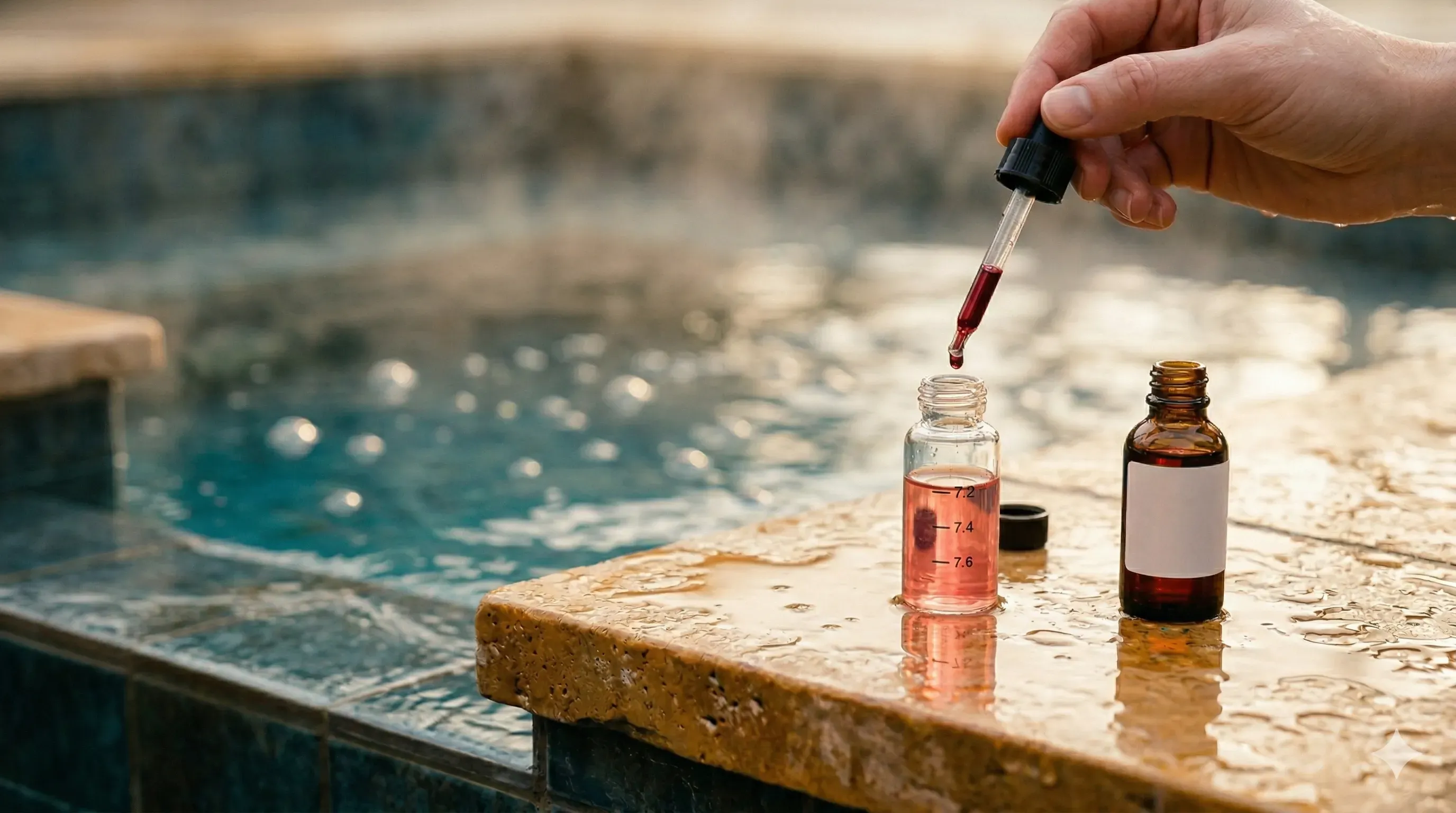
Most hot tubs push pH upward. Hot water releases CO2, jets aerate the surface, and every soak session drives pH higher. That’s the normal pattern, and it’s why pH decreaser is the most-used balancing chemical in hot tub care.
So when pH keeps dropping instead, something specific is wrong. The usual physics aren’t driving the behavior, which means an outside factor is pulling pH down. Here are the five causes, starting with the most common.
1. Low total alkalinity
Alkalinity is the buffer system that holds pH steady. When total alkalinity is in the 80 to 120 ppm range, it absorbs small chemical inputs and bather contaminants without letting pH move much. That’s exactly what a buffer is supposed to do.
When alkalinity drops below 80 ppm, the buffer fails. pH loses its anchor and reacts to every small change in the water. A single dose of sanitizer, one person soaking for 20 minutes, or even topping off with slightly acidic tap water can push pH down noticeably. The water has no resistance.
The confusing part is that pH may bounce in both directions when alkalinity is low. One day it’s at 7.0, the next it’s at 7.8. People treat the pH directly and get frustrated when it won’t stay put. The fix isn’t more pH increaser. The fix is getting alkalinity back into range.
How to fix it: Add sodium bicarbonate (baking soda) at 1 tablespoon per 100 gallons. That raises alkalinity by roughly 10 ppm without moving pH much. Get alkalinity to 80 to 120 ppm, let it circulate for an hour, then check pH. It often settles into range on its own once the buffer is working again.
2. Acidic sanitizer
Not all sanitizers are pH-neutral. If you’re using the wrong type of chlorine, it could be dragging pH down with every dose.
Trichlor tablets are the worst offender. They have a pH of about 2.8. In a 20,000 gallon pool, that acidity gets diluted. In a 400 gallon hot tub, it overwhelms the water fast. Trichlor also adds cyanuric acid at an aggressive rate and dissolves slowly, which means a single tablet can keep dumping acid into a tiny water volume for days. Multiple hot tub manufacturers void warranties if trichlor is found in the system. If you’re using trichlor, stop. Switch to dichlor granules immediately.
Bromine tablets (BCDMH) are also net-acidic, though less extreme than trichlor. If you’re on a bromine system and pH consistently trends downward, the tablets may be contributing. This is more common in smaller tubs (200 to 300 gallons) where the acid load has less water to dilute into.
Dichlor granules have a pH of 6.5 to 7.0. Nearly neutral. If you switch from trichlor or bromine to dichlor and the pH drop stops, you’ve found your cause.
3. Overcorrecting with pH decreaser
New hot tub owners learn that pH needs to be in a tight range and start adding sodium bisulfate (pH decreaser) at the first sign of drift. The problem is that sodium bisulfate works fast in small water volumes, and it’s easy to overshoot.
A common cycle: pH reads 7.8, you add a scoop of pH decreaser, it crashes to 6.8. You panic and add pH increaser, it swings to 7.9. You add more decreaser. Back and forth, never stable, each swing a little more extreme than the last because the chemistry is getting cluttered with dissolved chemicals.
The solution is simpler than it seems: dose smaller. For a 400 gallon tub, start with half a tablespoon of sodium bisulfate. Run the jets for 20 to 30 minutes. Retest. If pH is still high, add another half tablespoon. Never dump a full dose and walk away. The smaller the correction, the easier it is to land in the 7.4 to 7.6 range without overshooting.
If you’ve been seesawing for a while and the water feels “used up,” a drain and refill resets everything. Fresh water with proper alkalinity from the start eliminates the accumulated chemistry clutter.
4. Heavy bather load
Sweat, body oils, lotions, cosmetics, and dead skin cells are all acidic. Each person who soaks introduces organic compounds that lower pH. In a pool, the volume absorbs this easily. In a 300 to 400 gallon hot tub, two people soaking for an hour can drop pH noticeably.
If your pH is fine on days nobody uses the tub but drops after heavy use, bather load is contributing. Families with four people soaking after dinner, weekends with guests, or daily use without adequate shocking all accelerate pH decline from organic acids.
Shower before soaking. That alone reduces the contaminant load. Shock weekly with an oxidizer to break down accumulated organics. If pH consistently drops after heavy use nights, test and adjust the morning after instead of chasing it immediately. The water often stabilizes once the organics are oxidized.
Also check that alkalinity hasn’t drifted low. Bather load depletes alkalinity over time, which compounds the pH instability. If both are dropping together, alkalinity is the root cause.
5. Acidic source water
Your fill water sets the starting chemistry. Most municipal water comes out near neutral (pH 7.0 to 7.5), but well water varies widely depending on local geology. Acidic groundwater (pH 6.0 to 6.5) is common in areas with granite, sandstone, or high organic content in the soil.
If your tap water tests below pH 7.0, your tub starts behind and has to fight uphill to reach 7.4. Every time you top off to replace evaporation, you’re adding more acidic water. Over weeks, this steady drip of low-pH fill water can overcome the alkalinity buffer and drive pH downward.
Rainwater is another factor. It’s naturally acidic (around pH 5.0 to 5.6). If your tub sits uncovered during rainstorms, enough rainwater dilution can push pH down.
How to fix it: Test your fill water from the tap or well before you add any chemicals. If it’s acidic, raise alkalinity first (sodium bicarbonate) to build a strong buffer, then use sodium carbonate (soda ash) sparingly to bring pH into range. For well water, consider a hose pre-filter when filling. For rain: keep the cover on.
A bonus cause: non-chlorine shock (MPS)
Potassium monopersulfate, the active ingredient in non-chlorine shock, is net-acidic. A single weekly shock dose won’t move the needle much. But if you’re shocking frequently (after every soak in a heavily used tub), the cumulative acid load from MPS can contribute to a slow pH decline.
If you suspect this, try switching to dichlor shock (a higher dose of your regular granular chlorine) for a few weeks and see if the pattern changes. Dichlor has a near-neutral pH and won’t push it down the way MPS does.
The diagnostic sequence
If your pH keeps dropping and you’re not sure which cause applies, work through these steps:
Test alkalinity. If it’s below 80 ppm, raise it to 80 to 120 ppm with baking soda and see if pH stabilizes within two to three days. This alone fixes most cases.
Check your sanitizer product. Read the label. If it says trichloroisocyanuric acid, that’s trichlor. Replace it with dichlor (sodium dichloro-s-triazinetrione).
Review your dosing habits. Are you adding large amounts of pH decreaser at once? Cut doses in half and wait 30 minutes between additions.
Test your fill water next. Run the tap or well into a cup and test pH and alkalinity. Knowing your starting point tells you whether the source is part of the problem.
Finally, track bather load. Note whether pH drops correlate with heavy use days. If they do, increase your shock frequency and make sure alkalinity stays in range.
Most cases resolve at step one. Low alkalinity is behind the majority of pH-dropping complaints in hot tubs. Fix the buffer, and pH usually takes care of itself.
Frequently asked questions
Why does my hot tub pH drop but alkalinity stays normal? If total alkalinity is in range (80 to 120 ppm) but pH still drops, check your sanitizer. Trichlor tablets have a pH of 2.8 and will drag pH down even with good alkalinity. Bromine tablets are also net-acidic. Switching to dichlor granules (pH 6.5 to 7.0) or the dichlor/bleach method often stops the drop.
Can too much pH decreaser cause low pH? Yes, and it’s one of the most common beginner mistakes. Sodium bisulfate works fast in small water volumes. A tablespoon too many can crash pH below 7.0. Always add in small amounts, circulate for 20 to 30 minutes, then retest before adding more.
What pH is too low for a hot tub? Below 7.2 starts causing problems. Low pH water corrodes metal components, etches acrylic shells, degrades rubber seals, and irritates skin and eyes. Below 7.0 is aggressive enough to cause visible equipment damage over weeks. Don’t soak until you’ve brought it back to 7.4 to 7.6.
How do I raise pH without raising alkalinity? Aerate the water. Run the jets on high with the air valves open and the cover off for 30 to 60 minutes. CO2 loss raises pH without adding any chemicals. If you need a faster correction, sodium carbonate (soda ash) raises pH more than alkalinity, but use it sparingly.
Should I adjust pH or alkalinity first? Alkalinity first, always. Alkalinity acts as the buffer that holds pH steady. If alkalinity is too low, pH will bounce around no matter what you do. Get alkalinity to 80 to 120 ppm, then adjust pH. Fixing alkalinity often moves pH into range on its own.