Hot Tub Smells Like Chlorine but Chlorine Is Low
That harsh chemical smell isn't from too much chlorine. It's from too little. The chemistry behind it is simple, and so is the fix.
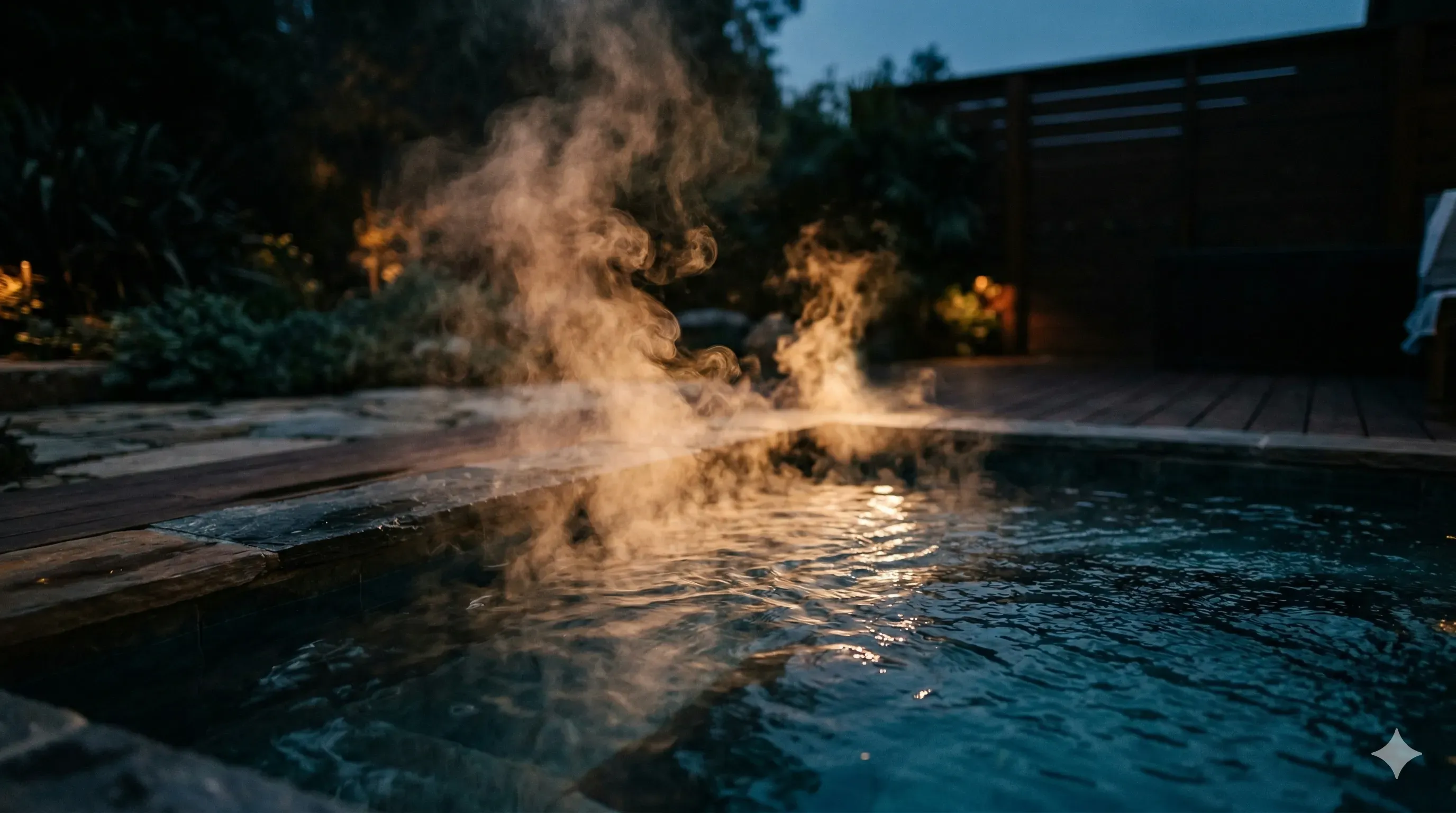
You open the cover and get hit with that sharp, acrid smell. The one everyone calls “too much chlorine.” You test the water. Free chlorine reads 1 ppm or even zero. That doesn’t make sense. How can the water reek of chlorine when there’s barely any in it?
Because what you’re smelling isn’t chlorine. It’s chloramines. And the fix is the opposite of what most people try.
What you’re actually smelling
Free chlorine, the active sanitizer in your hot tub, is nearly odorless at normal concentrations (3 to 5 ppm). You can put your face right over well-maintained water and barely notice it. The harsh chemical smell that people associate with “too much chlorine” actually comes from combined chlorine, also called chloramines.
Chloramines form when free chlorine reacts with nitrogen-containing compounds in the water. Sweat, body oils, skin cells, urine (it happens), cosmetics, deodorant, and laundry detergent residue from swimsuits all contribute nitrogen. When free chlorine encounters these contaminants, it binds to them instead of staying active. The result is three types of chloramine compounds: monochloramine, dichloramine, and nitrogen trichloride.
Nitrogen trichloride is the worst offender. It’s volatile, meaning it escapes the water surface as a gas. It’s what causes the eye-stinging smell. In enclosed spaces like indoor hot tub rooms, it concentrates in the air and causes coughing, eye irritation, and that “pool smell” people complain about.
The part that matters: every molecule of chlorine that becomes a chloramine is no longer working as a sanitizer. That’s why your free chlorine reading is low. The chlorine didn’t disappear. It got used up fighting organic contaminants and converted into these smelly, ineffective waste compounds.
Why adding “a little” chlorine makes it worse
And here’s where most people go wrong. The water smells chemical, so they add a small amount of chlorine. Just a teaspoon or two to nudge the levels up. The smell gets worse. They add a bit more. Still worse. So they stop adding chlorine entirely because they figure they’ve been overdoing it.
The chemistry is working against them. To destroy chloramines, you need to reach a threshold called breakpoint chlorination. Below that threshold, the chlorine you add actually reacts with existing chloramines and creates MORE chloramines before it starts breaking them down. You’re feeding the problem.
The ratio is roughly 10 to 1. For every 1 ppm of combined chlorine in the water, you need to add approximately 10 ppm of free chlorine to push past breakpoint and burn off the chloramines completely.
Timid doses sit below the breakpoint and make everything worse. You have to go big enough to blast through it. There’s no gentle option.
How to test for combined chlorine
You need two measurements: total chlorine and free chlorine. The math is simple.
Total chlorine minus free chlorine equals combined chlorine.
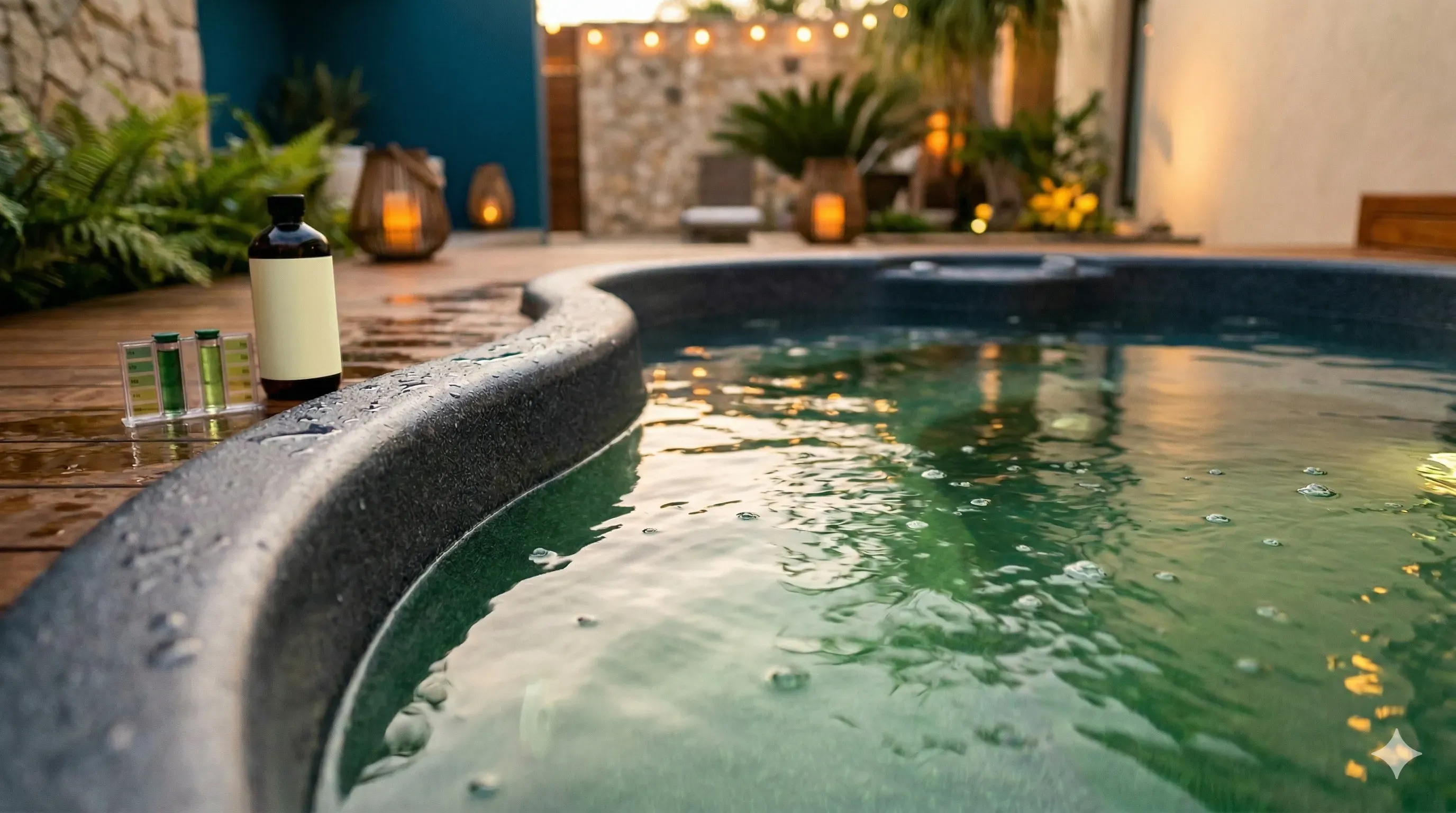
Most test strip kits measure both. Some show total and free as separate pads. If the two numbers are close (within 0.5 ppm), you don’t have a significant chloramine problem. If there’s a gap of 1 ppm or more, chloramines are building and that’s your smell.
Example: total chlorine reads 3 ppm, free chlorine reads 1 ppm. Combined chlorine is 2 ppm. That’s high enough to produce noticeable odor and irritation. You’d need to raise free chlorine by at least 20 ppm to hit breakpoint on 2 ppm of combined chlorine. In practice, shocking to 10 to 15 ppm handles most situations since some of the combined chlorine breaks down along the way.
For the most accurate results, a FAS-DPD drop test (like the Taylor K-2006) gives you precise readings. Test strips work for routine checks but can be less reliable when you’re trying to measure small differences between total and free chlorine.
The fix: shock hard, not gentle
Once you understand that the smell means “not enough active chlorine” rather than “too much chlorine,” the solution makes sense.
-
Test the water. Record free chlorine, total chlorine, and pH. If pH is above 7.8, lower it first. Shocking into high-pH water wastes product because the chlorine can’t work efficiently.
-
Calculate your dose. For most chloramine situations, shocking to 10 ppm free chlorine is enough. In a 300 gallon tub starting from near zero, that’s about 2 tablespoons of dichlor granules. For severe cases with strong odor and combined chlorine above 2 ppm, go to 15 or even 20 ppm.
-
Remove the cover. You want those volatile chloramine gases to escape, not get trapped against the vinyl. Off-gases are corrosive and will damage the cover over time.
-
Add the shock with jets running. Sprinkle dichlor granules across the water surface. Run jets for 20 to 30 minutes to distribute the shock through the plumbing and vent the gases.
-
Wait. The smell should start fading within an hour as chloramines are destroyed. Don’t soak until free chlorine drops below 5 ppm, usually 4 to 8 hours later.
-
Retest. Confirm that free chlorine and total chlorine are now close together (gap under 0.5 ppm) and that free chlorine is back in the 3 to 5 ppm range.
If the smell returns within a day or two, you’re dealing with a continuous source of contamination. Either the bather load is overwhelming your sanitizer, or biofilm in the plumbing is pumping contaminants back into the water faster than you can treat them.
Why this happens more in hot tubs than pools
Swimming pools deal with chloramines too, but hot tubs concentrate the problem in ways pools never do.
Start with the math. A 300 gallon hot tub has about 1/50th the water of a typical pool. Two bathers in a hot tub produce the same contaminant load per gallon as 100 bathers in a pool. The contamination-to-water ratio is staggering.
Then add heat. At 100°F to 104°F, chlorine degrades faster and bathers sweat more. You’re burning through sanitizer from both ends: the heat eats your chlorine while the open pores dump more nitrogen into the water.
The jets make it worse. All that turbulence drives volatile chloramines out of the water and into the air above the surface. Under a cover, those gases concentrate. When you lift the lid, you get months of accumulated trichloramine in one blast. It’s the reason the smell hits hardest the moment you open up.
And most hot tub owners soak daily or close to it, which means there’s no recovery window. Fresh organic load every evening, a small body of water already running hot, and chlorine that can barely keep up. This is why weekly shocking isn’t optional for hot tubs the way some pool owners treat it.
Preventing the smell from coming back
A big shock handles the chloramines in front of you. But if you don’t address the root cause, the smell keeps returning. A few habits make a real difference.
Maintain 3 to 5 ppm free chlorine at all times. Not just when you soak. Not just when you remember. Bacteria and organic reactions don’t pause between sessions. If your sanitizer drops to zero overnight, chloramine production starts the moment someone gets in.
Shock weekly. Even when the water looks and smells fine. Weekly oxidation destroys combined chlorine before it builds to levels you can smell. Non-chlorine shock (MPS) is enough for maintenance weeks. Save the chlorine shock for when things get ahead of you.
Shower before soaking. This single habit cuts the organic load entering the water by roughly half. Rinse off deodorant, lotion, sweat, and whatever else is on your skin. Your chlorine works to sanitize the water, not burn through a layer of body products.
Rinse swimsuits without detergent. Laundry detergent residue dissolves into hot tub water and reacts with chlorine. Rinse suits in plain water between uses. If you need to wash them, use a small amount of detergent and run an extra rinse cycle.
Drain on schedule. Every 3 to 4 months, total dissolved solids and accumulated waste products make it harder for chlorine to do its job. Fresh water resets the chemistry and eliminates the buildup that feeds chloramine production.
When the smell means something bigger
Sometimes the chloramine smell is a symptom of a deeper issue, not just a missed shock.
CYA buildup. If you’ve been using dichlor for several months without draining, your cyanuric acid may be above 50 ppm. High CYA locks up chlorine. The test strips look fine, but the actual germ-killing power behind those numbers is severely reduced. The water smells because the chlorine isn’t truly active. The fix is draining and refilling to reset CYA, not more shocking.
Biofilm. Plumbing biofilm keeps shedding bacteria and gunk into the water around the clock. No amount of shocking fixes the source. You’ll shock, the water clears temporarily, and the smell returns within days. The fix is a pipe flush (Ahh-Some or similar), full drain, clean, and refill.
Inadequate circulation. If the pump runs only a few hours per day, dead zones in the plumbing don’t get treated. Bacteria colonize stagnant sections and produce waste that enters the main water when the pump kicks on. Increase daily circulation time or run the circ pump 24/7 if your tub has one.
Old water. After four or five months without draining, total dissolved solids accumulate to the point where chlorine can’t keep up no matter what you do. The water itself is saturated with byproducts that feed chloramine formation. A full drain and refill resets the slate.
If shocking repeatedly doesn’t keep the smell away for at least a week, stop adding more shock and start investigating these underlying causes. More product isn’t the answer when the problem is structural.
Frequently asked questions
Why does my hot tub smell like chlorine when the chlorine level is low? The smell comes from chloramines (combined chlorine), not free chlorine. Chloramines form when your sanitizer reacts with nitrogen from sweat, oils, and organic waste. They smell harsh, but their presence means the free chlorine got consumed. The water needs more active chlorine, not less.
How do I get rid of the chlorine smell in my hot tub? Shock with dichlor to reach at least 10 ppm free chlorine. This pushes past the breakpoint where chloramines are destroyed. Run jets for 20 minutes with the cover open to vent the gases. The smell should clear within a few hours. Don’t soak until free chlorine drops below 5 ppm.
Is the chlorine smell in a hot tub dangerous? Chloramines cause skin irritation, red eyes, and respiratory discomfort, especially nitrogen trichloride which becomes a gas at the water surface. In enclosed hot tub rooms, the concentration in the air can trigger coughing and breathing difficulties. Beyond the irritation, the smell means your free chlorine is depleted, so bacteria aren’t being controlled.
What are chloramines in a hot tub? Waste compounds that form when chlorine reacts with nitrogen from sweat, oils, and organic matter. They smell harsh, irritate skin and eyes, and barely work as sanitizers. Shocking destroys them.
Why does my hot tub smell worse after I add a little chlorine? Breakpoint chemistry. There’s a threshold you have to clear, roughly 10 times the combined chlorine level. Below that threshold, the chlorine you add actually reacts with existing chloramines and creates more of them. A half-measure makes the smell worse. You have to dose hard enough to blow past breakpoint and oxidize everything on the other side. If you’re going to shock, commit to it. A timid dose is worse than no dose because it creates more of the very compounds you’re trying to eliminate.