How to Shock a Hot Tub (Dosing, Timing, and Method)
Shocking isn't optional. Learn which shock to use, exact dosing by tub size, when to shock, and how long to wait before soaking.
Your daily sanitizer kills bacteria. That’s its whole job. But every time someone soaks, they leave behind sweat, body oils, dead skin, lotion residue, and whatever else came along for the ride. Your sanitizer reacts with all of it and produces waste compounds called chloramines (or bromamines if you use bromine). These byproducts smell terrible and barely sanitize anything.
Shock breaks them down. It’s not the same as adding more sanitizer. It’s a separate job with its own chemistry, its own products, and its own schedule. Skip it and your water will let you know.
What shocking actually does
The concept is simple: oxidation. You’re hitting the water with a heavy dose of oxidizer to destroy the gunk and combined chlorine that normal sanitizing leaves behind. Think of it as taking out the trash. Your sanitizer fights bacteria all week, and the leftovers pile up. Shock clears the pile.
Without regular shocking, combined chlorine accumulates. That’s what creates the harsh “chemical” smell people blame on too much chlorine. It’s also what makes water cloudy, foamy, and irritating. The smell actually means your water needs more treatment, not less.
Left alone, combined chlorine and accumulated bather gunk create conditions where bacteria multiply and biofilm establishes itself inside your plumbing. Once biofilm takes hold, shocking the open water won’t touch it. You’re looking at a plumbing flush and full drain at that point.
Chlorine shock vs non-chlorine shock
Two different products. Two different jobs. Most hot tub owners should have both.
Chlorine shock (dichlor granules) kills bacteria AND oxidizes the accumulated crud in your water. It raises free chlorine to 10+ ppm temporarily, wiping out everything in the water. You can’t soak until free chlorine drops below 5 ppm, which usually takes 4 to 8 hours. Dichlor also adds cyanuric acid (CYA) with every dose, which becomes a real problem if you let it accumulate.
Non-chlorine shock (MPS, potassium monopersulfate) only oxidizes waste. It doesn’t kill bacteria and leaves zero sanitizer residual in the water. You can soak within 15 to 20 minutes. It adds no CYA. But if your water has a bacterial problem, MPS won’t solve it.
| Chlorine shock (dichlor) | Non-chlorine shock (MPS) | |
|---|---|---|
| Kills bacteria | Yes | No |
| Oxidizes waste | Yes | Yes |
| Wait before soaking | 4 to 8 hours | 15 to 20 minutes |
| Adds CYA | Yes (~9 ppm per 10 ppm chlorine) | No |
| pH impact | Near neutral (6.5 to 7.0) | Acidic (lowers pH slightly) |
| Best for | Heavy contamination, refills, recovery | Routine weekly maintenance |
When to reach for which one: MPS for your regular weekly shock when the water looks and smells fine. Dichlor when things are heavier: after a party, after a refill, when the water has an odor, when combined chlorine is elevated, or when you suspect bacterial issues.
One practical note about MPS that catches a lot of people off guard. It interferes with DPD test kits and some test strips. You’ll see a false high reading for combined or total chlorine. If you test within 24 hours of adding MPS and see unexpectedly high chlorine numbers, that’s the MPS showing up on the test, not actual chlorine. Wait a day and retest. FAS-DPD test kits avoid this problem entirely.
Why half measures make it worse
This is the part that trips up most owners.
Combined chlorine (chloramines) doesn’t just sit passively in the water waiting to be cleared out. To destroy it, you need to reach a threshold called the breakpoint. Below that threshold, adding chlorine actually creates MORE chloramines before it starts breaking them down. You have to push through the tipping point or you’re making things worse.
The ratio is roughly 10 to 1. For every 1 ppm of combined chlorine in your water, you need to add about 10 ppm of free chlorine to reach breakpoint and oxidize it all. So if your total chlorine reads 4 ppm and your free chlorine reads 3 ppm, you have 1 ppm combined chlorine. You’d need to raise free chlorine by at least 10 ppm to get past breakpoint.
This explains why “just adding a little extra chlorine” when the water smells bad doesn’t work. A small dose makes the chloramine problem worse. A big dose destroys them. There’s no gentle middle option here.
For routine hot tub shocking, hitting 10 ppm free chlorine handles most situations. For water that smells strong, looks cloudy, or has been neglected for more than a week, push to 20 ppm.
When to shock your hot tub
Seven clear triggers:
- Once a week as routine maintenance. Combined chlorine and bather residue build up even when everything looks fine. Weekly MPS shock handles most weeks.
- After heavy use. Three or more bathers in one session, or any soak longer than two hours. Each person dumps organic load into the water that your daily sanitizer now has to fight through.
- After a refill. Tap water carries chloramines, trace bacteria, and organic matter. Your startup sequence should include an initial chlorine shock to 8 to 10 ppm.
- When combined chlorine reads above 0.5 ppm. Test total chlorine and subtract free chlorine. If the gap is more than 0.5, those chloramines need to go.
- When the water smells harsh or “chemical.” That’s chloramines talking. You need more oxidation, not less.
- After the tub sits idle for several days. Stagnant warm water at 100°F promotes bacterial growth even with some residual sanitizer present.
- Before and after a trip. Shock before leaving to park the water at a high sanitizer level. Shock when you get back to clean up whatever accumulated while you were gone.
A trigger that’s NOT on this list: “because I feel like I should.” If the water tests clean, looks clear, and doesn’t smell off, stick to your regular weekly schedule. Unnecessary chlorine shocking just accelerates CYA buildup and brings your next drain and refill closer.
How to shock step by step
-
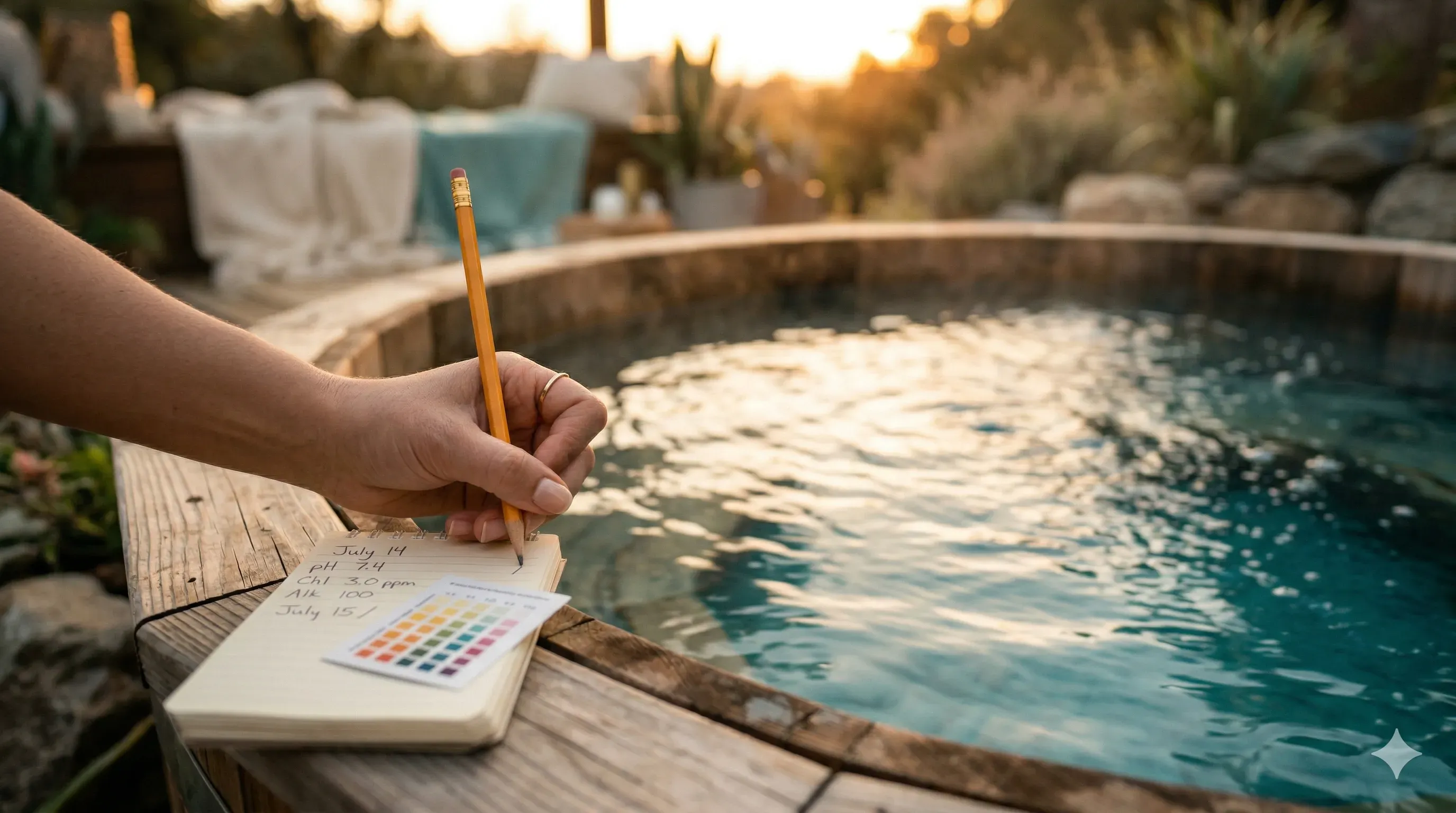
Test the water. Check free chlorine, total chlorine, and pH. Know your starting point. If pH is above 7.8 or below 7.2, fix that first. Shocking into unbalanced water wastes product.
-
Calculate your dose. For dichlor: 1 teaspoon per 100 gallons raises free chlorine about 5 ppm. To hit 10 ppm in a 300 gallon tub starting from 2 ppm, you need roughly 5 teaspoons (just under 2 tablespoons). For MPS: follow the product label, usually about 1 ounce per 250 gallons.
-
Pull the cover off. Never shock with it sealed. Off-gases from the oxidation reaction (mostly nitrogen trichloride) are corrosive. They eat the vinyl and foam core of your cover from the inside. This is one of the most common (and most expensive) mistakes hot tub owners make.
-
Turn the jets on. You need circulation to push the shock through the plumbing and into every corner of the tub.
-
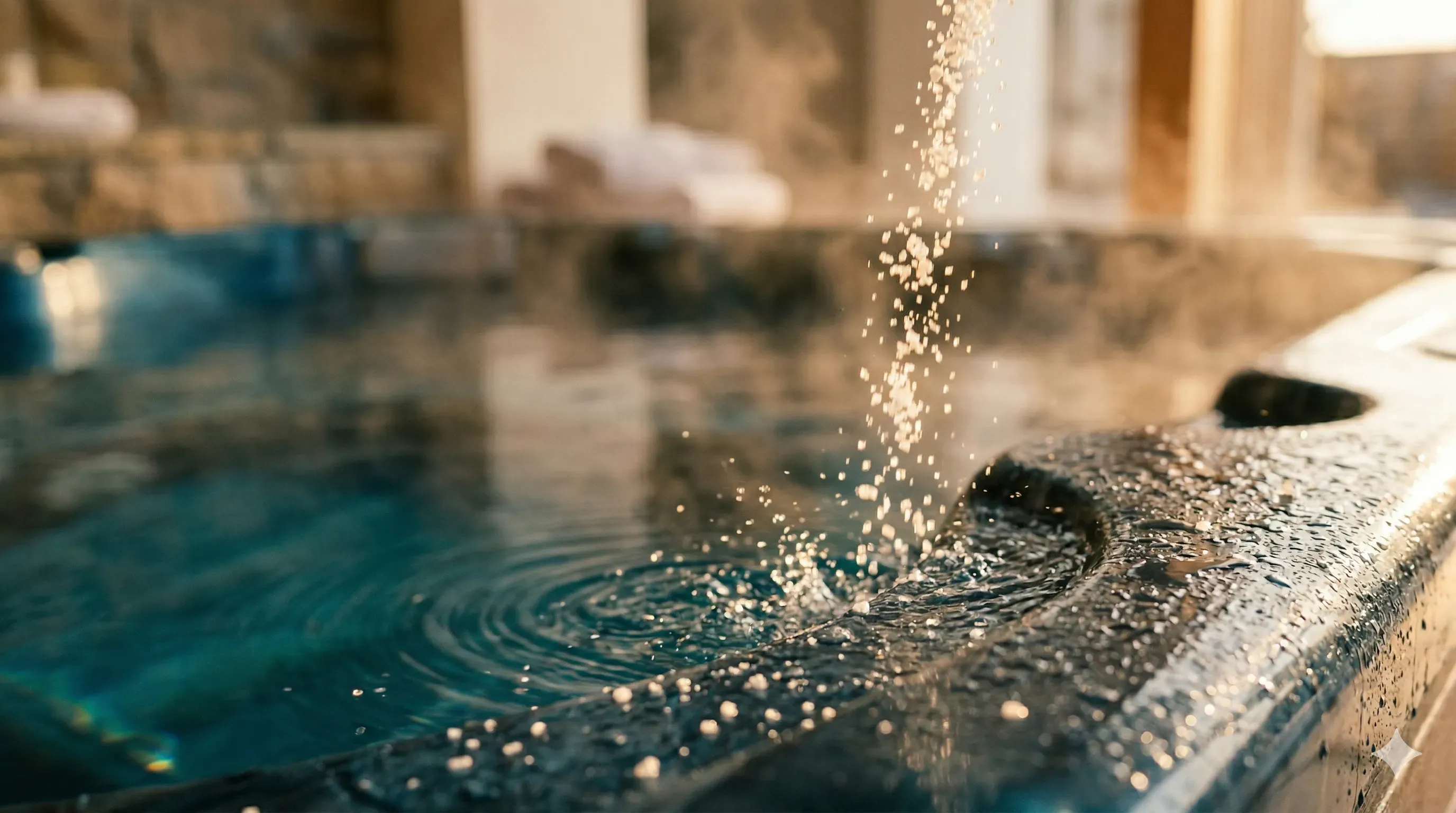
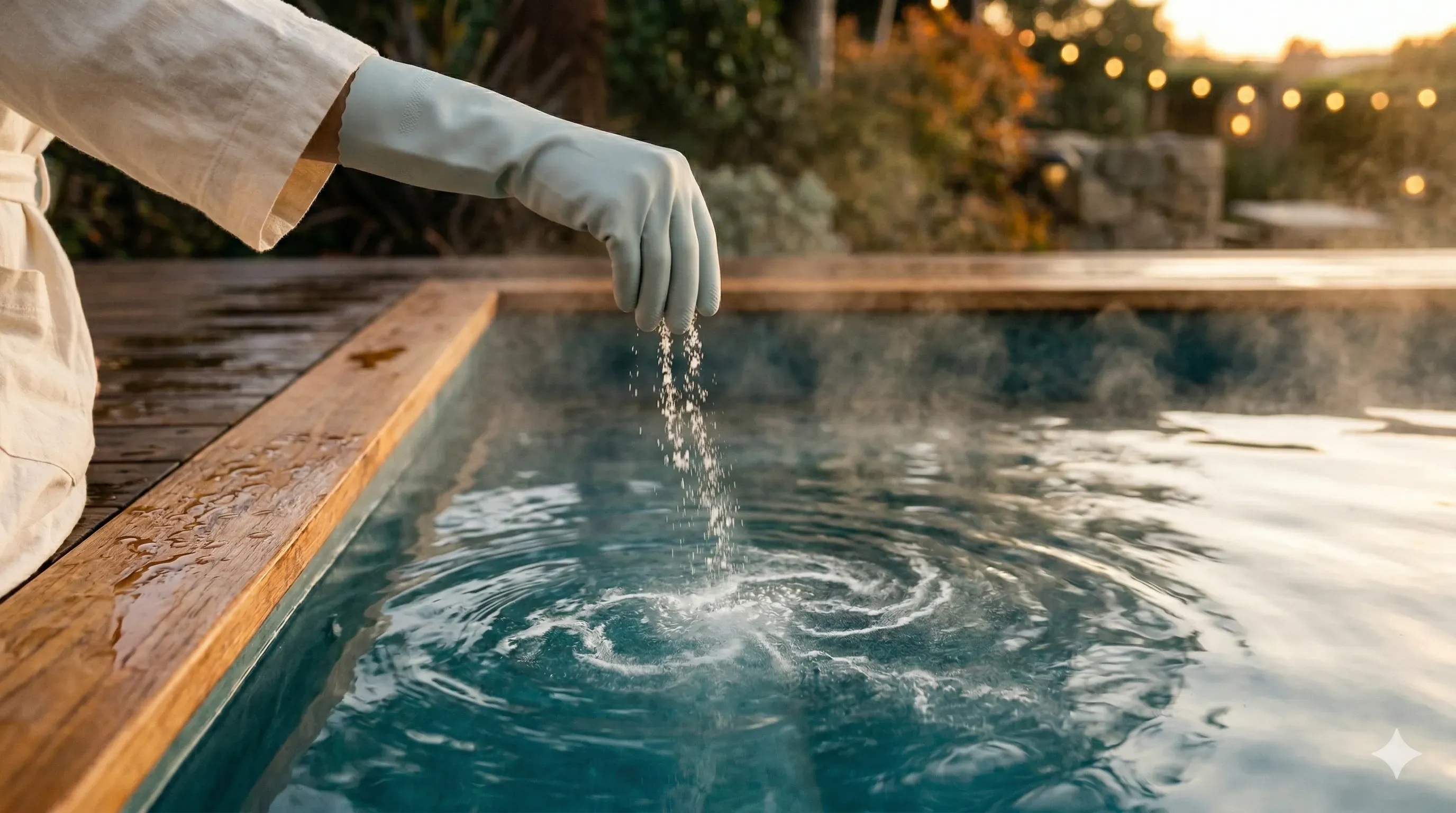
Sprinkle the shock across the water surface while the jets are running. Don’t dump it in one pile and don’t pour it through the skimmer. Dichlor dissolves within a couple of minutes at spa temperatures.
-
Run jets for 20 to 30 minutes to get full distribution and let the off-gases vent.
-
Leave the cover off or cracked for at least 20 minutes after chlorine shock. MPS produces far less off-gassing, so you can close up sooner.
-
Test before you soak. After chlorine shock, keep testing until free chlorine drops below 5 ppm. After MPS, 15 to 20 minutes is usually enough, but confirming with a test strip takes five seconds and removes the guesswork.
Dosing amounts by tub size
For chlorine shock targeting 10 ppm free chlorine using dichlor granules, starting from roughly 2 ppm:
| Tub size | Dichlor (standard shock) | Dichlor (heavy shock to 20 ppm) | MPS |
|---|---|---|---|
| 200 gallons | 3 to 4 teaspoons | 7 to 8 teaspoons | ~1 oz |
| 300 gallons | 5 to 6 teaspoons | 10 to 12 teaspoons | ~1.5 oz |
| 400 gallons | 7 to 8 teaspoons | 14 to 16 teaspoons | ~2 oz |
| 500 gallons | 9 to 10 teaspoons | 18 to 20 teaspoons | ~2.5 oz |
These are starting points based on dosing math. Your actual needs depend on your current free chlorine level and how much combined chlorine you’re fighting. When in doubt, test 30 minutes after dosing and add more if free chlorine hasn’t reached your target.
How long to wait before soaking
After chlorine shock: wait until free chlorine drops below 5 ppm. That’s usually 4 to 8 hours, sometimes overnight for a heavy dose. Leaving the cover cracked speeds up chlorine dissipation. A common approach: shock after your evening soak, leave the cover cracked, test the next morning.
After non-chlorine shock (MPS): 15 to 20 minutes with jets running. MPS doesn’t elevate chlorine, so there’s nothing to wait out.
Water above 5 ppm free chlorine irritates skin and eyes and fades swimsuits. Above 10 ppm gets genuinely uncomfortable. Test. Don’t guess based on how many hours it’s been.
Mistakes that waste shock or damage your tub
Pool chlorine tablets (trichlor) have a pH of 2.8. They’ll corrode your heater and etch your shell. Calcium hypochlorite (cal-hypo) runs a pH of 11 and dumps calcium into the water with every dose. In a 300 gallon tub, either one causes problems fast. Dichlor granules or MPS. Nothing else.
Then there’s the cover mistake. A lot of people seal the cover right after shocking. The corrosive off-gases have nowhere to go, so they eat the vinyl from underneath. Do this for a few months and the foam core delaminates, the vinyl cracks, and you’re shopping for a replacement cover that didn’t need replacing. All preventable with 20 minutes of fresh air.
Testing before you shock matters more than you think. If free chlorine is already sitting at 7 ppm and you add a full shock dose, you’re at 17 ppm. That’s a 12+ hour wait before soaking and unnecessary CYA added. Thirty seconds with a test strip avoids all of it.
Don’t shock cold water either. Below 80°F, dichlor granules dissolve poorly and can settle on the acrylic, leaving bleach spots or white residue that’s stubborn to remove.
And the biggest waste of shock? Using it when the real problem isn’t organic waste at all. If cloudiness is from high calcium hardness, shock won’t touch it. If the water clears for a day then clouds right back up, that’s biofilm in the plumbing, and no amount of oxidizer fixes the source. And if your CYA has crept above 50 ppm from weeks of dichlor use, your chlorine is too bound up to work at any dose. Sometimes the answer is a drain and refill, not another scoop of shock.
Shocking a bromine hot tub
Bromine users need to shock too. Organic waste and bromamines accumulate the same way chloramines do.
Here’s something that surprises a lot of people: adding chlorine shock to a bromine tub doesn’t just oxidize waste. It reactivates the bromide bank in your water and converts spent bromide ions back into active bromine. So a chlorine shock in a bromine tub pulls double duty: cleaning up waste and replenishing your sanitizer at the same time.
MPS works in bromine tubs too and is the easier option for weekly maintenance since it won’t change your bromine chemistry. One caution: if bromine is already running high, any shock will reactivate the bromide bank and push levels even higher. Lower the bromine first before your next shock dose. Save the chlorine shock for situations where you need the extra firepower or when your bromide reserve feels depleted.
Still deciding between the two sanitizer systems? The choice between chlorine and bromine affects your daily routine more than your shocking routine. Either way, weekly oxidation isn’t optional.
Frequently asked questions
How often should you shock a hot tub? Once a week with MPS for routine oxidation. Add a chlorine shock after heavy bather loads, after a refill, or whenever combined chlorine reads above 0.5 ppm. During weeks with lots of soaking or extra guests, shocking twice is reasonable. There’s no universal schedule because bather load and usage patterns vary so much between households.
How long after shocking a hot tub can you get in? After chlorine shock, wait until free chlorine drops below 5 ppm. Usually 4 to 8 hours, longer for heavy doses. After MPS, 15 to 20 minutes with the jets running. Time estimates from product labels are ballpark figures at best. Temperature, dose size, and whether the cover is off all change the math. Just test.
Can you shock a hot tub too much? Every dichlor dose adds CYA to the water. Once CYA passes 50 ppm, your chlorine’s germ-killing speed drops measurably, even when test strips show normal levels. Frequent MPS pulls pH down gradually. Shock with a reason, not out of habit or anxiety.
How much shock do I put in a 300 gallon hot tub? For chlorine shock to 10 ppm: about 2 tablespoons of dichlor granules if you’re starting around 2 ppm free chlorine. For MPS: roughly 1.5 ounces, but check the label since concentrations vary between brands. Test your water first so you’re dosing from a known starting point.
What’s the difference between chlorine shock and non-chlorine shock? Chlorine shock (dichlor) both kills bacteria and oxidizes waste. Non-chlorine shock (MPS) only oxidizes. MPS lets you soak in 15 to 20 minutes. Chlorine shock means waiting 4 to 8 hours. Most owners keep both: MPS for the weekly routine, dichlor for bigger jobs.
Can I use regular bleach to shock a hot tub? Unscented 8.25% sodium hypochlorite does the job and adds zero CYA, which becomes a real advantage once your stabilizer level starts climbing. Roughly 2 ounces per 100 gallons raises free chlorine about 10 ppm. Make sure the label says nothing but sodium hypochlorite and water. No fragrances, no “splashless” thickeners. This approach is the backbone of the dichlor then bleach method that experienced owners on water care forums swear by.